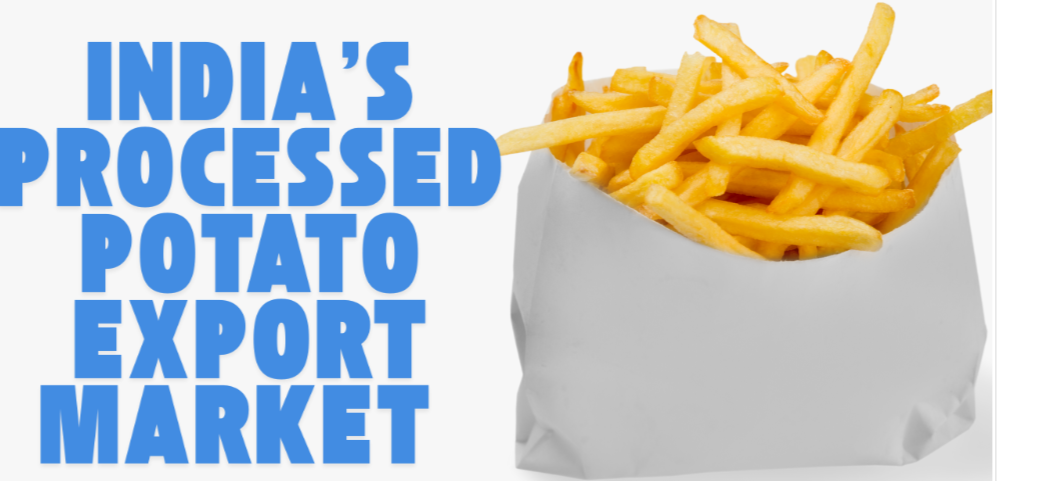
India stands at a pivotal moment in its agricultural history. As the planet’s second-largest potato producer, it paradoxically holds a mere 2.8% share of the global export market, largely confined to fresh tubers. However, a groundbreaking report from ICRIER-APEDA posits that processed potato products are the key to a dramatic export transformation, potentially capturing a substantial portion of the global processed potato market, which is projected to grow from USD 29.3 billion in 2021 to USD 47 billion by 2030. The scale of the opportunity is underscored by India’s current export of French fries, which sits at a paltry USD 2.9 million, a figure that highlights the vast, untapped potential in value-added segments like flakes, chips, starch, and prepared fries.
Realizing this potential requires a systemic overhaul of India’s potato value chain, moving from a production-centric to a market-oriented model. The ICRIER-APEDA report provides a clear strategic framework. Firstly, it recommends establishing export-oriented clusters in key states like Gujarat, Uttar Pradesh, Bihar, and West Bengal, concentrating infrastructure and expertise—a model proven successful in other agricultural sectors. Secondly, and critically for agronomists and farmers, it calls for a shift from generic varieties to targeted cultivation of internationally demanded potatoes, such as ‘Lady Rosetta’ for the Russian snack market and ‘Kufri Pukharaj’ for Gulf nations. This varietal shift is essential, as the right dry matter and sugar content are non-negotiable for industrial processing. This must be coupled with stringent adherence to international phytosanitary standards and traceability, areas where India currently faces significant market access hurdles. Global partnerships for technology transfer, particularly with processing leaders like Belgium and the Netherlands, will be vital to bridge the technological gap in cold storage, processing, and packaging, reducing the current post-harvest losses which can exceed 15-20% in some regions.
India’s journey to becoming a processed potato export powerhouse is not merely about increasing production; it is a strategic imperative to upgrade the entire ecosystem—from seed selection to the consumer’s plate. For farmers, agronomists, and investors, this represents a monumental shift from commodity trading to branded, value-added manufacturing. By executing the recommended strategy—focusing on specialized varieties, building clustered infrastructure, and embracing global standards—India can replicate the success of its dairy sector and fundamentally reposition its potato industry on the world map, turning a staple crop into a high-value export engine.
