
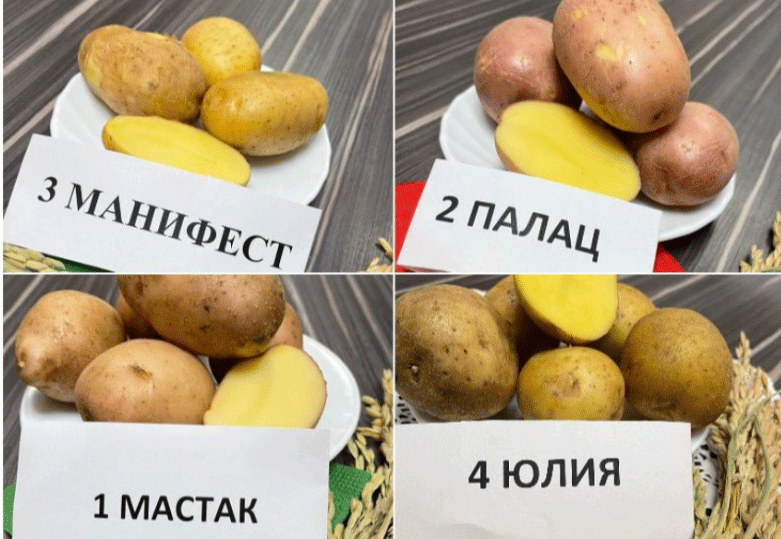
The Astrakhan region, characterized by a dry, continental climate with hot summers and often poor soil quality, presents significant challenges for potato cultivation. Against this backdrop, the successful 2025 field trials of ten early-ripening Belarusian potato varieties—including ‘Mastak’, ‘Vektor’, ‘Manifest’, ‘Yuliya’, ‘Vodar’, ‘Karsan’, ‘Palats’, ‘Skarb’, ‘Briz’, and ‘Lel’—represent a notable development. Conducted across three distinct farm locations in the Yenotayevsky, Krasnoyarsky, and Akhtubinsky districts, the trials were designed to test adaptability across the region’s microclimates. The reported average yield of 40 tonnes per hectare (400 centners/ha) is a robust result, especially for early-maturing varieties. To provide context, Russia’s national average potato yield in 2024 was approximately 18-20 tonnes per hectare according to Rosstat data. This suggests the Belarusian genetics offer a substantial yield advantage under Astrakhan’s conditions, potentially tied to traits like drought tolerance and efficient nutrient use.
The positive assessment from the regional Ministry of Agriculture highlights several key commercial and agronomic attributes: all varieties are for table use, possess good taste qualities, and are noted for being “undemanding” in planting and care. This last point on low-input requirements is critical for a region where irrigation costs are high and soil fertility can be variable. The success of these varieties aligns with a broader strategic push within the Eurasian Economic Union (EAEU) to enhance agricultural self-sufficiency and seed independence, reducing reliance on sources further afield. Belarus itself is a major global potato seed producer, known for varieties with strong disease resistance (particularly to late blight) and good storability. The proven performance in Astrakhan indicates these varieties can help mitigate production risks associated with climate volatility, offering farmers more predictable outcomes. It also provides a valuable data point for agronomists, indicating that sourcing adapted genetics from climatically similar regions within the EAEU can be a more effective strategy than trialing varieties from Western Europe with different disease and environmental pressures.
The successful adaptation of ten Belarusian potato varieties in the Astrakhan region is more than a local trial success; it is a case study in strategic varietal introduction. The high yields, coupled with reported stress tolerance and low agronomic demands, offer a compelling package for local farmers seeking to improve productivity and climate resilience. This outcome strengthens intra-EAEU agricultural cooperation and provides a model for other challenging growing regions. For producers, it underscores the importance of rigorous local trialing to identify non-native varieties that can outperform local standards. For the industry, it highlights Belarus’s growing role as a key supplier of adapted seed potato genetics for markets facing similar climatic constraints, potentially reshaping regional seed trade flows.
