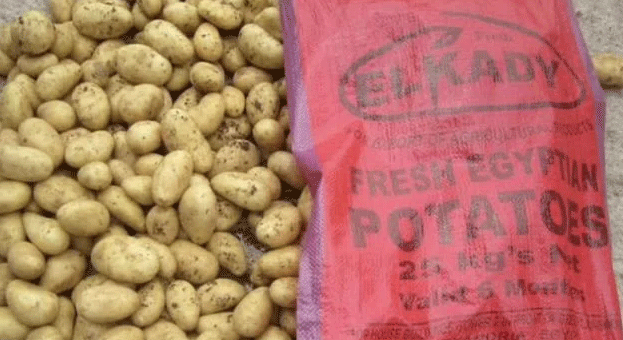
Russia’s Federal Service for Veterinary and Phytosanitary Surveillance (Rosselkhoznadzor) recently halted a major biosecurity threat—14,100 tons of Egyptian potatoes contaminated with quarantine pests. The shipment, intercepted at Novorossiysk port, contained potato tuber moth (Phthorimaea operculella) and humpback fly (Megaselia scalaris), both capable of devastating crops and endangering food safety.
The Scale of the Problem
- Over 500,000 tons of Egyptian potatoes entered Russia through Novorossiysk in the first half of 2025.
- Inspections revealed 100 infested batches with potato tuber moth (a pest that can destroy 80% of solanaceous crops) and 3 batches with humpback fly larvae.
- While most of the contaminated potatoes were diverted for industrial processing (e.g., starch, chips), 247 tons were sent back to Egypt.
Why Egypt? A Recurring Threat
Egypt is a top vegetable exporter to Russia but also a frequent violator of phytosanitary standards. Key reasons include:
- Favorable climate for pest proliferation (warm, humid, minimal seasonality).
- Lax export controls—inspections are often superficial.
- High export volumes—manual checks are impractical.
- Outdated pest management—ineffective mitigation strategies.
The Risks Beyond Potatoes
- Potato tuber moth reduces tuber quality, shelf life, and marketability.
- Humpback fly is far more dangerous—it infests grains, dairy, and meat, multiplies rapidly, and can cause severe intestinal diseases if ingested.
- Economic losses extend to farmers, storage facilities, and retailers, with potential recalls, legal penalties, and reputational damage.
Is Russia’s Phytosanitary Shield Strong Enough?
While Rosselkhoznadzor’s interception was successful, challenges remain:
- Sampling limitations—not all infested shipments are caught.
- Hidden infestations—larvae inside tubers evade visual checks.
- Financial burden—Russian importers often bear losses, not exporters.
Solutions: A Multi-Layered Defense
- Enhanced inspections—molecular diagnostics, DNA analysis, AI-assisted screening.
- Stricter supplier accountability—blacklisting repeat offenders, import bans.
- Boosting domestic production—reducing reliance on risky imports.
- Industry-wide training—improving pest recognition across supply chains.
Vigilance is Non-Negotiable
This incident underscores the urgent need for proactive phytosanitary measures. Strengthening import controls, investing in local agriculture, and fostering collaboration between authorities and businesses are critical to safeguarding food security. As global trade grows, so do biosecurity risks—prevention, not reaction, must be the priority.
