
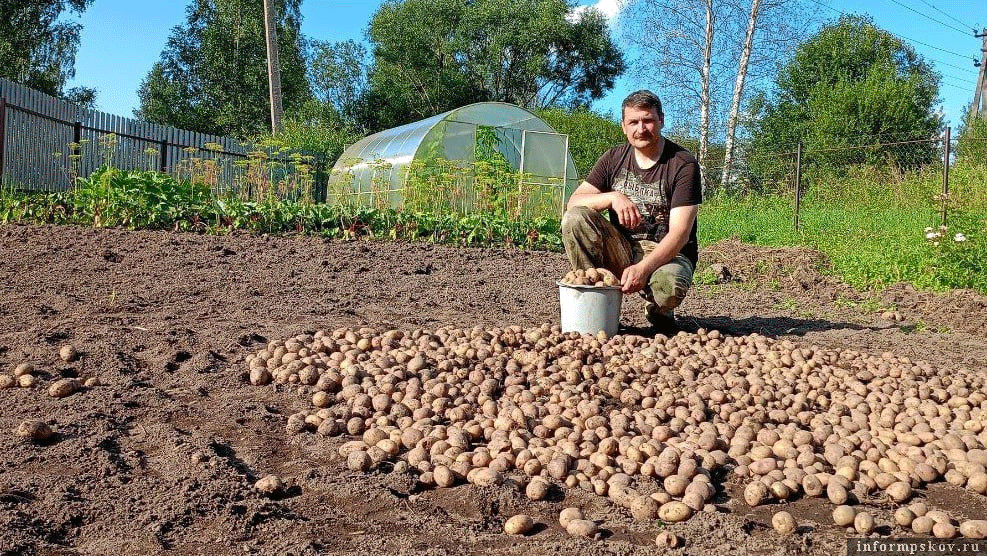
Farmers in Kunyinsky District have made the difficult decision to start potato harvest 2-3 weeks early after persistent rainfall waterlogged fields, district head Oleg Lebedev announced via Telegram. With another week of rain predicted, officials warn that delayed action could have meant total crop losses in some areas.
Flooded Fields Force Risky Early Harvest
• Current yields: Early reports show 15-20% lower tuber size in prematurely harvested fields
• Harvest conditions: Soil moisture at 120-140% of normal, complicating digging and storage
• Regional impact: Pytalovsky District faces similar crisis, with combines operating in 15-20 cm standing water
“The math is simple,” explained Lebedev. “We lose some yield now by harvesting early, or risk losing everything if the rains continue. At least this way we’ll salvage marketable potatoes.”
Agricultural Officials Cautiously Monitor Crisis
Pskov’s Agriculture Minister Nikolay Romanov declined to predict final yields but confirmed:
• 37% of regional potato fields are currently waterlogged
• If dry weather returns within 14 days, 60-70% of crops may recover
• Continued rainfall could damage up to 45,000 tons of potatoes across the oblast
Recent data from the Russian Hydrometeorological Center shows June-July rainfall in Pskov Oblast at 175% of the 30-year average, with Kunyinsky receiving 247 mm versus the typical 140 mm for this period.
Adaptation Strategies for Waterlogged Potatoes
Farmers report implementing emergency measures:
- Modified harvesters with extended digging depths to work in mud
- On-farm drying systems to reduce storage rot risks
- Immediate processing contracts for lower-quality tubers
Agronomists recommend foliar potassium applications for surviving crops to strengthen skins against disease pressure from excess moisture.
A Race Against Time and Weather
While early harvesting may preserve 60-75% of potential yields in hardest-hit areas, the situation underscores growing climate challenges for Russian potato growers. The 2024 season highlights the need for:
• Improved drainage infrastructure
• Development of flood-resistant varieties
• Expanded crop insurance programs
With climate models predicting increased summer precipitation for Northwestern Russia, such adaptation strategies will become increasingly critical for potato production sustainability.
