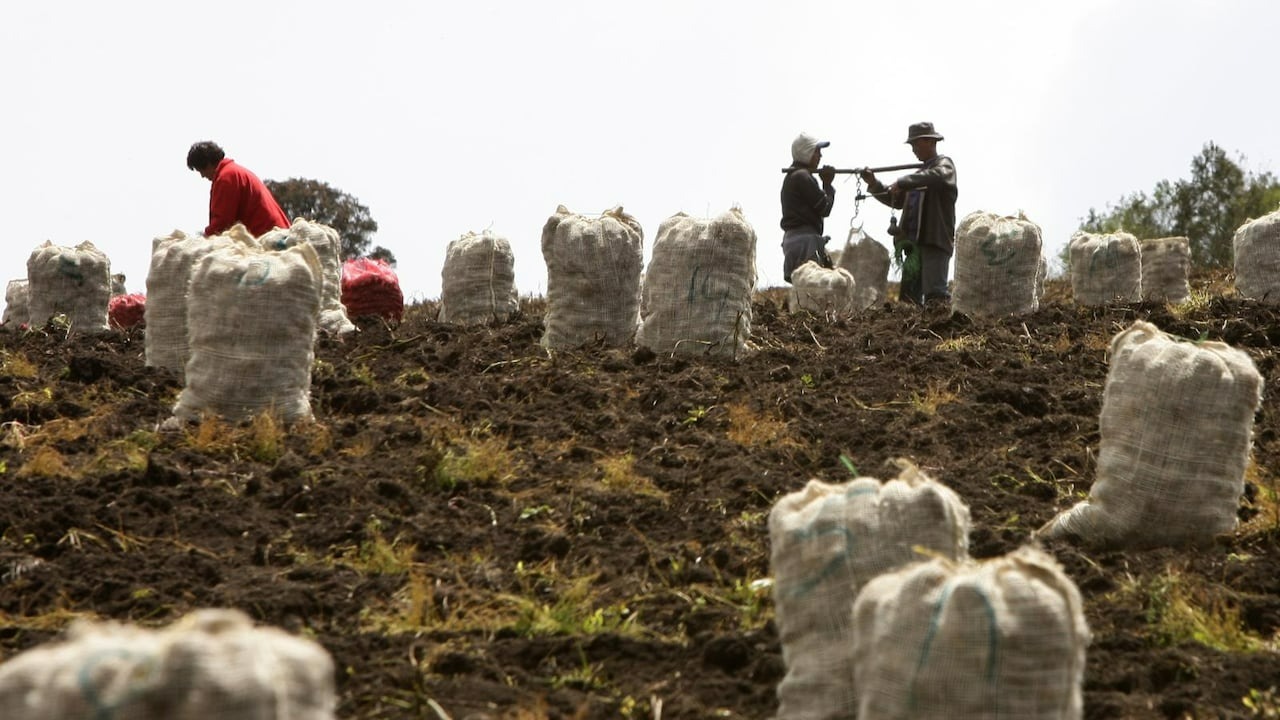
The situation in Colombia’s potato industry is becoming increasingly alarming. According to local producer groups, for every 40 million pesos invested, farmers recover only around 4 million — barely 10 percent. Such low returns jeopardize the sector’s sustainability.
For a country where potatoes are a key component of food security and rural employment, the economic imbalance is especially worrying.
Why Has Profitability Collapsed?
Colombian experts identify several core reasons:
Rising Production Costs
Nearly all input categories have become more expensive: fertilizers, crop protection, land rental, logistics, fuel and machinery maintenance.
Across Latin America, production costs have risen sharply since 2022.
Low Farm-Gate Prices
Even though costs are increasing, the prices buyers pay farmers have not followed.
Producers say that the market cannot absorb higher prices, and that retailers and intermediaries dominate price formation.
Climate Instability
Many potato-growing areas have been hit by the effects of El Niño, including irregular rains and extreme temperatures, which lowered yields.
Weak Post-Harvest Infrastructure
Storage, grading and packing facilities often do not meet modern standards.
Post-harvest losses may reach up to 30 percent.
What Farmers Are Saying
Producers describe the situation with growing frustration:
“Working at a loss has become normal. We continue because this is our life — but economically it has become unsustainable.”
Similar comments appear in Potatoes News reports from Russia, Kazakhstan, India, Kenya and parts of Europe, where growers face the same pattern: production costs rising faster than selling prices.
Potatoes News Analytics: A Global Pattern
Comparing Colombia to other regions frequently covered on Potatoes News reveals a shared reality:
Production costs outpace market prices, reducing profitability worldwide.
European growers face expensive land and energy; Asian processors demand higher standards but offer low prices; farmers in Russia and Kazakhstan report pressure from suppliers of seeds, fertilizers and equipment.
The challenges outlined for Colombia reinforce broader trends: reliance on outdated post-harvest infrastructure, climate vulnerabilities and an increasing need for risk management.
Potential Paths to Recovery
Government Support
Subsidies for infrastructure, improved credit access and tax relief may stabilize the sector.
Technology Adoption
Tools such as smart irrigation, soil moisture sensors and optimized fertilization programs can reduce risk and improve efficiency.
Expansion of Processing Capacity
Developing domestic demand for chips and French fry potato varieties could help absorb production and stabilize prices.
Stronger Farmer Cooperatives
Collective purchasing, logistics support and shared equipment could reduce costs and improve negotiating power.
Conclusion
Colombian potato growers today face an extremely fragile economic reality. But their crisis reflects global issues that Potatoes News tracks across many regions: high input costs, shrinking margins, climate challenges and the need for modernization.
The central question remains:
Is Colombia — and the global potato community — ready to take the necessary steps toward long-term stability and modernization?
Which priority should come first, in your view: technology, cooperation or government support?