
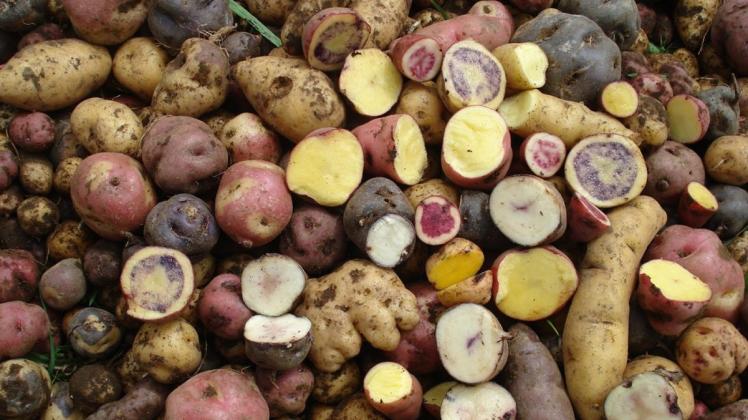
In brief. A study by the National University of Colombia (UNAL) found that among more than 100 genotypes of “papa criolla” (the Phureja group, “yema de huevo”), at least five use nitrogen significantly more efficiently. The researchers also highlighted three key genes associated with this trait, opening a path to breeding varieties that require fewer fertilizers without sacrificing yield.
Why it matters
Colombian growers traditionally apply elevated nitrogen rates—up to ~250 kg/ha in “papa criolla” plantings. On average, plants take up only about half of that: the surplus goes into foliage, raising farmers’ costs and environmental risks (eutrophication of water bodies) and, during heat treatment of tubers, can contribute to acrylamide formation. More “nitrogen-efficient” genotypes allow lower fertilizer inputs, reducing costs and environmental impact.
How the study was conducted
In a controlled greenhouse trial, >100 UNAL collection genotypes were compared under two nitrogen rates: 0.56 g/plant (low) and ≈1.78 g/plant (high). Researchers measured chlorophyll content (SPAD-502), biomass, tuber number, and nitrogen and carbon in tissues (Dumas method). They found that increasing nitrogen does not always translate into higher yields—excess nitrogen often “goes” to leaves. However, five genotypes maintained high tuber output and robust root systems even under low nitrogen.
Genetic markers
Molecular analysis identified three candidate genes linked to efficient nitrogen use:
- AMT1.1 — ammonium transport from soil,
- 2-OGD — an enzyme involved in amino acid/protein synthesis,
- PPR — regulation of metabolism and stress response.
These markers are suitable for selecting and crossing nitrogen-efficient Phureja lines.
What this means for farmers
Adopting such genotypes could cut nitrogen fertilizer use by about one-third, lowering costs and the risk of water pollution. For Colombia—producing more than 2.5 million tons of potatoes annually (including Boyacá, Cundinamarca, Nariño, Antioquia)—that’s a tangible economic and environmental gain. “More” doesn’t mean “better”: optimizing rates and choosing the right varieties work better than “playing it safe” with excessive doses.
Based on: https://argenpapa.com.ar/noticia/16651-