
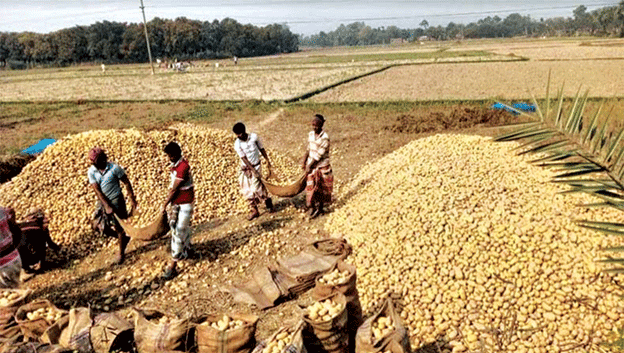
In what should have been a season of reward, potato farmers across northern Bangladesh—particularly in the Rajshahi and Rangpur divisions—are confronting a perfect storm of surplus, logistical shortfalls, and weather-related losses. As of this season, farmers cultivated potatoes on 50,000 hectares more than the projected area, largely encouraged by favorable prices in the previous year. But with production now peaking at 103 lakh tonnes—nearly matching last year’s national output of 106 lakh tonnes—the system meant to preserve these gains is buckling.
Too Much Harvest, Too Little Space
According to the Department of Agricultural Extension (DAE), the two divisions together have just 221 cold storage units with a combined capacity of 22 lakh tonnes. This is less than a quarter of the region’s potato output, leaving farmers desperate to find room for their produce. The result has been chaotic:
- Long queues of potato-laden vehicles have formed outside cold storage facilities in Tanore, Paba, and Bogura, as farmers wait for days.
- Cold storages are turning many away, citing full capacity, while others are prioritizing large-scale growers and traders.
- Cold storage fees have surged to Tk 6.75 per kilogram, up from Tk 4 last year, further cutting into margins.
This logistical squeeze has driven the wholesale market price of potatoes down to Tk 10/kg—far below the cost of production.
Farmers Speak Out
Sikander Ali, a smallholder from Nandigram, Bogura, harvested potatoes from three bighas but now stores them behind his house, unable to find a buyer or storage space. “We are not prioritized in the storage queues,” he said. “We’ll have to sell at huge losses.”
Masud Rana, another farmer who had booked space in advance, found his reservation revoked. Dulal Hossain, after hours of waiting at a facility, was turned away with his full truckload of potatoes.
For farmers like Rahidul Alam in Tanore, the problem is compounded by weather. “Rain forced us to harvest early, or we’d lose everything to rot,” he explained. The Rajshahi Meteorological Office recorded 5.4 mm of rain in 24 hours, triggering panic among farmers who needed to act fast to save their crops.
Storage Delay Equals Price Crash
As potatoes sit in trucks and homes, exposed to heat and humidity, their quality deteriorates. In a matter of days, this translates into:
- Lower market prices
- Increased post-harvest loss
- Higher transportation and handling costs
Farmers like Monjur Rahman, who cultivated 100 bighas, face enormous operational hurdles. “Even though I booked space months ago, transport costs have doubled because of waiting times,” he said.
Structural Problem, Not Seasonal
According to Abu Bakkar, president of the Rajshahi Cold Storage Owners’ Association, many facilities reached full capacity weeks before the harvest began. He warned of massive financial losses this year due to both the price collapse and inadequate cold storage infrastructure.
Azizur Rahman, an additional director at the Rajshahi divisional DAE office, confirmed that they had reached out to relevant ministries, requesting urgent expansion of storage infrastructure.
Planning Needed for a Post-Harvest Future
The current crisis in northern Bangladesh is a stark reminder that harvest success must be matched by post-harvest planning. Without adequate storage, farmers are at the mercy of weather and market volatility. To stabilize incomes and food supply chains, Bangladesh must:
- Invest in additional cold storage units, particularly in high-yield zones
- Ensure equitable access for small and marginal farmers
- Develop decentralized, mobile storage options
- Strengthen real-time forecasting and procurement mechanisms
Otherwise, bumper harvests will continue to end in wasted crops and shattered livelihoods—a tragedy that no farmer deserves.
