
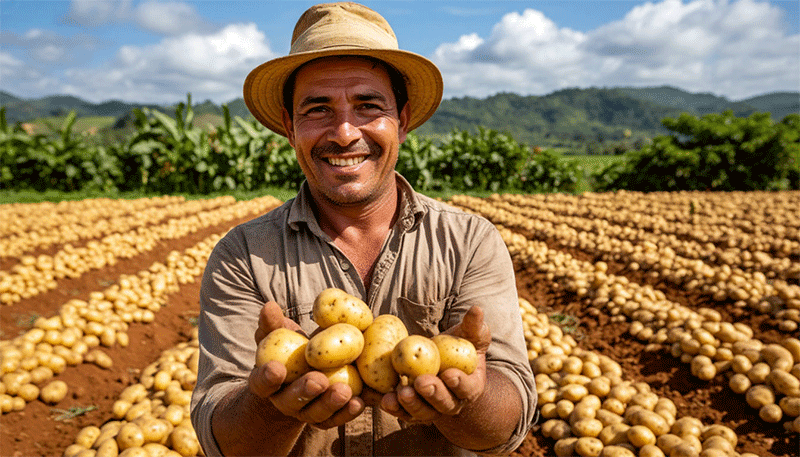
In Cristalina, Brazil—one of the country’s key potato-growing regions—only about 40% of the expected potato crop is projected to be harvested by the end of the season. The planting period, which began in February and concluded in June, was slightly ahead of the usual schedule (which typically ends in July), with 60% of crops planted between March and April. Harvesting started in May and is expected to finish by October, marking a shorter season compared to previous years, when it often extended into November.
Climate and Pests Take a Toll on Yields
Extreme weather conditions have played a major role in this year’s reduced output. February and March saw unusually high temperatures, accelerating crop growth but ultimately reducing productivity. According to agronomists, excessive heat can disrupt tuber development, leading to smaller potatoes—a concern echoed by local growers.
Adding to the challenges, heavy rainfall in April further stressed the crops, while whitefly infestations early in the season compounded the damage. Whiteflies not only weaken plants by feeding on them but also transmit viruses that can drastically reduce yields. The combination of heat and pest pressure resulted in smaller tuber sizes, lowering overall harvest quality.
A Glimmer of Hope: Improved Weather Ahead
Since May, weather conditions have stabilized, with moderate temperatures and no further heavy rains, offering some relief to farmers. Experts predict that these improved conditions will help stabilize tuber sizing from August onward and reduce whitefly populations. If these trends hold, productivity may see a late-season recovery.
Current yield estimates stand at around 40 tons per hectare, which is below optimal levels for many Brazilian potato farms. For comparison, under ideal conditions, some high-yielding potato varieties can produce 50-60 tons per hectare (FAO, 2023).
Adaptation Is Key
Brazil’s potato farmers are facing a tough season due to climate extremes and pest pressures, but the late-season weather improvements may help salvage some yields. Moving forward, adaptive strategies—such as heat-resistant varieties, improved pest management, and optimized planting schedules—will be crucial to mitigating future risks.
As climate variability increases, scientists and agronomists must collaborate to develop resilient farming practices that ensure stable potato production in Brazil and beyond.
