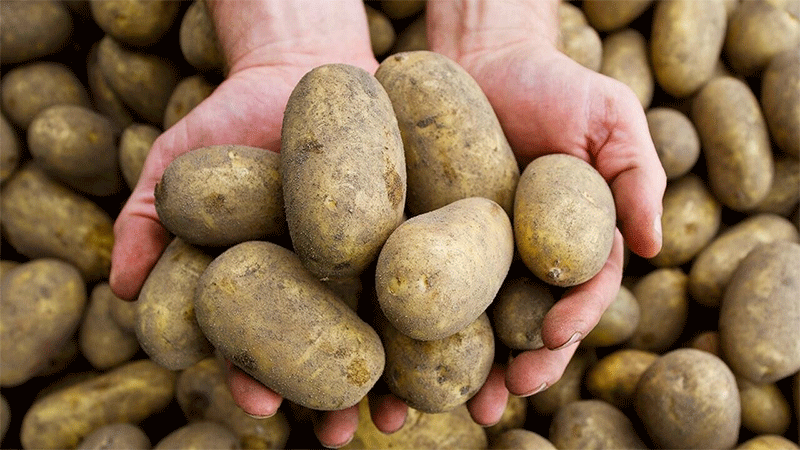
In a stark reminder of the rigid protocols governing agricultural trade, Russian phytosanitary authorities (Rosselkhoznadzor) blocked the import of a 22-tonne shipment of potatoes from Belarus at the “Krasny Kamen” border crossing in the Bryansk region on September 23. The sole reason for the rejection was an invalid phytosanitary certificate, leading to the truck being turned back and the responsible party facing administrative charges. This incident, while concerning a single shipment, highlights a critical and escalating point of focus for agricultural exporters worldwide: the stringent and unforgiving nature of modern phytosanitary regulations.
The certificate in question is not a mere formality; it is the primary international instrument verifying that a product is free from quarantined pests and diseases and complies with all import regulations. Its invalidation immediately classifies the cargo as a potential biosecurity risk. The direct consequence was a mandatory return of the potatoes to the sender, resulting in a total financial loss for the exporter, including freight costs and the value of the perishable product. This action aligns with a global trend of tightening border controls. According to the International Plant Protection Convention (IPPC)’s 2023 report, interceptions due to documentation irregularities or pest findings have increased by over 15% globally in the past five years, as countries act to protect domestic agriculture from invasive species.
For potato growers and traders, the risks are particularly acute. Potatoes are susceptible to a range of devastating soil- and tuber-borne diseases, such as potato wart (Synchytrium endobioticum) and brown rot (Ralstonia solanacearum), which can persist in soil for decades. A 2024 study in the European Journal of Plant Pathology emphasized that even a single breach in phytosanitary protocols can lead to the establishment of a pathogen, causing billions in annual control costs and lost market access. The Rosselkhoznadzor’s zero-tolerance approach, while disruptive in the short term, is a necessary defense mechanism to safeguard Russia’s entire potato industry, valued at billions of dollars.
The intercepted Belarusian shipment serves as a critical case study for all participants in the agricultural supply chain. In an era of heightened biosecurity awareness, phytosanitary documentation is as valuable as the product itself. For farmers, exporters, and logistics operators, investing in impeccable certification processes and staying abreast of the constantly evolving import requirements of target countries is not just good practice—it is fundamental to market access. This incident reinforces that there is no room for error; a failure in paperwork equates to a failure of the entire commercial endeavor and poses an unacceptable risk to the importing nation’s food security.
