
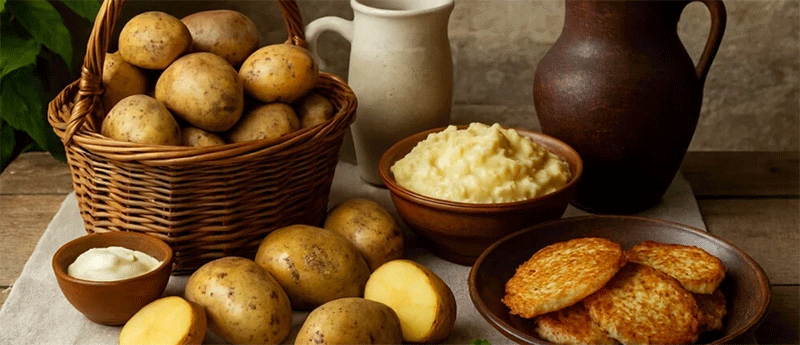
In a significant advancement for precision agriculture and value-added potato production, scientists at Belarus’s Grodno Institute of Plant Production have developed comprehensive recommendations for selecting potato varieties based on their optimal culinary applications. This research moves beyond traditional agronomic metrics to address the growing consumer demand for potatoes with specific cooking qualities and textures.
According to Nina Khokh, head of the institute’s potato department, several varieties maintain consistently high demand in Belarusian markets: “Skarb,” “Briz,” “Manifest,” and “Vektar.” These varieties are prized not only for their disease resistance and stable yields but increasingly for their culinary versatility. The research specifically categorizes varieties based on starch content and performance in different cooking methods:
For frying, baking, and crispy dishes like draniki (potato pancakes) and French fries, researchers recommend varieties with lower starch content, including “Briz,” “Pervotsvet,” and “Manifest.” These varieties maintain their structure during high-heat cooking, preventing sogginess and ensuring the desired crispy texture. This recommendation aligns with food science principles that identify ideal frying potatoes as having 13-16% starch content according to research published in the Journal of Food Science.
For creamy mashed potatoes, the institute recommends high-starch varieties such as “Bayarski,” “Vodar,” and “Vektar” which typically contain 18-22% starch. These varieties break down completely during cooking, creating the smooth, uniform texture consumers expect from quality mashed potatoes. The universal variety “Skarb” performs well for both boiling and frying, making it an excellent choice for general purpose use.
For industrial processing into starch and prepared foods, maximum starch accumulation is critical. Varieties “Bayarski” and “Vytok” lead in this category, with starch content potentially exceeding 22% under optimal growing conditions. This specialization reflects the growing segmentation of potato markets, where specific end-use requirements dictate variety selection.
The economic implications for farmers are substantial. By aligning variety selection with market demand for specific culinary applications, producers can potentially capture premium prices. Consumer studies indicate growing willingness to pay 15-20% more for potatoes specifically identified as optimal for particular cooking methods.
The Belarusian research represents an important shift toward culinary-focused variety selection that benefits all segments of the potato value chain. For farmers, this approach offers opportunities for product differentiation and potentially higher returns. For processors, it provides clearer guidelines for raw material selection. For consumers, it delivers more consistent cooking results and eating experiences. As global potato markets become increasingly sophisticated, this type of application-specific research will become increasingly valuable for maintaining competitiveness and meeting consumer expectations. The findings underscore the importance of considering end-use characteristics alongside traditional agronomic traits in variety selection decisions.
