
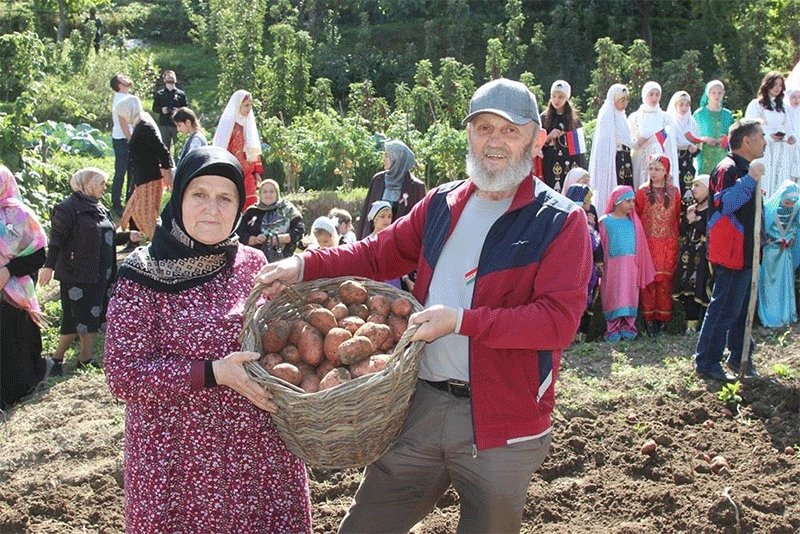
A story emerging from the village of Karata in Dagestan sounds more like folklore than agronomy: an artist’s request to a president leads to a gift of seed potatoes, which then produce a record yield of 7:1 to 10:1 in an anomalously dry summer where local varieties failed. While the human-interest element is captivating, for agricultural professionals, the performance of the Belarusian ‘Pereshacvet’ (often translated as “First Color” or “Early Bloom”) variety provides a tangible data point worthy of serious consideration. It underscores the profound impact that well-adapted, high-quality genetics can have on productivity and resilience.
The reported yield multiplication is impressive, especially under drought stress. While the cultivation method—traditional plowing with a horse—adds charm, the result highlights key varietal characteristics. Modern potato breeding, particularly in Belarus and Russia, has long focused on developing cultivars with high yield stability and stress tolerance. According to data from the International Potato Center (CIP), drought tolerance in potatoes is a complex trait linked to deeper root systems, osmotic adjustment, and canopy architecture. The success of ‘Pereshacvet’ in Dagestan’s dry summer suggests it may possess such traits, making it a candidate for drier regions. Furthermore, the mention of its excellent culinary quality—performing well both fried and boiled—aligns with the growing market demand for versatile, high-quality table potatoes. This is not an isolated case; a 2022 FAO report on Eastern European agriculture emphasized that strategic introduction of adapted varieties could increase regional potato yields by 15-25%, reducing reliance on imports and enhancing local food sovereignty.
The broader implication of this story extends to global food security and climate adaptation. The UN’s Intergovernmental Panel on Climate Change (IPCC) has consistently flagged the vulnerability of staple crop systems to increasing temperatures and erratic precipitation. In this context, the genetic diversity found in national breeding programs, like Belarus’s, becomes a crucial resource. The informal “trial” in Karata acts as a powerful validation of existing research. A study published in “Potato Research” (2023) concluded that the future of sustainable potato production hinges on integrating such stress-tolerant varieties with improved water management, even in small-scale farming contexts. The next logical step, as seen in this case, is scaling up. The villagers’ plan to expand the celebration signifies an intention to continue cultivation, which will provide more robust, multi-year data on the variety’s performance, disease resistance, and long-term adaptability to the local ecosystem.
The story from Dagestan is more than a feel-good anecdote; it is a microcosm of a critical agricultural imperative. The exceptional performance of the ‘Pereshacvet’ potato variety under drought conditions demonstrates the tangible benefits of investing in and exchanging climate-resilient genetic material. For farmers, agronomists, and policymakers, it serves as a reminder that enhancing food security in an era of climate change will rely on identifying, testing, and disseminating robust crop varieties that can turn challenging conditions into opportunities for a stable harvest.
