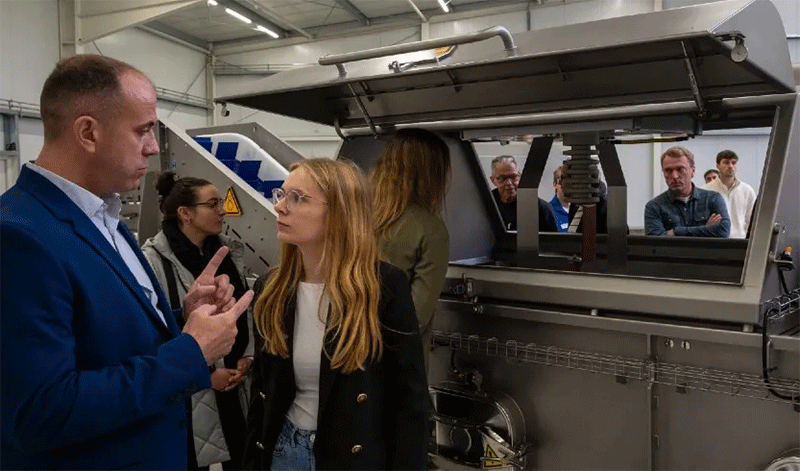
The quest for perfection in potato chip manufacturing has entered a new technological era. At the recent Elea PEF Chip Day 2025 in Germany, industry leaders witnessed firsthand how Pulsed Electric Field (PEF) technology is moving from a novel concept to an essential industrial tool. This non-thermal process, which applies short, high-voltage pulses to potato tubers, fundamentally alters their cellular structure, leading to a cascade of benefits that directly impact the bottom line and product quality. For potato growers and processors alike, understanding this technology is key to staying competitive in a market that increasingly demands efficiency and consistency.
Quantifiable Gains: The Data-Driven Case for PEF
The advantages presented for PEF are not merely theoretical; they represent significant operational improvements that have been validated in commercial settings. The cited 50% reduction in cutting force is a critical metric. This directly translates to lower energy consumption on processing lines and a dramatic extension of blade life, reducing downtime and maintenance costs. Furthermore, the technology’s ability to prevent starch leaching into process water and reduce fat absorption during frying addresses two of the most persistent quality and cost challenges in chip production.
These findings are supported by broader industry research. A 2024 review in the Journal of Food Engineering concluded that PEF pre-treatment can consistently reduce oil uptake in fried potato products by 15-30%, while simultaneously improving texture and structural integrity. This is achieved by electroporation—the creation of microscopic pores in the cell membranes—which facilitates more uniform water loss during frying. For an industry grappling with volatile oil prices and health-conscious consumers, this single benefit offers a powerful dual advantage of cost savings and a healthier product profile.
The Next Frontier: AI Integration and Scalable Solutions
The event highlighted that PEF technology is not static but rapidly evolving. The launch of the Elea PEF Advantage B Micro system, with a capacity of up to 1.7 tons per hour, is a strategic move to democratize the technology, making it accessible to smaller producers and facilitating pilot projects for larger companies. This scalability is crucial for widespread adoption across the diverse landscape of food processing.
Perhaps the most forward-looking innovation demonstrated was PiCon, a system that integrates artificial intelligence with acoustic analysis. This represents a leap from static PEF application to dynamic, real-time process control. By using AI to “listen” to the treatment process and instantly adjust PEF parameters, processors can achieve unprecedented consistency and optimize energy use, ensuring every batch meets exact quality standards regardless of natural variations in the raw potato supply.
A Strategic Imperative for Modern Processing
The developments showcased at the Elea PEF Chip Day make a compelling case that PEF is transitioning from an optional upgrade to a core component of modern potato processing. The technology delivers a clear return on investment through hard cost savings in maintenance and energy, while also enhancing product quality and alignment with consumer trends for lower-fat options.
For potato farmers, the rise of PEF underscores the ongoing need to supply high-quality tubers that can meet the exacting standards of advanced processing. For agronomists, engineers, and processors, it represents a tangible opportunity to build more efficient, sustainable, and profitable operations. The integration of PEF with AI-driven monitoring systems marks the beginning of a truly intelligent and adaptive food processing future.
