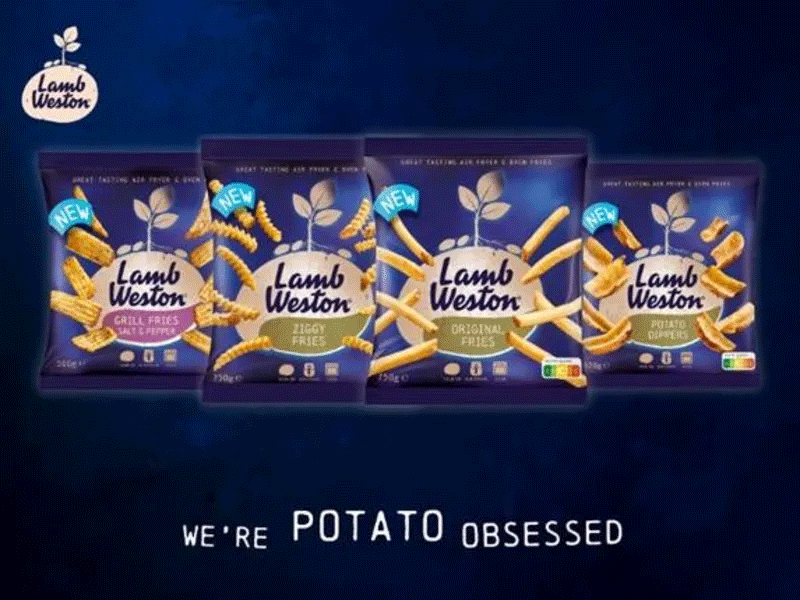
The recent retail launch of Lamb Weston in Singapore, marking its first foray into Southeast Asia’s consumer market, underscores a strategic pivot by global agri-food giants to capture value at every stage of the supply chain. For the agricultural professionals who grow the raw material, this move is significant. It reflects the growing demand for convenience and quality in a region where the frozen potato market is projected to grow at a CAGR of over 5% in the coming years, driven by urbanization and rising disposable incomes. This expansion is not merely about distribution; it’s a demonstration of how deep product innovation, honed over 75 years, creates market opportunities. Technologies like the proprietary Stealth™ batter coating are not just marketing claims but are crucial value-additions that extend shelf-life and performance in home kitchens, directly addressing consumer pain points with homemade fries.
A critical lesson from this launch lies in its holistic approach to sustainability, a factor increasingly important to consumers and investors alike. Lamb Weston’s new packaging, which is 20% thinner and incorporates 60% bio-renewable polyethylene from used cooking oil, represents a tangible step towards a circular economy. This initiative aligns with a broader industry push to reduce the environmental footprint of food packaging. According to a recent report by the Food and Agriculture Organization (FAO), sustainable packaging innovations are becoming a key differentiator, with life-cycle assessments being used to validate claims like the reported 30% reduction in carbon footprint. Furthermore, the focus on halving food waste by 2033 resonates deeply with the agricultural sector, where post-harvest losses remain a significant challenge. By ensuring product integrity and longevity from factory to home, these technological and packaging advances contribute directly to waste reduction.
The product’s certifications—Halal, vegan, and gluten-free—are also strategically critical. They are not afterthoughts but essential design specifications that open doors to diverse consumer bases in multicultural markets like Singapore. For potato growers, this signals a clear demand for raw materials that can consistently meet the stringent quality and processing specifications required for such specialized end-products. The success of a global brand in a new retail market ultimately trickles down to the field, reinforcing the need for partnerships between farmers and processors that prioritize varietal selection, dry matter content, and storage protocols to ensure the final product meets brand promises.
Lamb Weston’s entry into the Singaporean retail market is a microcosm of the future of potato agriculture. It illustrates that long-term success is built not just on bulk production, but on a tightly integrated chain that connects agronomic excellence with consumer-centric innovation and verifiable sustainability. For farmers, agronomists, and processors, the message is clear: the value of a potato is increasingly determined by the technology applied to it, the sustainability of its journey, and its ability to meet specific dietary and cultural needs. Embracing this integrated, value-added approach is essential for remaining competitive in the global agri-food landscape.
