
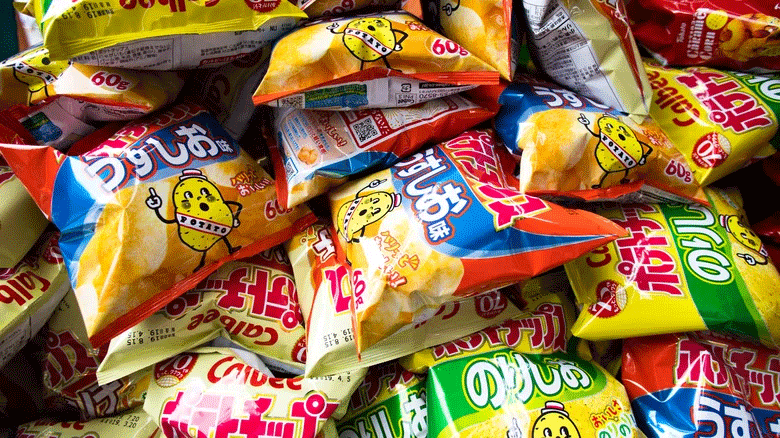
In a remarkable departure from global snack conventions, Japan’s Calbee Corporation has successfully developed and marketed “Nure Jaga” (wet potatoes) – a potato chip product that deliberately features a moist, soft exterior rather than the crispness typically associated with potato chips. This innovative approach to potato processing represents both a technological achievement and a sophisticated understanding of market segmentation that could inspire new product development in potato-growing regions worldwide.
The product transforms the conventional potato chip experience through a specialized glazing process inspired by “nure-senbei,” a traditional Japanese moist rice cracker. The chips are coated with “ama-kara shōyu,” a sweet and spicy soy sauce glaze that provides a distinctive balance of umami, sweetness, and slight tanginess. Reviewers note the chips offer a complex sensory experience: fragrant upon opening the package, with a satisfying chewiness from the glaze while maintaining a slightly crispy interior texture.
This innovation comes at a time when global potato chip markets show both maturity and opportunity. According to Mintel’s Global New Products Database, potato chips indeed account for approximately 30-35% of all new snack product launches in Western markets, with most innovation focused on flavor variants rather than texture transformation. The global potato processing market was valued at $130.2 billion in 2023 and is projected to grow at a CAGR of 4.5% through 2030, according to Grand View Research.
The technological achievement lies in achieving consistent moisture content and texture while maintaining product stability and shelf life. This requires precise control of the glazing process and likely specialized potato varieties with specific solid content and sugar profiles that can withstand the additional moisture without deteriorating. For potato producers, this suggests potential new market opportunities for varieties optimized for value-added processing rather than traditional chip production.
The market response in Japan indicates strong consumer acceptance of texture innovation in snack foods. This aligns with broader trends identified by the International Food Information Council, whose 2023 Consumer Survey found that 65% of consumers are interested in trying new food textures, and 42% specifically seek out “chewy” textural experiences in snacks.
For agricultural professionals, the success of Nure Jaga demonstrates several important principles:
- Value-added processing can create premium products from commodity potatoes
- Texture innovation represents an under-explored dimension of product development
- Cultural adaptation of traditional food concepts can yield successful modern products
- Specialized potato varieties may be needed for non-traditional processing methods
Japan’s “wet” potato chips represent more than a novelty snack—they demonstrate how reimagining conventional product categories can create new market opportunities for potato producers. The success of Nure Jaga suggests significant potential for texture-based innovation in potato products, particularly as consumers increasingly seek novel eating experiences. For farmers and agricultural researchers, this highlights the importance of developing potato varieties specifically suited to alternative processing methods and the potential for cross-cultural inspiration in product development. As global snack markets continue to evolve, such innovations in texture and processing may provide valuable pathways for adding value to potato crops and differentiating products in competitive markets.
