The upcoming New York Produce Show will feature more than just new potato varieties; it will showcase a fundamentally different approach to crop production and go-to-market strategy. Plant Grow Harvest (PGH) represents a case study in vertical integration where agronomy, branding, and logistics are not separate functions but interconnected pillars of a single business model. For producers and agronomists, their moves offer critical insights into the future of specialty crop agriculture.
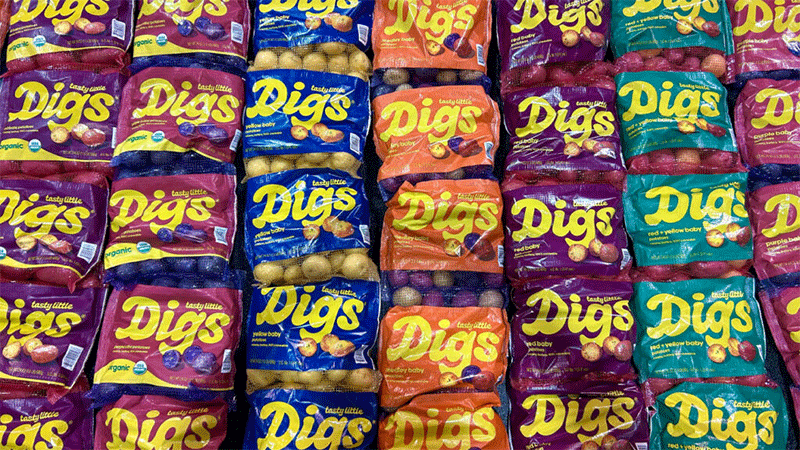
At the core of PGH’s strategy are two distinct consumer-facing brands: Tasty Little Digs, focusing on premium petite and organic varieties, and Big! Digs, a streamlined brand for mainstream russets, reds, and yellows. This segmentation directly addresses a significant market shift. According to a 2024 report by Potatoes USA, while per capita consumption of fresh potatoes has held steady, demand for value-added, convenient, and specialty varieties (like fingerlings and creamers) has grown by over 15% in the past five years. PGH’s branding creates clear market channels, moving beyond selling a commodity to marketing specific culinary experiences. This is crucial for farm gate profitability, as data from the USDA Economic Research Service shows that branded, value-added produce consistently captures higher margins than unbranded commodities.
The engine driving this branded portfolio is PGH’s expanded proprietary seed breeding program. Their focus on flavor, quality, and sustainability aligns with broader scientific priorities. Modern potato breeding, leveraging techniques like marker-assisted selection, is increasingly targeting traits beyond yield and disease resistance. A 2025 review in the American Journal of Potato Research highlights “enhanced nutritional density, improved flavor profiles, and abiotic stress tolerance” as key frontiers. By controlling its seed genetics, PGH ensures varietal characteristics that directly support its brand promises—exceptional taste for Tasty Little Digs and consistent performance for Big! Digs.
However, genetics alone don’t guarantee success. PGH’s operational backbone is its multi-region growing network, enabling a nine-month supply of fresh-dug potatoes. This logistical achievement is a direct response to a major industry challenge: supply chain volatility. Research from the University of California-Davis’s Agricultural Issues Center underscores that geographic diversification of production is a primary risk-mitigation strategy against localized climate events. PGH’s model ensures consistent volume and freshness, a powerful value proposition for retailers wary of empty shelves. For fellow growers, it underscores the importance of collaborative networks or owned operations across differing agro-climatic zones to extend market presence and smooth out production risks.
Plant Grow Harvest is demonstrating that future-facing agriculture requires a holistic systems approach. Success is no longer solely dependent on yield per acre but on the synergistic integration of consumer-centric marketing, targeted genetics, and resilient, geographically diversified production. Their model presents a compelling argument: the greatest leverage for improving farm profitability and sustainability may lie not just in the soil, but in the branding, the supply chain, and the strategic coordination of all elements from seed to supermarket.
