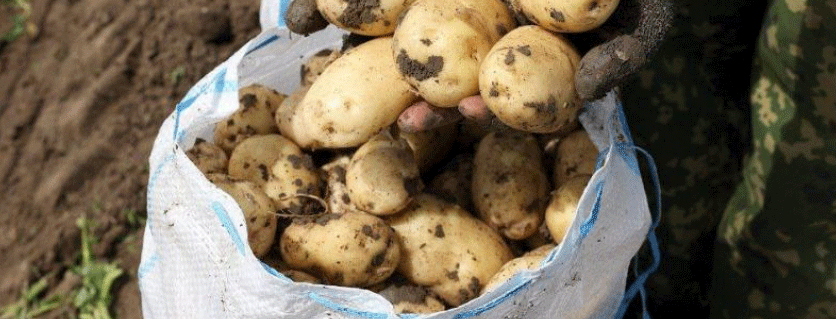
Governor Igor Babushkin recently announced the start of the potato harvesting season in Astrakhan Oblast, highlighting impressive yields and the role of state support in agricultural success. In the Kharabalinsky District, farmers are harvesting around 200 tons of potatoes daily from just five hectares, demonstrating high efficiency in production.
One standout example is entrepreneur Azat Karagushev, who dedicated 120 hectares of his vegetable farm to potato cultivation. Of these, 80 hectares were planted early, with an additional 40 hectares for a second planting. The primary variety grown is Riviera, known for its hardiness and high yield. From the first planting alone, Karagushev expects to harvest over 2,500 tons of early potatoes, which will be distributed across Astrakhan Oblast, central Russia, and northern regions.
Expanding Market Opportunities with New Varieties
To enhance marketability, farmers are introducing new potato varieties tailored for federal retail chains. This strategic shift aims to increase profitability and meet growing consumer demand.
Employment and Diversification
The Kharabalinsky farm provides jobs for over 200 people, contributing significantly to local employment. Beyond potatoes, the enterprise cultivates carrots and onions, with early onion harvesting set to begin in July.
Government Support: A Key Driver of Success
Governor Babushkin emphasized that the farm’s achievements stem from state grants, including those under the “Family Farm” program. These funds enabled the purchase of advanced storage and harvesting equipment, modern irrigation machinery, high-quality seeds, and two new tractors.
In 2024, Astrakhan Oblast has allocated 1.3 billion rubles for agricultural support, with 500 million rubles (39% of the planned budget) already distributed. Of this, 400 million rubles are dedicated to crop production development, ensuring continued growth in the sector.
Astrakhan’s agricultural sector is thriving, thanks to high-yield varieties, mechanization, and strong government backing. With sustained investment and innovation, the region is set to remain a key player in Russia’s food supply chain.
