
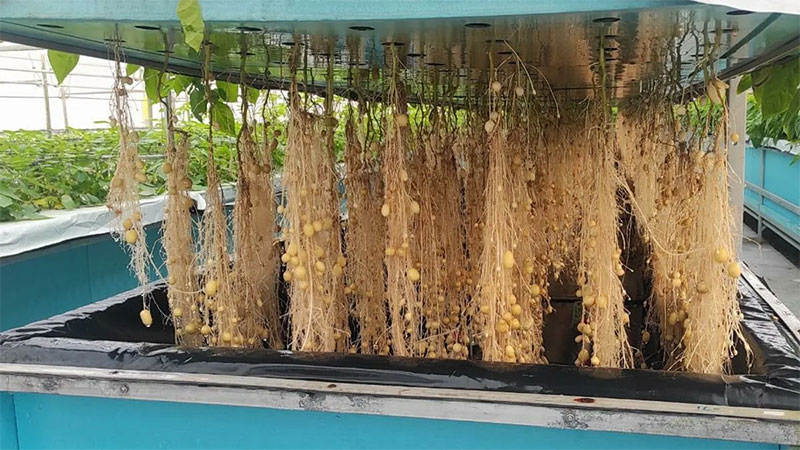
A groundbreaking initiative in India is leveraging advanced aeroponics technology to tackle the persistent challenges of potato seed production. This article explores the potential of this soil-less method to drastically reduce disease transmission and production costs, offering a scalable model for high-quality seed tuber propagation.
The agricultural sector is perpetually seeking innovative methods to enhance crop yield, reduce costs, and ensure food security. A significant development emerging from India, the world’s second-largest potato producer, provides a compelling case study in modernizing a critical part of the supply chain: seed production.
The state government of Uttar Pradesh (UP) has established Centers of Excellence in Kushinagar and Hapur with a clear objective: to produce elite-quality potato seeds using aeroponics technology. As reported, the primary motivation is to eliminate soil-borne pathogens. “Because soil is the biggest source of contamination, a soil-less medium is being used at these centres,” stated horticulture department sources. This directly addresses a major pain point for potato growers worldwide – viral and bacterial degeneration that plagues traditional seed multiplication systems.
The High Cost of Conventional Seed Production
The current system, as detailed, relies on cloning breeder seeds from the Central Potato Research Institute (CPRI) on government farms. This method is not only resource-intensive but also biologically limiting. Clones degenerate over time, typically requiring replacement every five years, leading to a constant cycle of reinvestment. Most strikingly, seed production alone can account for 50% of the total cost of potato cultivation, a significant financial burden on farmers.
The Aeroponic Advantage: Data and Global Context
Aeroponics, a process where plant roots are suspended in air and misted with a nutrient-rich solution, is not merely a theoretical alternative. Global data and research confirm its profound benefits:
- Exponential Multiplication Rates: Studies from the International Potato Center (CIP) and other research institutions show that aeroponic systems can produce 60-80 mini-tubers per plant per cycle, far exceeding the 5-10 typically achieved in traditional soil-based systems. This dramatically increases the propagation speed of new, disease-free varieties.
- Enhanced Phytosanitary Quality: By removing soil from the equation, aeroponics effectively eliminates threats from soil-borne diseases like Rhizoctonia, Streptomyces scabies, and Fusarium, as well as pests like nematodes. A 2022 study published in the American Journal of Potato Research found that aeroponically produced seed tubers had a >95% disease-free rate compared to ~70% in conventional field-grown seeds.
- Resource Efficiency: Aeroponic systems use up to 95% less water than traditional field irrigation and require significantly less space due to vertical stacking possibilities. This makes them highly suitable for regions facing water scarcity or with limited arable land.
- Reduced Degeneration: While not eliminating the need for a seed renewal cycle, producing Generation 0 (G0) mini-tubers in a completely controlled environment significantly slows the rate of viral degeneration in subsequent field generations, ensuring farmers get more productive cycles from their seed stock.
Cultivating a More Profitable Future
The initiative in Uttar Pradesh is a significant step toward modernizing agriculture through precision technology. For farmers, agronomists, and farm owners, aeroponics represents more than just innovation; it is a practical solution to a core economic problem. By producing higher yields of superior, disease-resistant seed tubers at a fraction of the conventional cost and resource input, this technology has the potential to slash the overall cost of potato production, increase profitability, and enhance the sustainability of one of the world’s most vital food crops. The success of these centers could provide a replicable blueprint for potato-growing regions globally.
