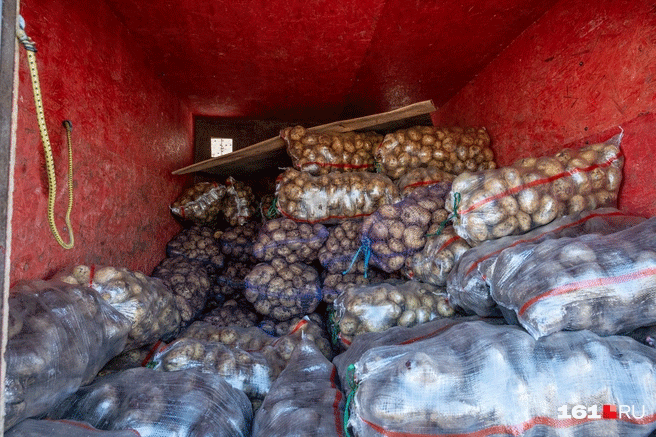
A stark warning from a leading Russian potato producer, Nikolai Yuzefov, owner of a 7,200-hectare farm in the Rostov region, paints a dire picture for the country’s potato sector. The core issue is a devastating price squeeze. Yuzefov reports that domestic producers are selling potatoes at 10-12 rubles per kilogram, while the production cost sits at 20 rubles/kg—a loss of nearly 50% on every unit sold. The immediate cause, he states, is a record import volume of approximately 850,000 tonnes from Egypt and China, a figure he claims is triple the normal level. This influx has saturated the market during the domestic harvest season, collapsing wholesale prices and forcing growers to sell at a loss simply to clear inventory. The situation is so severe that Yuzefov warns of widespread bankruptcies if imports continue at this scale into the next season.
Beyond the import shock, the crisis is compounded by a perfect storm of agronomic challenges and runaway input inflation. Domestically, while the overall harvest was good, regional issues persist: drought impacted the Don region, while excessive rain in central Russia exacerbated nematode and scab problems, leading to poor storability in some areas. More critically, Yuzefov details an unsustainable rise in operational costs. Seed potato prices have doubled from 35-40,000 to ~70,000 rubles per tonne. Logistics costs have tripled, with a truckload of seeds now costing 120,000 rubles compared to 37,000 previously. Furthermore, fuel prices have risen 30% in recent months, a timing Yuzefov calls punitive as it coincides with peak harvest and sowing seasons. This cost-price disconnect has crippled farm economics. Even contract growing for processors like PepsiCo’s Lay’s offers little respite, with weak end-consumer demand for chips and low contract prices failing to provide a profitable outlet. The desperation is palpable, with Yuzefov noting that farmers are now trying to sell land at minimal prices simply to survive.
The Russian potato crisis is a textbook case of how short-term trade policy can destabilize a strategic agricultural sector, especially when layered atop structural cost inflation and phytosanitary challenges. The massive import volume, intended perhaps to ensure food security or manage prices, has instead created a profound insecurity by jeopardizing the future of domestic producers. The solution requires a multi-pronged approach: rationalized import quotas timed to avoid market cannibalization during the local harvest, targeted support to mitigate spiraling input costs, and a renewed focus on investing in domestic seed systems and storage infrastructure to improve competitiveness. Without swift and coherent policy intervention to protect producers from both external market shocks and internal cost pressures, Russia risks the rapid erosion of its own potato production capacity, trading long-term food sovereignty for short-term market glut.
