
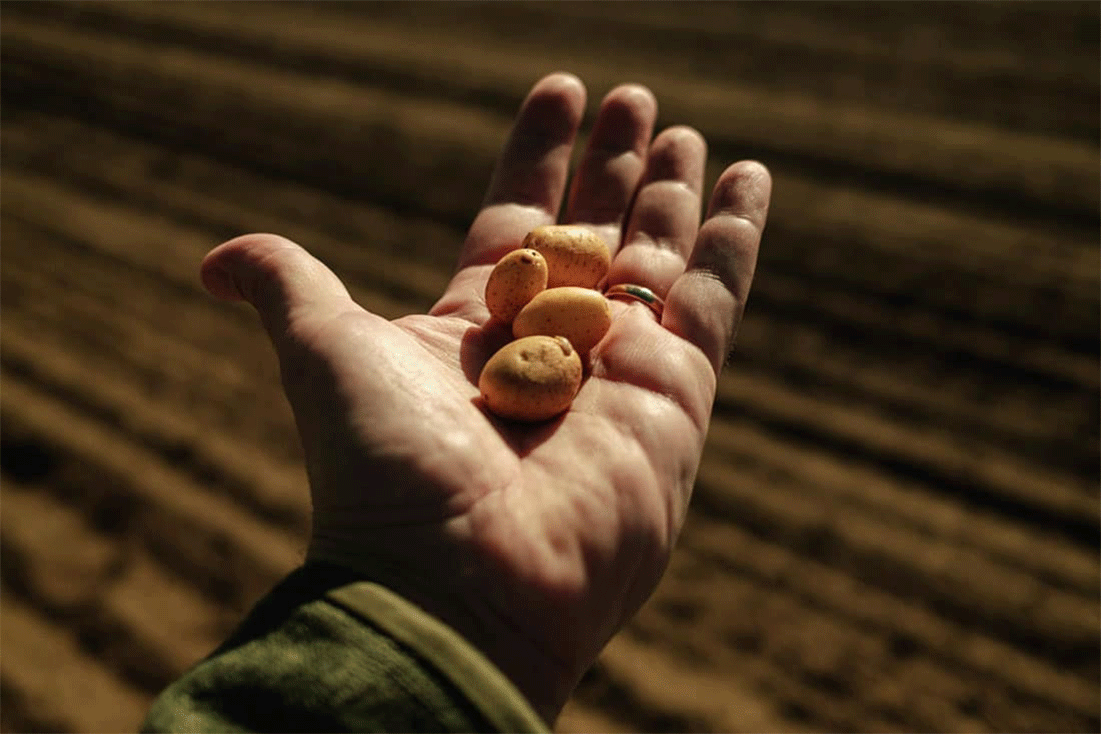
For potato growers and the industry that supports them, the fight against Phytophthora infestans, the pathogen responsible for late blight, is a constant and costly battle. This disease devastates crops globally, costing an estimated €6-7 billion annually in yield losses and control measures. Against this backdrop, a recent announcement from Project Opportunity offers a glimpse of a more resilient future. The consortium has successfully completed its first field trials in Sweden and Denmark, testing starch potatoes genetically enhanced using CRISPR-Cas technology for improved late blight resistance.
The project’s progress is notable for its speed. As highlighted by Hans Berggren, Secretary of Project Opportunity, the team went from first seedlings in a greenhouse to field-grown “mini-tubers” within a single growing season. This rapid timeline underscores one of the key advantages of New Genomic Techniques (NGTs) over conventional breeding. The consortium, comprising 12 partners across the potato starch value chain, has now initiated seed multiplication activities to produce sufficient material for comprehensive field trials planned for 2026. The edited variety is ‘Kuras,’ a widely cultivated starch potato provided by partner Agrico. This strategic choice ensures that any successful trait can be rapidly integrated into a proven, high-demand cultivar. While optimism is high, the scientific process remains rigorous. Sjefke Allefs, a potato breeder at Agrico, cautions that it will take several more years to verify the results and identify the single best-performing edited line for optimal blight tolerance.
This European initiative is part of a broader global shift. For instance, scientists at the John Innes Centre in the UK have also developed a CRISPR-edited potato with enhanced blight resistance by targeting specific susceptibility genes. The success of these independent projects strengthens the case for NGTs as a precise tool for crop adaptation. The timing is critical, as climate change is altering disease pressure and patterns, making traditional control methods less predictable and often more expensive.
The initial field trials by Project Opportunity represent a pivotal moment for European agriculture. While not yet a commercial solution, they provide tangible proof that CRISPR technology can be deployed swiftly to address urgent agronomic challenges. For farmers and the industry, this progress signals a potential pathway to significantly reduced fungicide applications, lower production costs, and greater yield stability. The coming years of validation will be crucial, but the seeds of a blight-resistant future are already in the ground.
