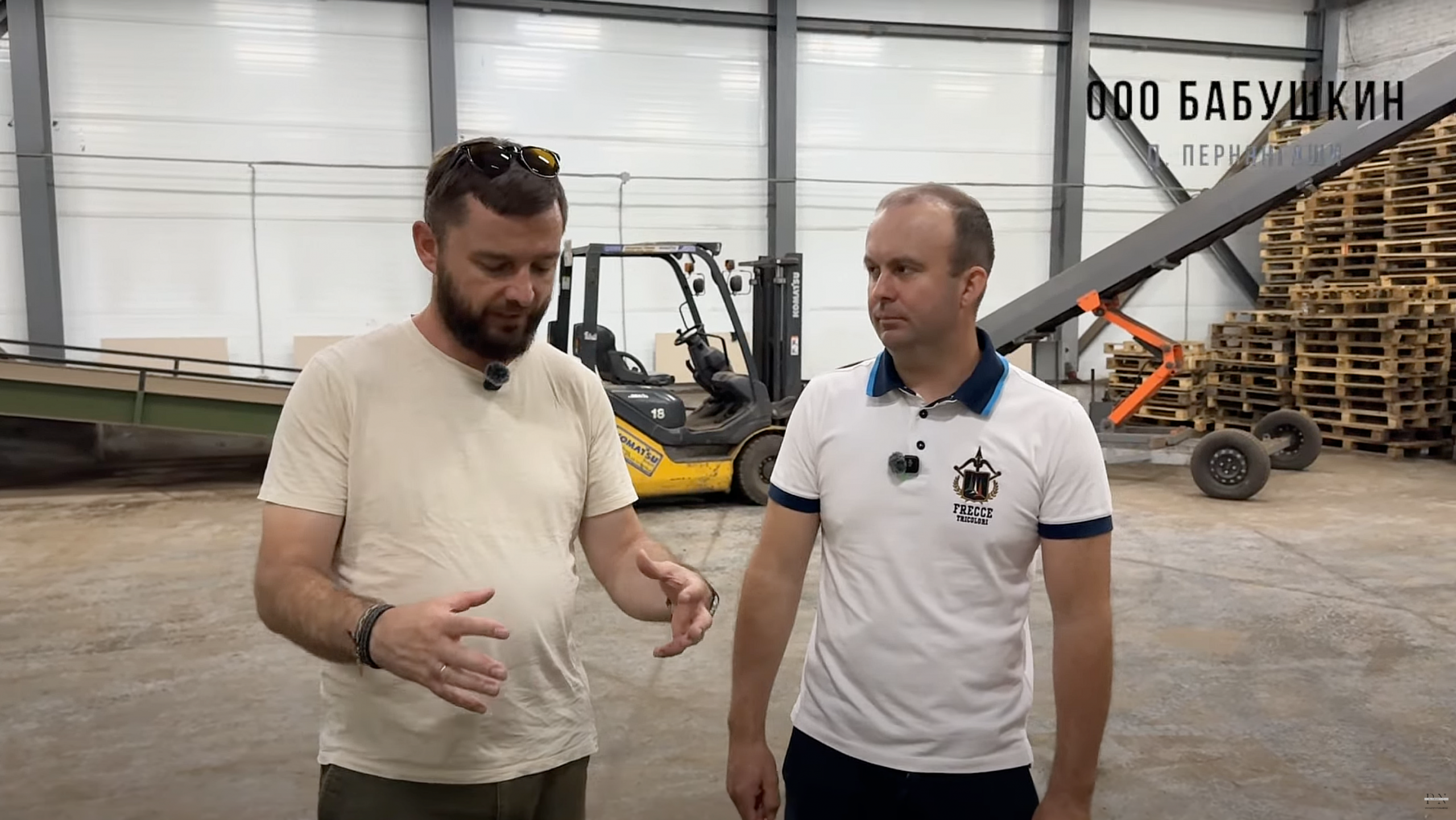
In Baturino (Tomsk district), farmer Denis Kolpakov runs a mixed enterprise with a ~1,300 ha land bank and 270 ha of potatoes (target 300 ha). Sales split between regional retail chains (Tomsk) and processing: Kolpakov supplies the Novosibirsk PepsiCo plant with chipping potatoes (his 3rd season on that program).
The 2024 season was the hardest Denis remembers: floods, heat, and a shortfall that halved usual tonnage. Spring 2025 swung from early heat to late frosts and snow, yet planting finished on time; potatoes now range across ~10 varieties (Russian, imported, and chipping types).
Fields & irrigation
Irrigation today is modest (one hose-reel + pump), but the plan is to shift potato production to a 50–80% irrigated model—intensifying output “on the same acres.” Cereals (wheat) and rapeseed support the rotation.
Storage & packhouse
The farm still uses semi-underground Soviet-era stores (good thermal inertia), whitewash + copper sulfate and smoke bombs for sanitation, and piles up to ~4 m. A temporary insulated hangar (~1,200 t, foam 15–20 cm) bridges peaks. Seed is kept in smaller dedicated rooms (~120 t each). Packing runs 2.5–25 kg, with 25 kg the retail standard. For PepsiCo, most chipping lots ship straight off the harvester through the grader in autumn (storage space is tight), though the buyer increasingly asks for washed product later into the season.
Costs, prices, and last season’s reality
Denis pegs table-potato cost at ₽15–20/kg; a comfortable sell price starts near ₽25/kg. He’s seen crashes down to ₽6–8/kg “a few years back.” In 2024, the farm harvested ~3,000 t vs a normal 5–6 thousand tonnes, with a big share falling below chain calibers—one reason stocks were largely sold before New Year (unusual; typically they supply schools/camps into summer).
5-year focus
Hold potatoes near 300 ha, push yield + quality, expand irrigation, and keep sharpening post-harvest: gentler handling (lined trailers on hydro-suspension), better grading, and selective storage upgrades.