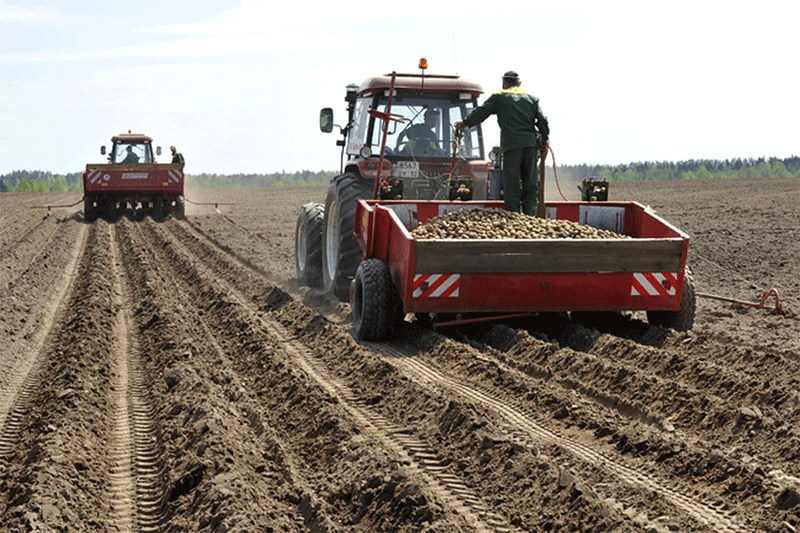
In a striking contrast to broader agricultural trends, Belgium’s potato sector is demonstrating remarkable resilience and strategic importance. According to preliminary 2025 data from Statbel, the Belgian statistical office, the country’s total agricultural land area has decreased by 0.7% compared to 2024. However, defying this overall contraction, potato cultivation areas have surged by more than 7% for the second consecutive year. This sustained expansion is driven by a powerful combination of optimal spring weather conditions and robust demand from the potato processing industry, positioning the humble spud as an increasingly vital crop in Belgium’s agricultural economy.
Analyzing the Drivers: Market Forces and Agricultural Strategy
The consistent growth in potato acreage amid declining agricultural land highlights several key dynamics. The high demand from processing industries is a primary economic driver. Belgium hosts major global potato processors, including McCain and Clarebout, which require a steady, large-scale supply of quality potatoes for frozen fries and other products. This creates a reliable market for farmers, making potatoes a financially attractive option compared to more volatile commodity crops. The European Potato Processors’ Association (EUPPA) reports that continental demand for processing potatoes remains strong, with consumption patterns favoring convenience foods.
Furthermore, the mention of optimal spring weather conditions points to another critical factor: climate adaptability. While many crops face challenges from changing weather patterns, potatoes have demonstrated relative resilience in certain regions. Research from the Flemish Research Institute for Agriculture and Fisheries (ILVO) indicates that well-managed potato systems can achieve stable yields even under variable spring conditions, making them a calculated risk for farmers. This expansion occurs despite the well-documented challenges of potato cultivation, such as its intensive input requirements and susceptibility to diseases like late blight. The fact that farmers are willing to allocate more land to potatoes suggests that the perceived economic returns outweigh these risks and complexities.
A Sign of Strategic Specialization
The contrasting trends in Belgian agriculture—declining total farmland but expanding potato production—signal a move toward greater specialization and market-oriented farming. Potato cultivation is becoming a strategic focal point, leveraging Belgium’s strong processing sector and the crop’s adaptability to secure farmer income in a competitive environment.
For the agricultural community, this underscores the importance of aligning production with stable, value-added market channels. The Belgian example demonstrates that even in regions facing overall land pressure, specific crops with strong industrial linkages can thrive. However, this specialization also necessitates continued investment in sustainable practices, such as crop rotation and integrated pest management, to ensure the long-term viability of this expanding potato production. The spud’s success story in Belgium offers a compelling case study in how agricultural sectors can adapt and grow by strategically responding to market signals and environmental conditions.
