
Potato growing & erosion problems (part 1)

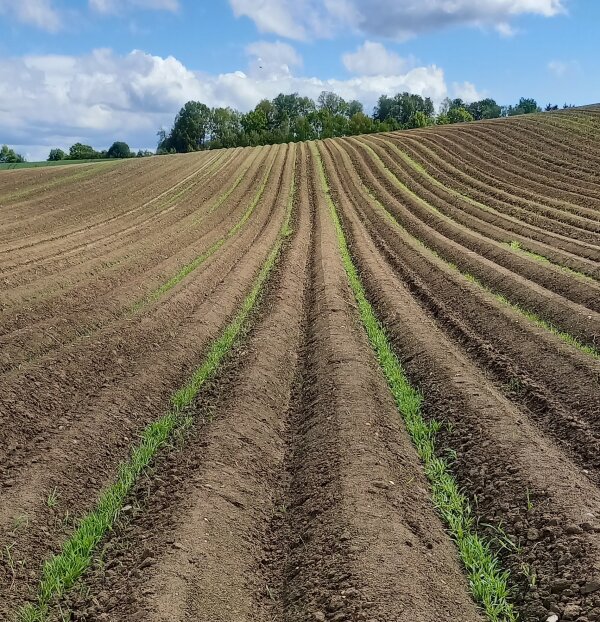
When planting the inter-dams in potato cultivation, erosion protection is in place from the start. When winter barley or spring barley is sown, the small inter-dams are held together and protected by the roots. This allows more water to seep into the soil during heavy rainfall.
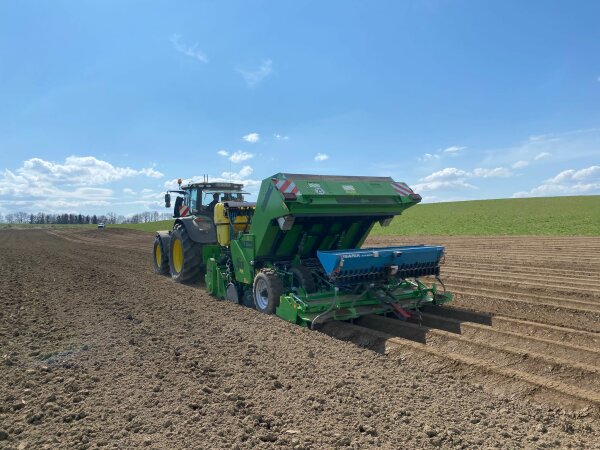
This method is also suitable for farms that do not want to or cannot mulch sow potatoes. The technology can be mounted on a hilling device, among other things.
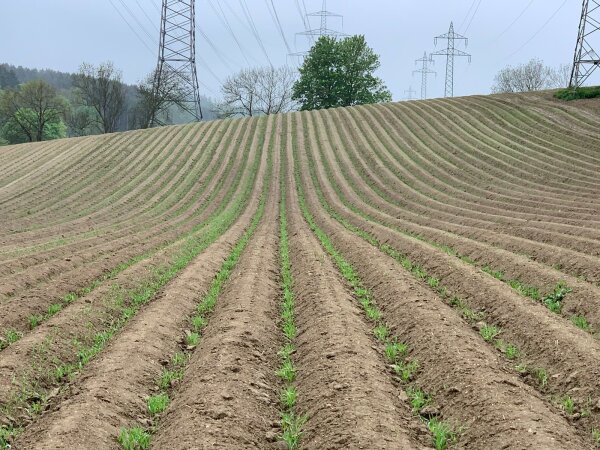
Findings from 2022 Field day at the Pabst farm
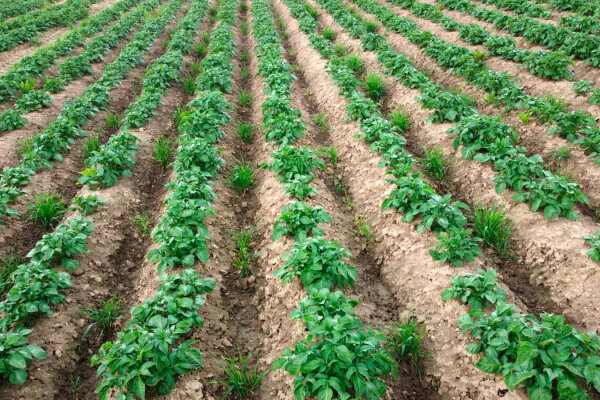
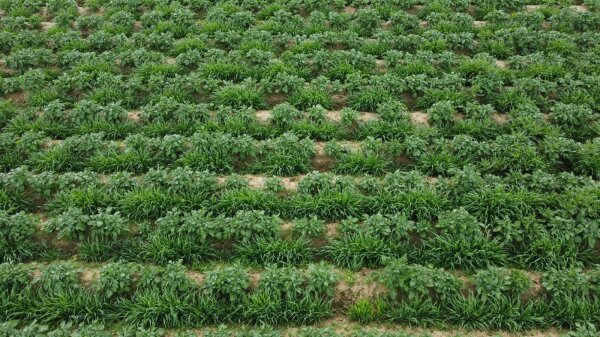
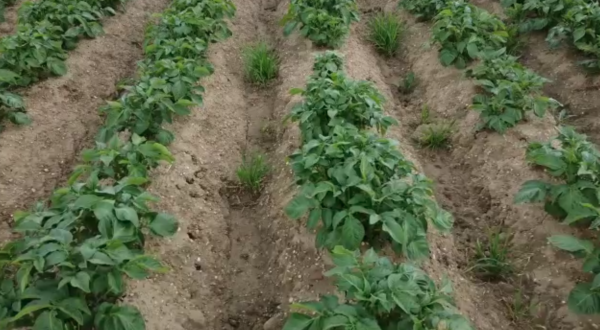
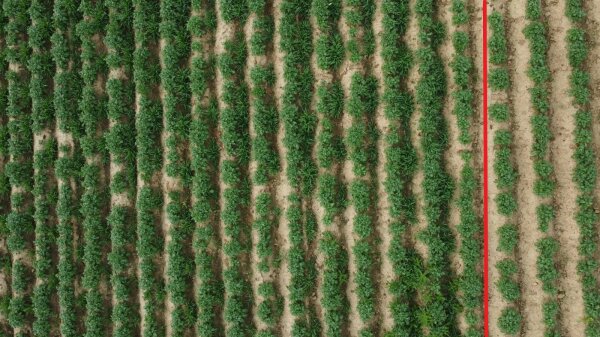
Photo: Stadler
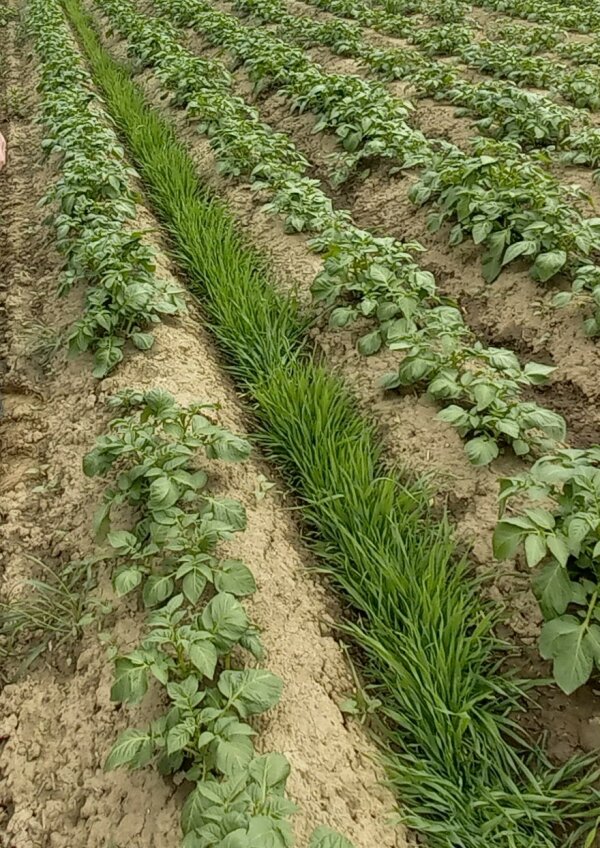
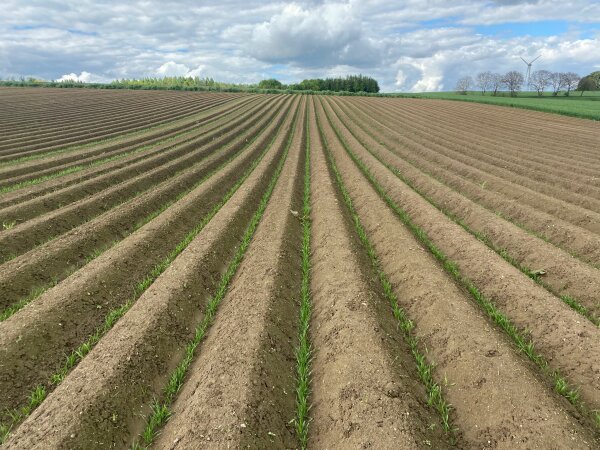
Greening of the dam base without cross dams
Here, winter barley/oats were sown by hand between the ridges at a rate of around 50kg/ha. Erosion protection only takes effect after the grain has sprouted. Once the grain has reached about the height of the ridge, it must be killed.The ridge bottom vegetation can also be sown after hilling or ridge milling.
Erosion protection in organic farming
In organic farming, the challenges in terms of erosion protection in potato cultivation are even greater. Due to mechanical or thermal weed control, the soil is repeatedly moved and loosened by hoeing and harrowing and is therefore susceptible to erosion over a long period of time. This requires special measures with regard to field division, slope division, slope length reduction and cultivation measures. With sensible and well-considered cultivation planning, potatoes can also be grown economically on sloping sites. The effort required here is of course greater than on flat areas. The aim of the measures must always be to keep as much rainwater as possible on the area.
Weekdays. Unsubscribe in one click.
Due to the scheduled maintenance work such as hoeing and harrowing, it is not advisable to create cross ridges. The best time to sow the grain is immediately after it has been laid or after the first hilling and harrowing.
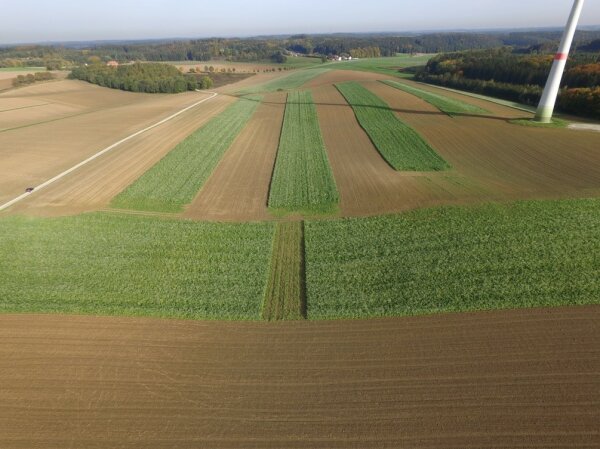
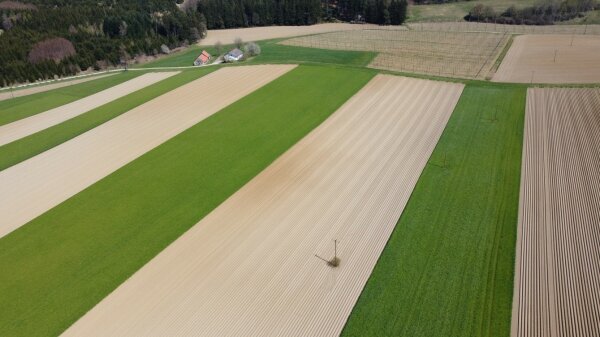
Slope length reduction and plot division
Heavy rain and periods of heat are the harbingers of climate change, which is becoming more and more noticeable. Water has become the most important production factor, as its absence reduces the effect of other purchased production resources. It is therefore important to keep the rainwater on the field, store it and use it for crop production.
This is a challenge in row crops on large and long fields. When growing potatoes, the water concentrates in the furrows and is therefore even more erosive.
By alternating summer crops (row crops) and winter crops, the risk of erosion in heavy rain is significantly reduced. If the field width is several times the working width, then effective management is possible even with alternating crops on one field.Particularly critical areas in a field that are susceptible to erosion can be temporarily created as drainage troughs or drainage barriers. If, for example, the entire field is planted with winter cover the following year, these can be removed again.

Global Potato Brief
Top five stories, prices, disease alerts and events. Weekday mornings, no advertising.
Linked in this material
- Sections
- AGRONOMIC ARCHIVEEurope
Related stories
Kenya Tightens Potato Seed Rules with New Bacterial Test, as Farmers Battle Hidden Rot Beneath the Soil
Efficacy of eradication measures on Dickeya solani, the virulent potato blackleg and soft rot bacterial pathogen in Finland


