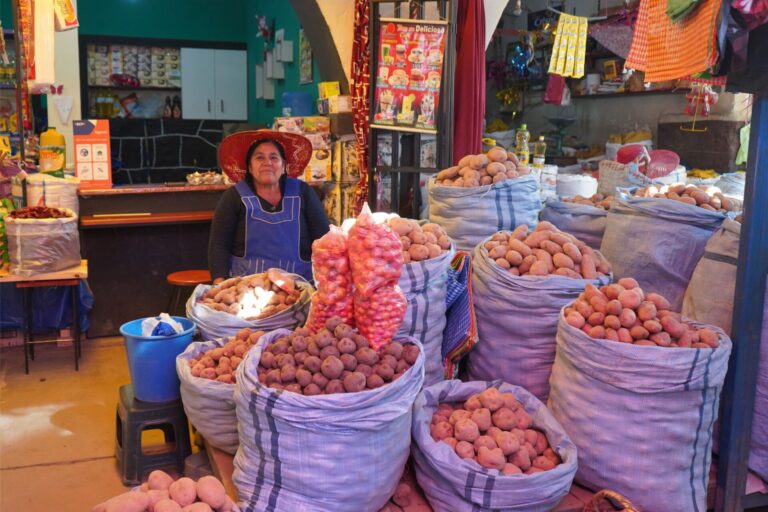

Peru: Lima to Host the V National Potato Congress to Drive Research, Security, and Export Innovation

The national potato sector in Peru—the historic birthplace and genetic cradle of the world’s most famous tuber—is preparing for its premier institutional event. From June $22$ to $24$, $2026$, the Auditorium of the National Institute of Agricultural Innovation (INIA) in Lima will host the V National Potato Congress (V Congreso Nacional de la Papa).
Co-organized by INIA and Fontagro, the three-day scientific and commercial gathering aims to foster a high-level exchange of agronomic knowledge, promote cutting-edge genetic research, and strengthen long-term food security, climate resilience, and economic sustainability for farming communities nationwide.
Below is an analytical overview of the current production figures, regional contributions, and export dynamics shaping the potato value chain in Peru ahead of this landmark congress.
Weekdays. Unsubscribe in one click.
Unprecedented National Yield and Production Benchmarks
The congress comes at a time of exceptional performance for the domestic potato sector. According to data released by the Ministry of Midagri (Ministry of Agricultural Development and Irrigation), Peru’s national potato sector achieved robust outcomes during the $2025$ agricultural year:
- Total Harvested Output: National production reached an impressive total of
$6.9$ milliontons of fresh potatoes. - Cultivated Footprint: This high yield was achieved across a total harvested surface area of
$373,332$hectares. - Productivity Average: Due to improved seed technologies and optimized field management, the national average yield reached a healthy
$20.6$tons per hectare.
A Major Engine of Socio-Economic Development
Beyond its dietary importance as a nutritional staple, potato farming is a vital economic pillar for rural Peru, maintaining a massive labor footprint:
- Family Farming Focus: The crop serves as the primary livelihood for more than
$711,000$family farms, establishing food security in rural regions. - Geographical Distribution: Potato cultivation is actively managed across
$19$of Peru’s administrative regions, connecting coastal, highland, and high-altitude Andean ecosystems. - Employment Footprint: The sector generates approximately
$25$ milliondaily work wages (jornales) annually, serving as a primary source of indirect employment throughout agricultural supply chains. - Dominant Growing Hubs: The major contributors to Peru’s national potato volumes are centered in the departments of Cajamarca, Junín, Huánuco, Cusco, Ayacucho, Apurímac, and Puno.
Double-Digit Growth in the Processed Export Market
While fresh potatoes satisfy the vast majority of local consumer demands, Peru has rapidly scaled up its industrial capacity. The processed potato segment has achieved remarkable international success:
- Export Surge: In
$2025$, shipments of processed potato products (including frozen, pre-fried, and value-added culinary goods) grew by$19\%$compared to the previous year. - Export Volumes: Total international dispatches of processed potato products surpassed
$11,000$tons. - Primary Global Markets: The leading international destinations driving this export expansion include neighboring Bolivia and Brazil, along with Canada, the United States, and various key markets in Europe.
Information Sources
This article was prepared using specialized agricultural reports from the portal Argenpapa. The primary source of data is the official publication:
- Argenpapa News Portal: Perú: Se realizará en Lima el V Congreso Nacional de la Papa (News Item #17359), featuring official statistics and announcements originally published by the authoritative Peruvian agricultural agency Agronegocios / Agraria.pe (agraria.pe).