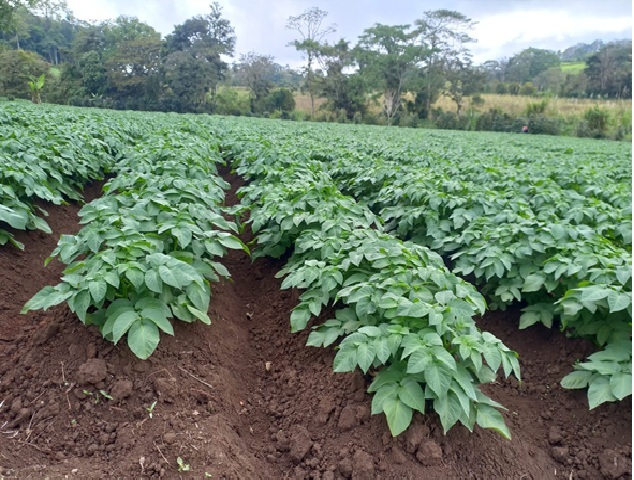
Nicaragua’s agricultural sector reports positive news this season: potato production is sufficient to guarantee the supply of national markets. After a year marked by climate instability across Central and South America, Nicaragua stands out for maintaining stable yields and ensuring product availability for consumers.
Authorities and producer associations confirm that harvest volumes allow for consistent distribution to wholesale and retail markets, avoiding shortages or abrupt price spikes.
What Is Supporting Nicaragua’s Stable Potato Supply?
Favorable Growing Conditions
Compared to neighboring countries hit by frost, drought or excessive rain, Nicaragua benefited from relatively stable weather during key growth stages.
Improved Production Practices
Producers highlight better use of:
- certified seed,
- irrigation systems,
- pest and disease management strategies,
- soil fertility programs.
These improvements strengthened crop uniformity and yield consistency.
Coordinated Market Distribution
Local supply chains have become more organized, enabling faster movement of potatoes from production zones (such as Estelí and Jinotega) to main consumer markets.
Impact on Domestic Markets
No Shortages Expected
Wholesalers confirm that incoming volumes are sufficient for continuous market coverage.
Stable Prices
Unlike Brazil, Mexico and Colombia — where prices have recently surged due to climate events and import pressures — Nicaragua is experiencing relatively steady price behavior.
Support for Rural Economies
Stable production ensures predictable income for families dependent on small-scale potato farming.
This aligns with regional trends highlighted on Potatoes News showing that consistent supply chains can buffer communities from broader agricultural volatility.
Potatoes News Analytics: Why Nicaragua’s Case Stands Out
Across Latin America, many countries have reported disruptions:
- Brazil faces quality losses due to rain,
- Mexico reduced acreage due to low prices,
- Honduras and Bolivia struggle with climate and import pressures.
Nicaragua’s stability suggests several structural strengths:
Better Adaptation
The use of improved seed and irrigation has strengthened resilience.
Strong Local Market Orientation
Most production is focused on domestic consumption rather than risky export markets.
Smaller but More Flexible Supply Chain
Nicaragua’s potato sector, though modest in scale, adjusts more quickly to changing conditions.
What Producers Expect for the Coming Months
Continued Regular Supply
Growers anticipate meeting market needs during the upcoming distribution cycles.
Moderate Price Behavior
Producers expect prices to remain within typical seasonal ranges barring unexpected climate events.
Potential for Increased Investment
Stable conditions may encourage producers to reinvest in seed quality, irrigation and storage.
Conclusion
Nicaragua’s potato sector offers a rare example of stability in a year filled with regional agricultural challenges. Strong production, organized distribution and favorable conditions have ensured that the country maintains steady market supply and price stability.
The key question now is:
How can Nicaragua build on this momentum to further strengthen resilience and secure long-term growth in its potato sector?
Nicaragua: Producción de papa garantiza abastecimiento de mercados
argenpapa.com.ar/noticia/16775-