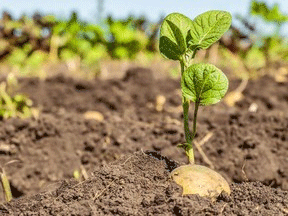
Managing soil pH is one of the most effective strategies to prevent potato diseases like common scab. While compost and mulch can enhance potato health, applying lime may backfire—especially in sandy, coastal soils where disease pressure is high.
Growing healthy, blemish-free potatoes requires more than just good seed and water. Soil chemistry—especially pH levels—plays a critical role in determining whether your crop stays clean or succumbs to diseases like common scab, a widespread bacterial infection caused by Streptomyces scabies. Though it doesn’t impact yield, scab reduces tuber marketability and consumer appeal, especially in fresh market sales.
Why You Should Avoid Lime in Potato Beds
Lime is commonly recommended to raise soil pH, making soil less acidic. This is helpful for many vegetables—but not for potatoes. Here’s why:
- Scab thrives in alkaline soil conditions, typically when the pH exceeds 5.5 to 6.0, especially in light, sandy soils common to coastal gardens.
- Research from Washington State University Extension confirms that Streptomyces activity increases significantly as soil pH approaches neutrality (7.0) or goes alkaline.
- Applying lime can inadvertently shift the pH toward this danger zone, creating ideal conditions for scab development.
Instead, potato growers should maintain a slightly acidic soil pH between 5.0 and 5.5, where scab organisms are much less active.
Alternative Soil Strategies for Potato Health
Here are evidence-backed ways to prepare your soil and reduce scab risk:
1. Use Compost, Not Lime
- Add well-rotted compost to improve soil structure and moisture retention.
- Compost can help buffer pH without pushing it into the alkaline range.
2. Incorporate Coconut Coir
- Especially useful in very sandy or coastal soils, coconut fibre (coir) helps retain moisture and prevent soil from drying too quickly—conditions that favor scab development.
3. Mulch to Moderate Temperature
- Once tubers begin forming, apply loose mulch (e.g., straw or shredded leaves) to cool the soil, retain moisture, and shade developing tubers.
- Cooler, moist soil reduces scab risk and promotes uniform tuber development.
4. Crop Rotation
- Avoid planting potatoes in the same spot more than once every 3–4 years.
- Rotate with brassicas, legumes, or grains to naturally suppress soil-borne diseases.
Supporting Evidence
According to a 2023 study published in the journal Plant Disease, managing soil pH is one of the most cost-effective cultural controls for common scab. Researchers found that scab severity dropped by 40–60% in controlled trials when soil pH was adjusted below 5.5 without chemical inputs.
The University of Idaho also advises growers to test soil pH prior to planting, and avoid liming potato fields unless absolutely necessary for long-term field management of other crops.
To keep your potato crop disease-free and market-ready, focus on maintaining acidic soil, avoiding lime, and using organic amendments like compost and coir. With strategic mulching and thoughtful crop rotation, growers can minimize scab pressure and improve tuber quality without relying on chemical treatments. As climate and soil variability continue to challenge producers, understanding the microbiology of your soil will remain central to growing healthier, more resilient potato crops.