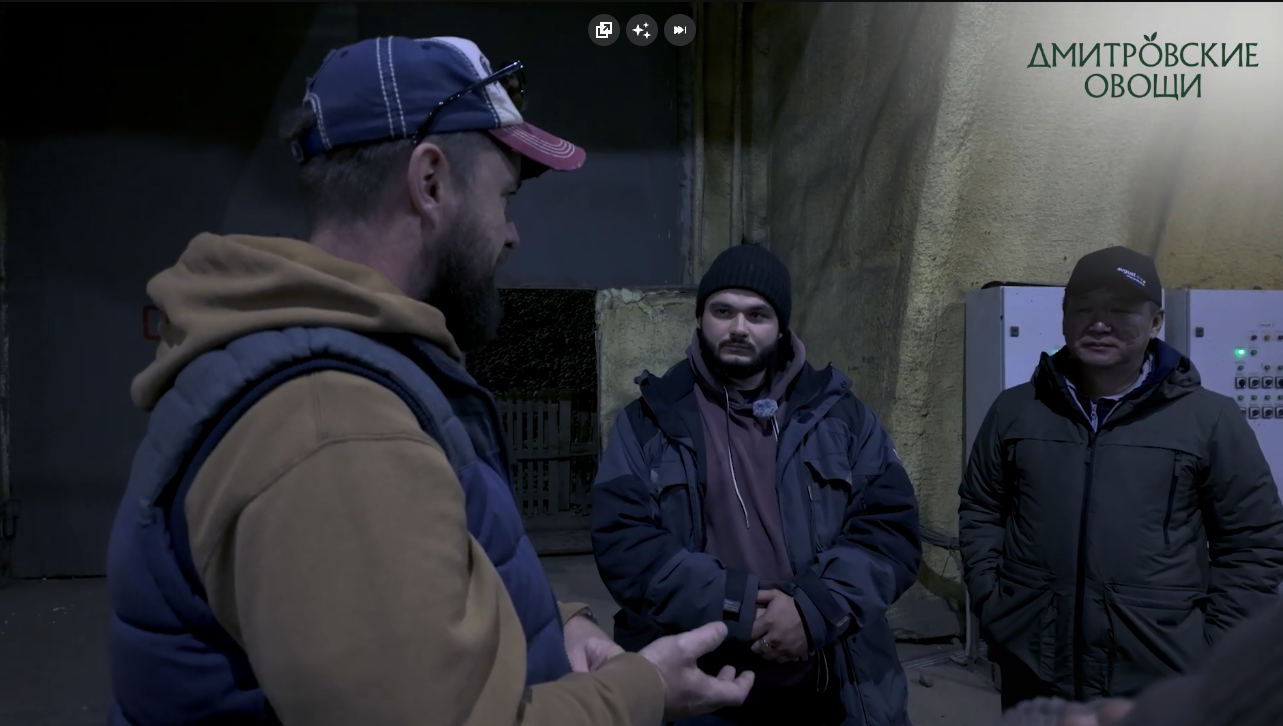
The International Potato Tour continues its journey across Kazakhstan, exploring the technologies, agronomic decisions, and real-world challenges faced by potato growers. This time, the team visits Irtyshskoye Farm in Pavlodar Region — a location that demonstrates how farmers adapt to changing weather, labor shortages, and post-harvest demands while working closely with crop-protection partners such as Avgust.
A Season of Large Tubers and Tight Deadlines
According to the farmers at Irtyshskoye, the 2024 season brought unusually large tubers, which affected both logistics and commercial sorting. The final harvest was completed on October 2, only hours before the first frost arrived — a rare case in which weather conditions fully cooperated.
Inside the storage facility, temperatures are maintained at 4–6°C, depending on the purpose of the tubers.
- 3.5°C for seed potatoes
- 4–4.5°C for table potatoes
Humidity control is critical. As the team noted, insufficient relative humidity can quickly reduce tuber weight and quality, leading to significant economic losses.
The “Combi-Bunker” Debate: Is the Investment Worth It?
One of the key discussions during the visit revolved around the high-end combi-bunker, a cleaning and soil-separating unit priced at nearly €300,000. While the system can reduce labor and improve sorting efficiency, the investment makes sense only when the farm’s throughput and scale justify such machinery.
The technology uses a combination of steel and semi-rubber rollers:
- Potatoes bounce off the rollers
- Soil does not
- Staff remove only the largest clods manually
Neighboring farms have adopted the system, and Irtyshskoye is considering whether the increased efficiency outweighs the cost.
Labor Optimization in Storage
Currently, the farm operates with:
- 12 workers on sorting lines
- Additional loaders and two operators
- A “mole” conveyor system for unloading
- Standard loaders for moving potatoes
However, experts suggested a more efficient unloading process using a loader and bunker system instead of long belt lines. This could:
- Reduce human labor
- Increase unloading speed
- Minimize bruising
- Improve consistency during night shifts
As demonstrated at other farms such as Agroterra, high airflow and proper ventilation greatly reduce losses and maintain quality.
Seed Quality: Diagnostics Before Planting
A recurring theme in the discussion is the importance of verified seed material:
“Healthy material must be tested. You cannot rely on promises — you must send samples to a certified laboratory.”
Seed diagnostics in Kazakhstan are available in Almaty, where bacterial and fungal pathogens can be identified in a single test (approx. 50,000 KZT). These analyses help design a targeted plant-protection strategy for the season.
Bacterial Diseases and Nematodes: Hard Lessons for Growers
Once bacterial infections spread in the field, they are almost impossible to stop. The only effective mitigation involves:
- Avoiding contamination at planting
- Maintaining a strict hygiene protocol
- Implementing multi-year field quarantine
- Rotating crops responsibly
For nematode control, agronomists recommend:
- Oilseed mustard
- Rapeseed
- Buckwheat
- Rye
Lucerne (alfalfa), despite popular belief, does not reduce nematode pressure and may introduce additional soil pathogens.
The Ideal Crop Rotation
Experts recommend a minimum 3-year rotation, ideally 4–5 years:
- Potatoes
- Rapeseed
- Grain crops
- Optional: Oats for phytosanitary effect
Corn remains a challenging predecessor due to severe soil compaction and stone formation.
The Economics of Scale: 300 or 400 Hectares?
One of the strongest insights from the discussion was the economic trade-off between cultivated area and production efficiency.
A grower may achieve:
- 30 t/ha on 400 hectares, or
- 40+ t/ha on 300 hectares
If machinery, labor, and timing are optimized, smaller can be more profitable.
Large-scale farms operating 1,300+ hectares with multiple self-propelled harvesters confirmed the same pattern — yield is only valuable when it is stored properly, sorted properly, and sold properly.
Storage Technology: Why Spreadsheets Don’t Work in Potatoes
A final message from the agronomists:
“Excel does not work in potato farming.”
Unpredictable variables such as:
- Breakdowns
- Weather windows
- Labor shortages
- Delayed deliveries
- Rising fuel and electricity costs
…make potato cultivation highly dynamic. Profit often comes not from high prices, but from entering the market when there is no price — storing potatoes and waiting for the right moment.
Conclusion
The visit to Irtyshskoye Farm reveals the combination of challenges and opportunities facing potato producers in Kazakhstan. From storage science and equipment investments to disease management and crop rotation, the farm illustrates that modern potato production is a demanding, knowledge-intensive sector.
The International Potato Tour will continue documenting the people and technologies shaping the potato industry across Central Asia and beyond.