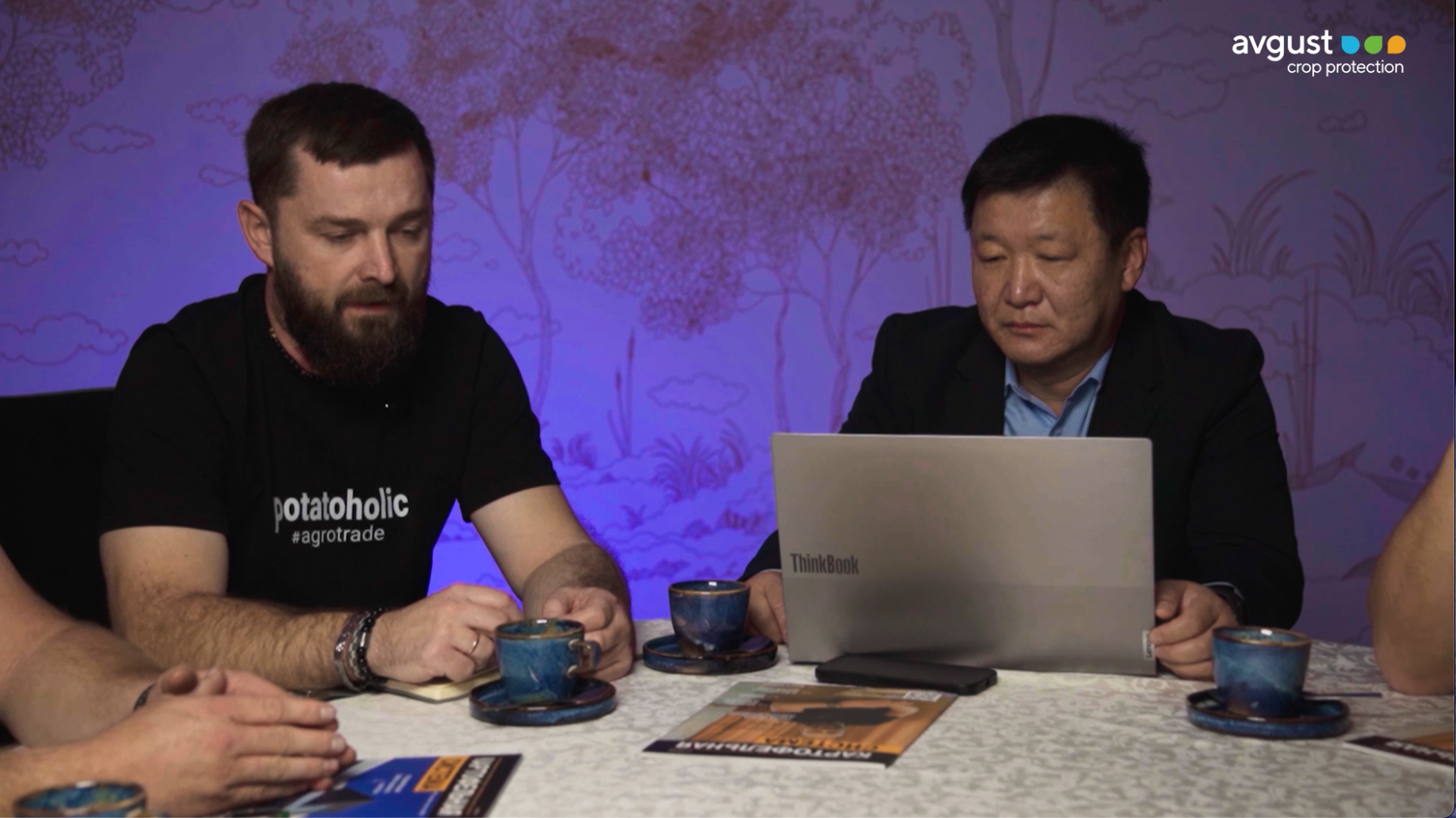
The first part of the special podcast by Avgust and the International Potato Tour (IPT) was recorded in Pavlodar and focused on the most pressing questions of Kazakhstan’s potato sector.
Participants of the discussion:
- Viktor Kovalev — Founder of POTATOES NEWS and organizer of the International Potato Tour “Kazakhstan 2025”;
- Alexander Matvienko — Executive Director of the Potato Union of Kazakhstan;
- Nikolay Ryambov — Head of “Ryambov” Farm.
The conversation delivered real figures, practical insights, and field-level experience.
How Many Hectares Should Go to Table Potatoes vs. Processing?
One of the main questions of the episode:
What is the optimal balance between fresh market potatoes and potatoes grown for processing?
In 2025, Kazakhstan planted about 63,000 hectares of potatoes, achieving an average yield of 35–40 tons per hectare — one of the strongest results in recent seasons.
Export to Uzbekistan — the Core Driver of the Industry
All speakers agreed:
Keeping access to the Uzbek market is crucial.
Uzbekistan absorbs the surplus and stabilizes prices. At the same time:
- Logistics in 2025 became “very tough” and expensive;
- Sometimes it is cheaper to transport a truckload of raw potatoes than a truckload of chips;
- Kazakhstan and Russia are now direct competitors on the same export market.
Processing Is Becoming the Key Strategy for Growth
A major shift is expected with the upcoming 2026 launch of the PepsiCo chips factory in Almaty Region, which will eventually require up to 400,000 tons of raw potatoes annually.
About 15 farms have already started supplying processing potatoes—currently to Russian plants in Novosibirsk—but the local demand will grow rapidly.
Benefits of shifting to processing include:
- predictable prices and margins;
- long-term planning of production volumes;
- lower dependency on market price fluctuations.
However, processing requires meeting strict specifications, especially in storage. For example, chip-grade potatoes must be stored at +10°C, which demands dedicated infrastructure.
Season Challenges: Late Harvest, Storage Issues & Seed Shortages
Farmers in 2025 faced several issues:
- some farms left part of their crop under snow due to early frost;
- a need for more specialized storage capacity for processing varieties;
- seed shortages — most seed potatoes next season will be imported.
On the positive side, late blight (phytophthora) caused far fewer problems this year compared to 2024.
Kazakhstan & Russia: Two Systems in One Market
According to Viktor Kovalev, the situation in Russia is similar:
- yields are higher than last year;
- some regions struggled with phytophthora and early snowfall;
- the overall production level in both countries is above average.
This naturally increases competition between Russia and Kazakhstan for the Central Asian market, especially Uzbekistan.
What’s Next for the Industry?
The main conclusion from the podcast:
Processing is the future of Kazakhstan’s potato sector.
If even 30% of current production shifts to processing, the industry will become more stable and less dependent on “lucky price seasons” when farmers hope to sell at high spot prices.
According to experts, within the next 5 years Kazakhstan’s potato growers may reach the level of leading European producers, provided the current pace of development continues.
Watch the full podcast episode via the link and share your thoughts!
Your feedback helps the IPT project grow and create more valuable content.