Prepared as part of the International Potato Tour (IPT).
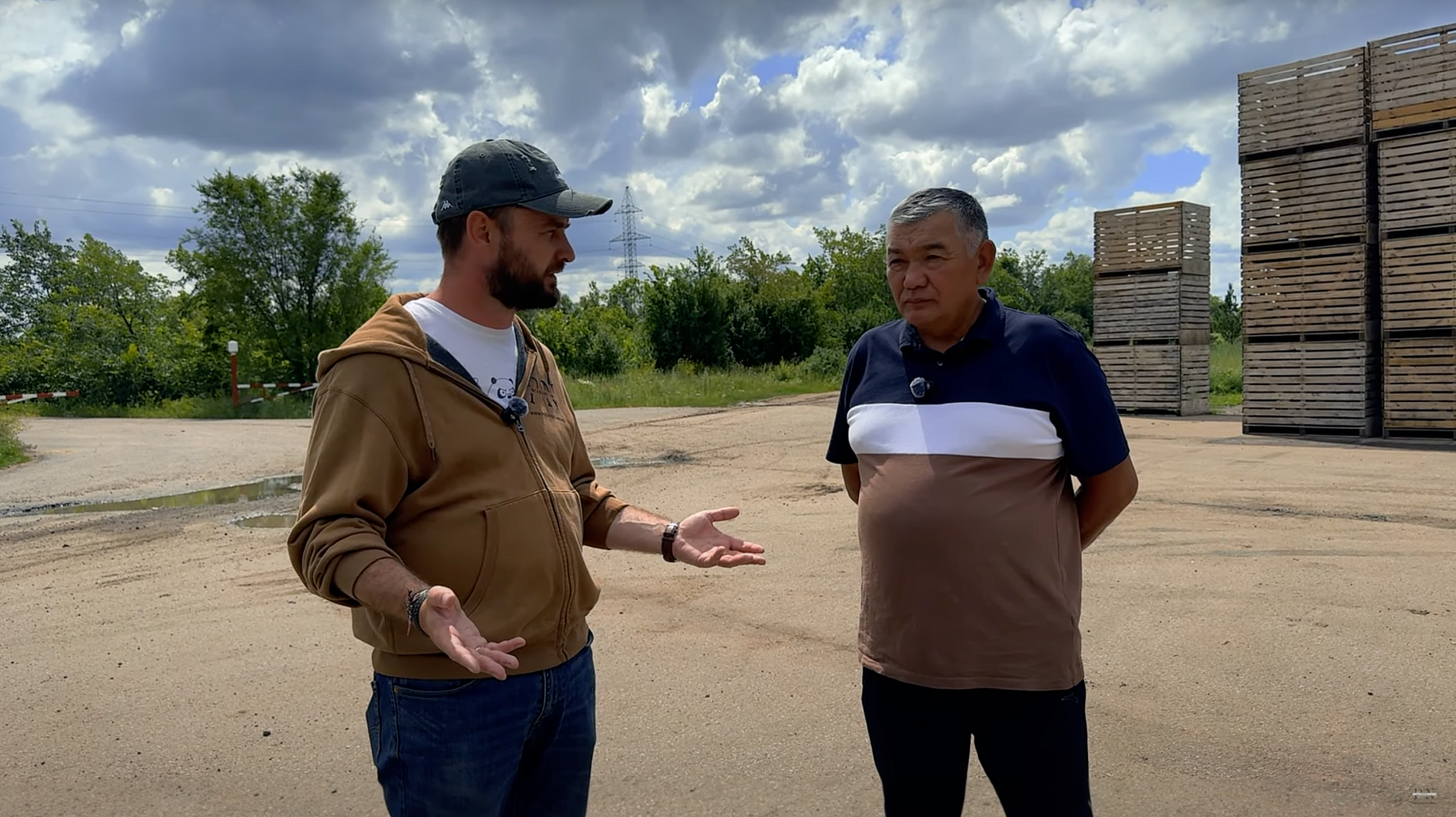
On day two of the Kazakhstan stage of the Potato Enthusiast project we visited LLP “Bio Nord” and spoke with Kyzbek Kabdrakhmanov. Here, potatoes are treated like a “sporting” challenge: you plant—and then you see how the team and the technology unlock the field’s potential. That excitement rests on three pillars: stable acreage, strict crop rotation, and clean storage logistics.
100 hectares as a principle
Since 2013 the farm has held potato area at ~100 ha, while the overall land bank has grown to ~1,200 ha. The logic is simple: “Better quality and manageability than mechanical expansion.” That discipline supports a 5–6-field rotation, keeps fields “fresh,” and lets the team plan resources without chasing extra hectares.
A new niche with fast progress
Vegetable production is relatively new for the team, but with advice from agronomist peers, by the third season the farm feels confident progress. The emotions are positive: “Once you dive in, it’s addictive. Potatoes remain one of the most high-margin crops—if you stick to the technology.”
Field technology: from containers to sensors
- Bins & storage. They use bins with a polished inner surface—easier to wash, less sand/soil sticking. Storage zones focus on sanitation: floors, ducts, and easy clean-up (including marble-chip floor finishes).
- Automation. On the grading line, mechanization is key: a single unit can replace ~20 people on manual tasks; second and third modules are in the plan.
- Sensors & water control. Soil moisture probes in the fields allow tighter irrigation and stress management.
- Nutrition under pivots. They are expanding the use of UAN with center-pivot water: under fertigation nutrients reach the roots faster and losses are lower than with dry broadcasting of ammonium nitrate/urea.
Varieties, phases, and “clean fields”
The team watches the bud stage and tuber set closely: plant density, wind/sun stress, and strictly timed protection—prevent rather than chase. Variety choices are pragmatic: the market sets visual specs, but flavor is pursued technologically—from nutrition to irrigation.
Why processing is the next step for the region
A point many Pavlodar growers agree on: Kazakhstan needs processing (chips, fries). With processing, producers can plan volume and quality more confidently. Until then, farms are exposed to swings in the fresh market. Bio Nord is open to dialogue with processors and retail—vital for resilience across the chain.
Growing through discipline
They’re candid about the “ground-level” drivers: clean ventilation ducts, washed bins, specialized posts on the sorting line—that’s real money. Conversely, “saving” on weed control and sanitation later returns as lost quality and productivity.
Takeaways for peers
- Stable acreage + 5–6-field rotation = manageability and “fresh” fields.
- Storage is part of the technology, not the last step: bins, sanitation, traffic flows.
- UAN under pivots = fewer losses and more precise root feeding.
- Sorting automation eases labor bottlenecks and lifts quality.
- Regional processing multiplies resilience and volumes.
The Kazakhstan route of the International Potato Tour (IPT) continues—more farms and practices ahead.
Want to be featured in the next episode or become an IPT partner? Email i@viktorkovalev.ru, message me on WhatsApp +79614720202, or reach out on Telegram.