Industrial Demand Keeps German and Dutch Potato Prices Firm Despite Smaller European Harvest
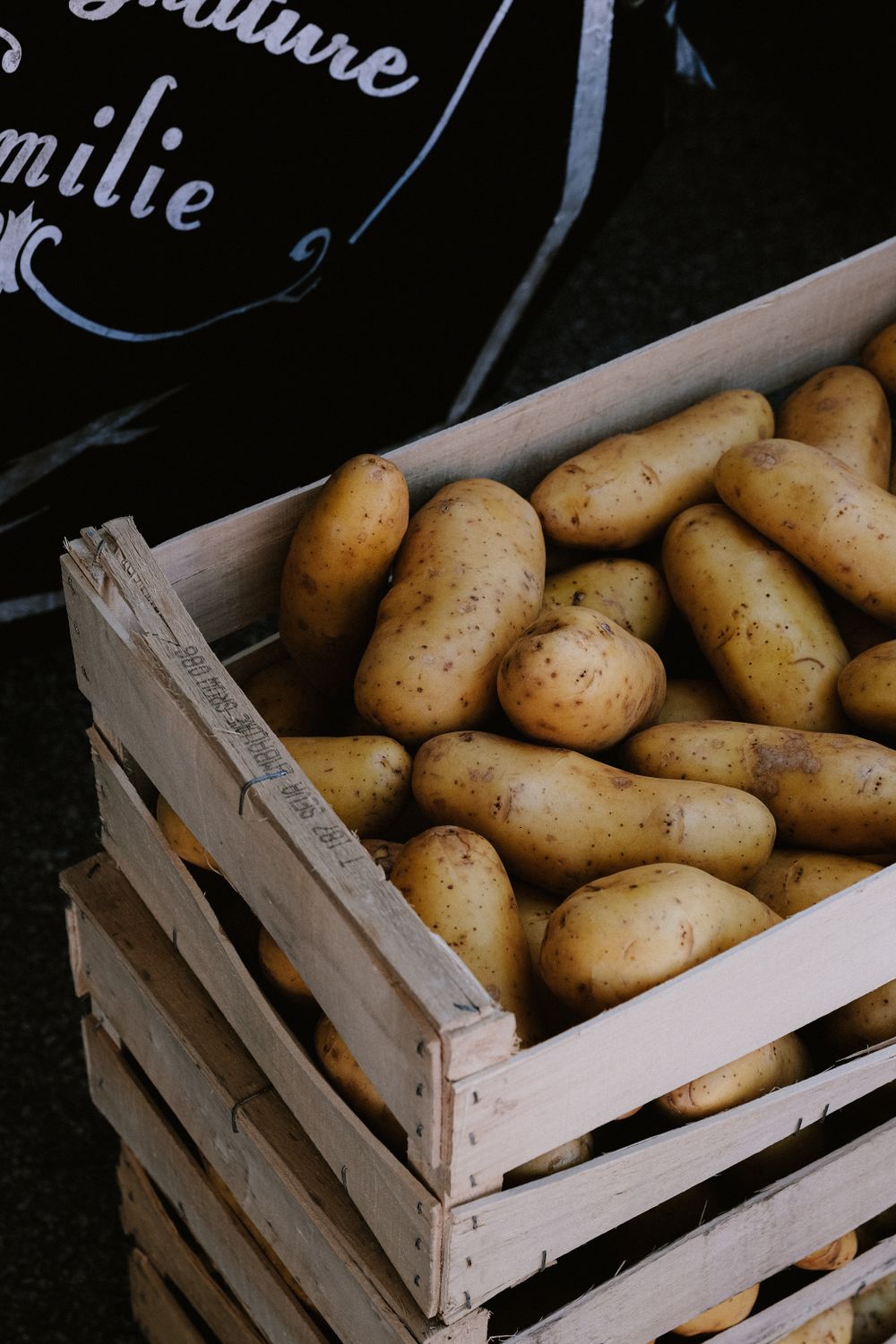
Potato quotations in Germany and the Netherlands are holding firm on steady industrial and retail demand against a tighter European supply: Innovator trades at €27.50–28.30 per 100 kg, while Dutch factories processed 308,800 tonnes in September, with 47% of the raw material imported.
The potato market in Germany and the Netherlands is showing firm, stable quotations, sustained by orderly industrial and retail demand and a European supply more limited than in the previous campaign. Weekly variations are small, although significant differences persist between varieties according to quality, size and suitability for processing.
Innovator holds its premium. References for Innovator stand at €27.50 per 100 kilograms, within a reported range of €27.50–28.30, unchanged from the prior assessment. The variety keeps a premium over other processing materials because of its use in long fries destined mainly for fast-food chains.
Weekdays. Unsubscribe in one click.
Fontane eases slightly. Fontane is trading at €22.00 per 100 kilograms, within a range of €22.00–23.30, down about €0.50 from the previous reference. The adjustment is considered moderate and does not represent a change in the market’s general trend.
German table-potato prices stay in an orderly band. In Germany, fresh-consumption (table) potatoes are trading mostly within a band of €26 to €30 per 100 kilograms. Demand from packing stations and food retailers is described as orderly and steady, with consumer promotions concentrated mainly on smaller retail packs rather than large bags, and most fresh demand met from field-run and recently stored lots. For industrial potatoes specifically, comparable regional reporting from Bavaria put free-market raw material for fries at around €22–28 per 100 kilograms in late September — a broadly similar level to the German table-potato band, though this figure applies to Bavaria and cannot be confirmed for North Rhine-Westphalia specifically.
The Netherlands processed 308,800 tonnes in September. Dutch fry factories processed approximately 308,800 tonnes of potatoes in September — close to 40,000 tonnes more than in August. Industrial activity is sustained partly by raw material from other countries: 47.3% of the potatoes processed in September came from abroad, mainly Belgium and Germany, up sharply from 39.2% foreign-origin a year earlier. This trade flow illustrates the growing integration of the north-west European market and the competition among Dutch plants to secure industrial-quality raw material.
Annual processing still down. Over the twelve months to September, Dutch fry factories processed approximately 3.59 million tonnes of potatoes, roughly 290,000 tonnes less than in the same twelve-month period a year earlier — a decline of about 7–8%. The gap reflects the interaction between the exhaustion of last campaign’s large stocks and the smaller 2026 European harvest. Despite the accumulated decrease, September’s pace confirms that factories continue operating actively and sustaining raw material demand.
Dutch harvest down 17%. Dutch gross production of table (ware) potatoes is estimated at approximately 3.5 million tonnes for 2026, 17% less than the unusually large 4.2 million tonnes harvested in 2025. The volume sits just below the ten-year average of roughly 3.6 million tonnes. The main driver of the fall was a reduction in planted area, down around 15% to 70,286 hectares, part of a total potato area of 150,134 hectares — the smallest since 2012. Gross yield held relatively firm at 49.5 tonnes per hectare, about 3% below the 50.8 tonnes recorded in 2025.
Irrigation moderated the drought. Around a third of Dutch arable farms report owning their own irrigation equipment, a feature that helped limit yield losses during the periods of greatest climatic stress this season. The available figures correspond to gross yields; the effectively marketable volume will be lower after discounting defects, unsuitable sizes and grading and storage losses.
Outlook: sideways to moderately firm. The market expects table and processing potato quotations to stay sideways to moderately firm over the coming weeks, supported by steady retail demand, a smaller 2026 EU crop and disciplined processor buying. One flagged risk is storage quality: lots affected by sweat damage could emerge and carry surcharges of around €5 per 100 kilograms. The evolution through the European winter will also depend on the availability of contract-free lots and the pace at which processing plants take in raw material.
Sources: Commodity Board (Dutch harvest, area and yield data); AGF.nl (Dutch processing volumes).