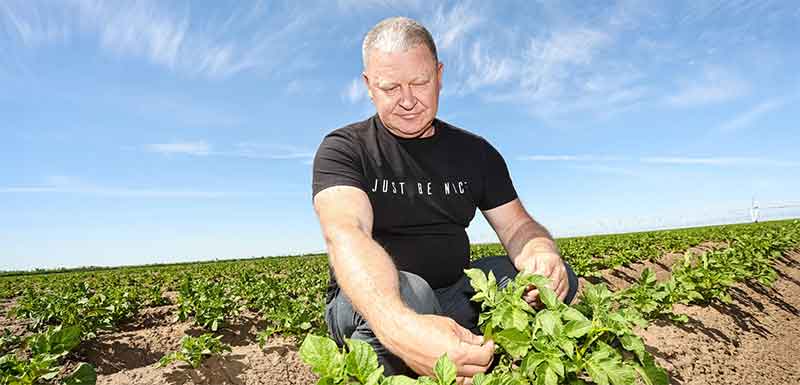
The Boguslavsky cooperative in Sol-Iletsk has nearly sold out its remaining last year’s potato harvest, with only 20 tons of the popular “Queen Anne” variety left. Thanks to fully automated ventilation systems and modern storage facilities maintaining a constant +3°C, the potatoes have stayed in excellent condition since September. The cooperative has expanded its potato area to 90 hectares this year, up from 70, betting on “second bread” as a more profitable crop than sunflowers or watermelons. With wholesale prices at 18 rubles per kilogram and retail at 25 rubles, demand remains strong. The farm also recently acquired a Belarusian palletizer, dramatically reducing labor needs while speeding up packaging and loading.
Precision farming is the key to their success. The cooperative uses Dutch ridge technology to create space for tubers, circular pivot irrigation systems with a 550-meter reach controlled via smartphone, and auto-steering on tractors to avoid damaging plants. On onion fields, wheat is interplanted to prevent wind erosion, later removed with herbicides once the onions strengthen. Despite a cold May that forced planting in poorly warmed soil (7–8°C instead of the desired 10°C), the sprouts look healthy. Farmers expect a good—if not royal—harvest of Queen Anne potatoes, with early variety Colombo ready for digging starting July 10.