Prepared as part of the International Potato Tour (IPT).
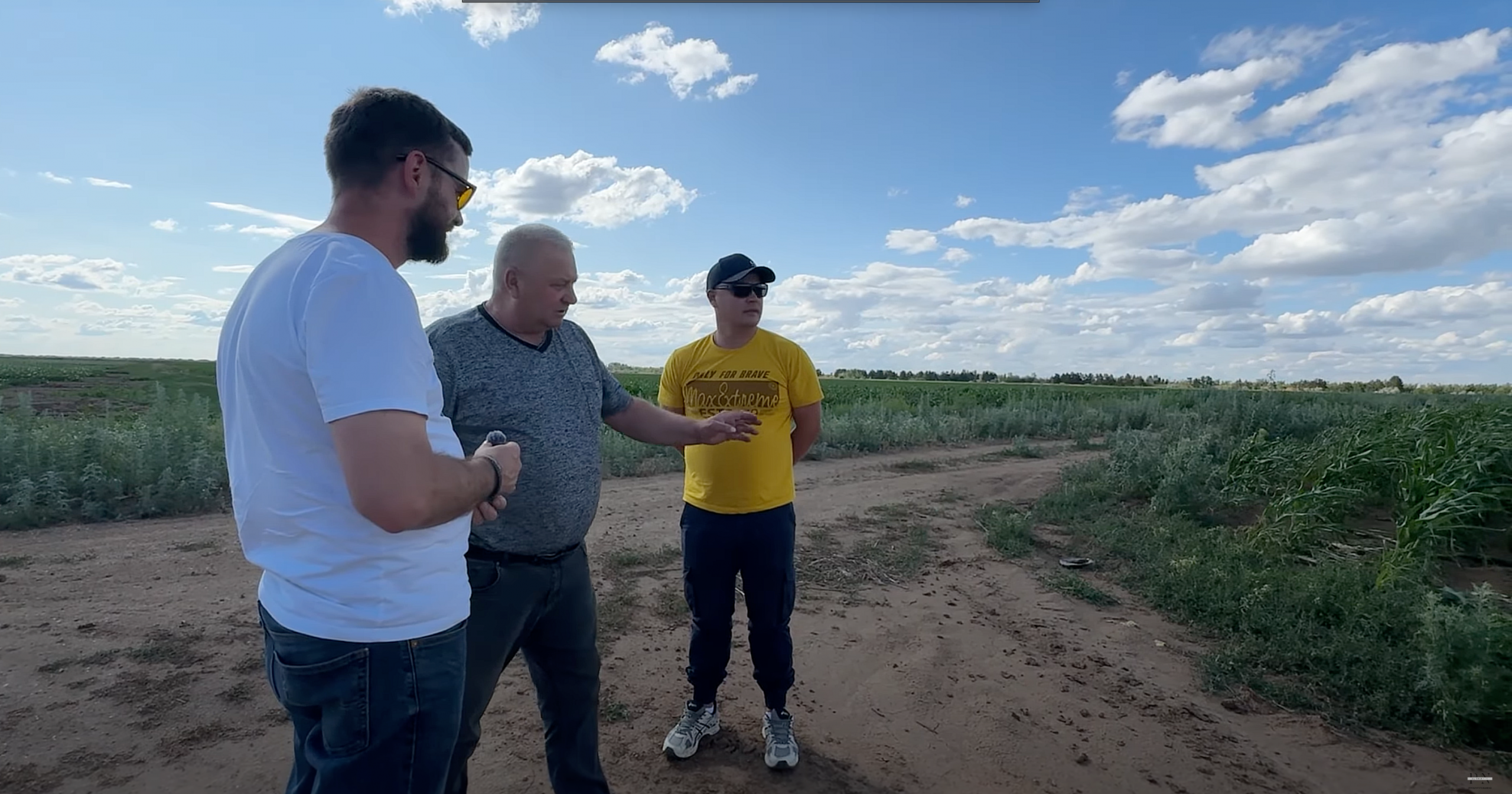
In Yevgenyevka we met Viktor Ryambov, head of the farm enterprise “Sergey.” His story is about the “school of the field”: from early shifts on potato harvests to running a farm where decisions rest on practice, discipline, and respect for the land.
“Practice is the best teacher”
Ryambov is frank: he did not come from an academic agronomy track. “I wouldn’t call myself an agronomist, but I learn every day—colleagues point out the weak spots. The main thing is to act and judge by results.”
Some of the most important insights came from seed work: elite, 1st, 2nd, 3rd reproductions and the need for genuine—not “paper”—renewal of planting material.
“Elite seed isn’t a label. If someone plants first reproduction table potatoes 300 meters away, what kind of ‘super-elite’ is that? Elite requires isolation distances; otherwise it’s self-deception.”
Crop rotation: balancing cash crops, feed, and soil health
The rotation is built around potatoes, carrots, maize, and alfalfa (lucerne) with clear proportions and roles:
- Potatoes — the core cash crop (reference area: ~430 ha).
- Carrots — up to 25% of the potato area (about 100 ha) to diversify revenue.
- Maize — area comparable to potatoes; part of the biomass stays in the field, part goes to feed.
- Alfalfa (lucerne) — the anchor of soil health and a feed base for livestock: twice the potato area (around 750 ha).
“Science is great, but decisions must live in reality: animals need feed daily, machinery and people need work, and the soil must not be exhausted,” Ryambov stresses.
Seed and isolation: no illusions
The approach to seed is pragmatic: spatially separate reproductions, don’t mix elite plots with table fields, and don’t “stretch” the same fraction forever. “Better less but cleaner—rather than ‘elite on paper,’” he sums up.
Protection and “clean fields”
Top priority: clean fields and a clear protection logic. In Ryambov’s experience, casual penny-pinching on weed control turns into higher harvest costs and quality losses. “Once a tap-rooted weed establishes, neither a topper nor a harvester will save you.”
Family and succession
His son works in the farm like everyone else: tractor, trucks, plots—no special treatment. The father deliberately gives him room for independent decisions—even risky ones: “Let him try his way; then we compare. My job is to step in only if he’s drifting too far.” Celebrating success, he says, is “too early”: in agriculture, success is a string of good seasons, not a one-off yield.
Takeaways for peers
- Elite seed = isolation and discipline, not a sticker on a bag.
- Rotation must feed both soil and farm: cash crop + feed + a soil-improving crop (alfalfa).
- Clean fields pay off: skimping on herbicides is often costlier in the end.
- Succession = responsibility: let the young make independent calls with quiet senior back-up.
Want to be the hero of our next episode or become a partner? Email i@viktorkovalev.ru or message me on WhatsApp +79614720202 or Telegram.