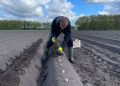
The dry season potato harvest (safra de seca) in the southern region of Minas Gerais—the leading potato-producing state in Brazil—has commenced for the $2026$ agricultural cycle. Despite minor planting delays caused by erratic rainfall early in the year, local producers are reporting highly favorable productivity levels. Optimized irrigation management and favorable late-stage weather have positioned growers to capitalize on robust yields and strong market prices.
Below is an in-depth analytical breakdown of the climatic variables, scheduling adjustments, and phytosanitary conditions shaping this season’s agricultural output.
Climatic Resilience and Irrigation Success
Typically, the dry season presents significant climatic risks for potato development, often leading to natural yield reductions. However, the $2026$ cycle in southern Minas Gerais has bucked historical trends due to a highly effective combination of natural rainfall and automated field management.
- April Dry Spell: During the critical tuber formation phase in April, the region experienced a marked decrease in precipitation. To counter water stress, growers actively deployed localized irrigation systems, successfully satisfying the crop’s hydric demands.
- May Meteorological Shift: At the start of May, natural rains returned to the region alongside a drop in temperature, creating excellent conditions for final tuber growth. By the second week of May, temperatures rose slightly while rainfall became more spaced out, establishing an ideal climate for active field operations and harvesting.
- Productivity Benchmarks: Due to these stable conditions, the average productivity in southern Minas Gerais is holding strong at an estimated
$35$tons per hectare. Analysts from Hortifrúti/Cepea predict that this high yield average will remain consistent throughout the entirety of the harvesting window.
Harvest Schedule and Market Dynamics
While yields are robust, the overall volume offered to the market experienced a slight initial lag, which is expected to balance out in the coming weeks.
- Initial Progress: Harvest activities formally began in the first half of May, with growers clearing between
$5\%$and$10\%$of the total projected seasonal acreage. - Sowing Delays: This initial harvested volume is roughly
$5\%$to$10\%$lower than originally forecasted. The minor deficit is a direct result of planting delays experienced during the rainy periods earlier in the cycle. - The June Peak: The temporary supply deficit is expected to clear in June, when growers plan to harvest and offer roughly
$50\%$of the remaining dry-season acreage. The entire campaign is scheduled to wrap up by the end of July. - Favorable Capitalization: This staggered harvest timeline has played to the financial benefit of local growers. Because the initial supply remained controlled, potato prices have remained highly lucrative. Strong price levels are expected to persist through the first half of July, allowing regional producers to achieve excellent profit margins and recover capital.
Phytosanitary Management and Disease Control
Maintaining crop quality required constant vigilance from growers in southern Minas Gerais. Field teams successfully managed two distinct biological pressures without suffering significant commercial damage.
- Late Blight (Tizón Tardío): Extremely wet weather during the initial planting phase in January and February triggered localized outbreaks of late blight. However, targeted fungicidal treatments and a transition to drier weather in the subsequent months stabilized the infection, preventing it from damaging the final yields.
- Leafminer Larvae (Larvas Minadoras): As dry conditions set in, leafminer populations grew, with larvae detected approximately
$30$days after planting. While the pests required monitoring, the timely return of rains and targeted agricultural controls kept leaf damage to a minimum, preserving the structural integrity and market appeal of the harvested potatoes.
Information Sources
This article was compiled using specialized agricultural news from the portal Argenpapa. The primary source of data is the official publication:
- Argenpapa News Portal: Brasil: La cosecha de la estación seca en el sur de Minas Gerais muestra una buena productividad (News Item #17358), featuring field updates, yield estimations, and market data originally published by the Brazilian center Hortifrúti/Cepea (hfbrasil.org.br), under the Center for Advanced Studies on Applied Economics (CEPEA) of the University of São Paulo.