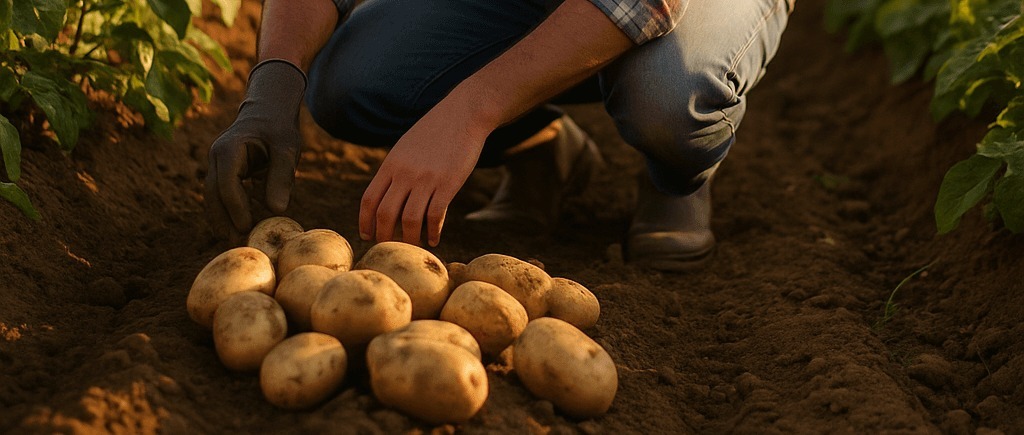
Brazil’s 2025 potato season has been one of the most difficult in recent memory. Producers across key potato-growing regions are reporting historic losses, driven by a combination of adverse weather, rising production costs and unexpected market shifts.
The country, normally stable in its potato supply, now faces a season marked by shortages, volatility and uncertainty.
What Caused the Historic Losses?
Severe Climate Challenges
Brazil has experienced an intense sequence of weather extremes:
- excessive rainfall in some regions,
- prolonged drought in others,
- unstable temperatures at critical growth stages.
Such conditions reduced yields and degraded tuber quality, increasing post-harvest losses.
Higher Production Costs
Costs for fertilizers, seeds, labor and logistics rose significantly during the season.
For many producers, the yield reduction made it impossible to recover investments, mirroring financial stress also seen recently in Colombia and Mexico.
Market Saturation Followed by Shortage
Earlier in the cycle, some regions experienced oversupply, which pushed prices down.
But once extreme weather damaged late-season fields, shortages developed, suddenly reversing the price curve — too late to save many farms financially.
A Market Changing Direction
The Brazilian potato market is undergoing a structural shift. According to patterns observed globally on Potatoes News:
Stronger Demand for High-Quality and Processing Varieties
Processors are seeking more stable supply contracts and higher standards.
Producers without access to irrigation, modern storage or certified seed face increasing difficulty keeping up.
Regional Disparities Growing
States like Minas Gerais, Paraná and São Paulo show different levels of resilience.
Producers with better infrastructure recovered more quickly, while small farmers took the hardest hit.
Rising Dependence on External Supply
The severity of the 2025 losses may push Brazil to increase imports, at least temporarily.
This follows a trend also seen in Honduras and Mexico — domestic instability drives reliance on foreign supply.
Feedback from Farmers
Growers describe the 2025 season as “one of the toughest in decades”:
“After the rains and the heat waves, we lost more than half of what we planted. Even the surviving potatoes had no marketable quality.”
Producers emphasize that without structural improvements, similar crises will recur.
Potatoes News Analytics: What This Means for the Sector
Based on global trends we observe across Latin America, Europe and Asia, several conclusions emerge:
Climate Adaptation Is No Longer Optional
Countries like Brazil must invest in irrigation, drainage and climate-resilient varieties.
The Shift Toward Processing Will Accelerate
Processors require stable volumes; growers who adapt will be more protected from market volatility.
Infrastructure Investment Is Critical
Storage modernization and cold-chain improvements could dramatically reduce post-harvest losses.
The Market May Restructure Around Larger, More Technified Farms
As seen in Argentina, Mexico and India, periods of crisis often trigger consolidation.
What Comes Next for Brazil?
Policy Responses
Analysts expect discussions around crop insurance, emergency credit and incentives for infrastructure upgrades.
Producer Strategies
Farmers are calling for:
- improved seed systems,
- better water management,
- modern post-harvest facilities,
- long-term contracts with processors.
Potential Market Adjustments
If supply remains unstable, retail prices may remain high, and imports may rise.
Conclusion
Brazil’s 2025 potato harvest reflects a perfect storm of climate stress, economic pressure and shifting market dynamics. The historic losses highlight vulnerabilities in the national production system — but also point to clear avenues for strengthening the sector.
The key question is now:
Can Brazil turn this crisis into an opportunity to modernize and stabilize its potato industry?
What do you think Brazil should focus on first: climate resilience, processing development, or improving infrastructure?
Brasil: Cosecha de patatas 2025 con pérdidas históricas y cambio de rumbo del mercado
argenpapa.com.ar/noticia/16755-