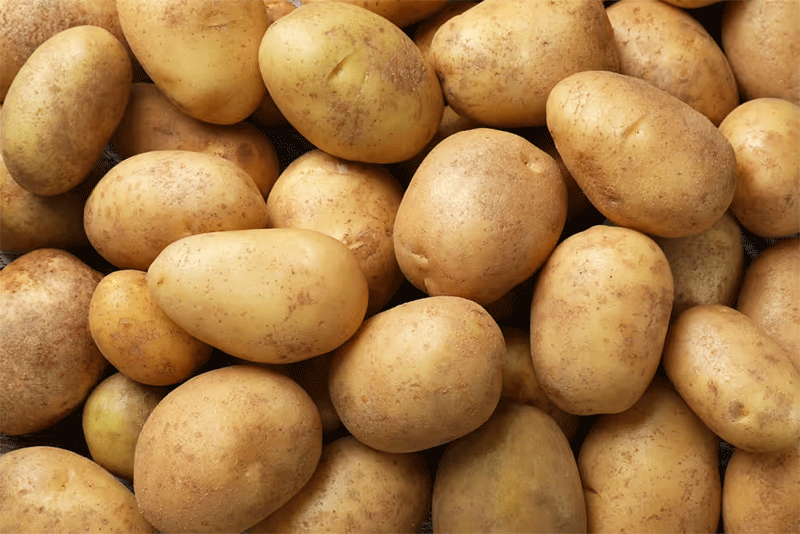
The recent nationwide Canadian launch of EarthFresh’s “Butter Potatoes”—comprising Butter Golds, Butter Reds, and Butter Russets—is more than a new product line; it’s a strategic move capitalizing on a clear consumer trend. Following a successful U.S. debut that reportedly led to stores selling out, these varieties are marketed not for their agronomic performance, but for their sensory characteristics: a “naturally buttery, creamy interior” that ostensibly reduces the need for added fats. This launch is the result of over a decade of research and development, signaling a long-term corporate commitment to value-added breeding. For growers and breeders, this underscores a pivotal shift: the market is increasingly rewarding differentiated, premium products that command higher margins.
This strategy aligns perfectly with broader market data. The global specialty potato market is experiencing steady growth, driven by consumer interest in novel flavors, unique textures, and perceived healthier options. According to a recent analysis by MarketsandMarkets, the potato processing market is increasingly segmented, with demand for premium frozen and fresh products outpacing conventional commodities. Furthermore, a 2023 consumer survey from the International Food Information Council (IFIC) indicated that over 60% of consumers are willing to pay a premium for foods with enhanced health or taste benefits. EarthFresh’s “Butter Potato” line directly targets this demographic, offering a point of differentiation that can help retailers and farmers escape the race-to-the-bottom pricing of commodity spuds. The key for producers will be understanding the specific agronomic requirements, yield potential, and disease resistance of these new varieties to accurately calculate their profitability per acre compared to traditional cultivars.
The introduction of EarthFresh’s Butter Potatoes is a powerful indicator of where the potato industry’s future growth lies. It demonstrates that significant investment is being funneled into breeding for specific, consumer-facing sensory traits rather than solely for yield, storability, or processing quality. For farmers and agronomists, this evolution presents both a challenge and an opportunity. The challenge lies in adapting cultivation practices to new genetics; the opportunity is in accessing more profitable, value-added supply chains. The success of such varieties will depend on a close partnership between breeders, who develop the traits, and growers, who can consistently deliver on the quality promise these potatoes represent.
