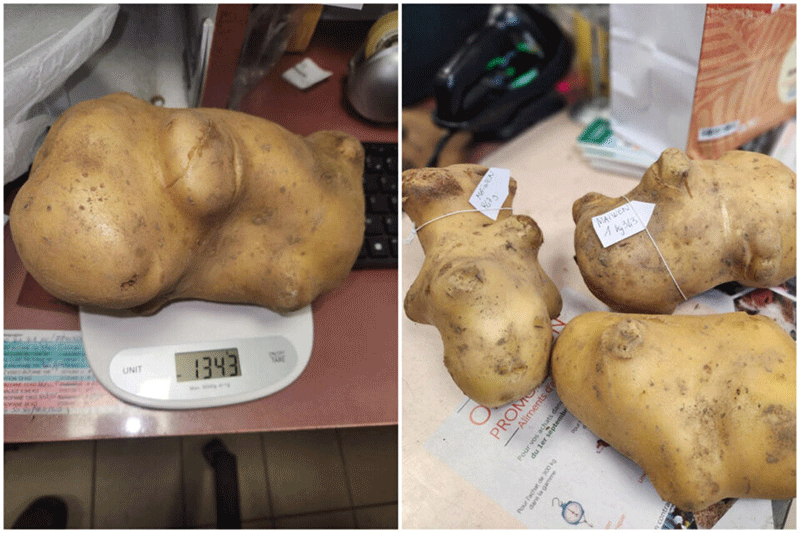
The image of a 1.343 kg potato is certainly striking, but for professionals in agriculture, the story behind Adeline Dromer’s record-breaking harvest in Flers, Orne, is far more compelling than the tuber’s size alone. This exceptional yield, achieved with the variety ‘Maiwen’, provides a tangible, real-world example of how modern genetics, when paired with favorable conditions, can deliver remarkable results, particularly in the face of pervasive disease pressure.
The Star Performer: Genetics of the ‘Maiwen’ Variety
The cornerstone of this success is the specific variety. ‘Maiwen’ is not a random garden potato; it is a variety professionally cultivated on the Île de Noirmoutier, known for its premium agricultural products. The grower explicitly credited the variety’s two key traits:
- Durable Resistance to Late Blight: Her statement that “it resists mildew, a dreaded disease” points directly to the genetic incorporation of late blight (Phytophthora infestans) resistance. This is a critical agronomic trait, especially in humid regions like Normandy. Late blight remains the most destructive potato disease globally, capable of destroying entire crops and costing the industry billions annually. The use of resistant varieties is a cornerstone of Integrated Pest Management (IPM), significantly reducing the need for fungicide applications.
- Robust Foliage: The observation of “resistant foliage” is intrinsically linked to the tuber’s size. Healthy, photosynthetically active canopy for a longer duration directly translates to greater carbohydrate allocation to the tubers. A canopy compromised by blight cannot support the development of such large tubers.
The Supporting Role: An “Ideal” Growing Season
While genetics provided the potential, the 2025 season’s weather conditions unlocked it. The grower’s report of “less spring frost” followed by “rain at the right time” describes a near-perfect scenario for potato development:
- Minimized Frost Risk: This allowed for an early, unharmed emergence and establishment of the canopy.
- Adequate and Well-Timed Moisture: Consistent soil moisture is crucial for tuber initiation and bulking. Stress from drought during these phases can lead to misshapen tubers and yield loss.
The Professional Context: Validating the Anecdote with Data
This anecdotal success aligns with broader agricultural research. A 2023 review in the American Journal of Potato Research emphasized that the yield potential of new, resistant varieties is often only fully realized in the absence of the biotic and abiotic stresses they are bred to withstand. Furthermore, the global shift towards sustainable agriculture is driving increased demand for blight-resistant cultivars. In the Netherlands, for instance, a world leader in potato breeding, over 50% of new variety registrations now include specific late blight resistance genes (R-genes), a practice that reduces fungicide use by 30-80% in conducive climates.
The giant potato from Normandy is not merely a gardening curiosity. It is a powerful, tangible demonstration of a core agronomic principle: maximizing yield and resilience starts with selecting the right genetic material for the local environment and disease pressure. The ‘Maiwen’ variety’s inherent resistance to late blight allowed it to maintain a healthy canopy, which, when supported by a season of optimal rainfall and minimal frost, resulted in extraordinary tuber development. For farmers, agronomists, and breeders, this story reinforces the immense value of investing in and utilizing disease-resistant varieties as a fundamental strategy for achieving sustainable, high-yielding, and climate-resilient potato production.