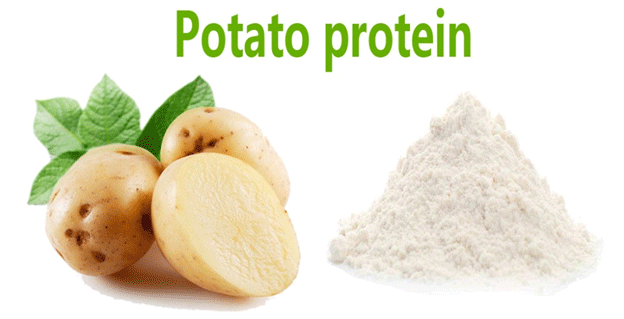
Unlocking New Revenue from a Classic Crop: The Potato Protein Revolution
For generations, the potato has been a cornerstone of global agriculture, primarily valued for its starch and its place on the dinner plate. However, a quiet revolution is transforming this humble tuber into a source of high-value, functional protein, creating new market opportunities for farmers, processors, and researchers alike. The global potato protein market is on a steady climb, forecast to grow from USD 0.3 Billion in 2025 to USD 0.5 Billion by 2035, at a compound annual growth rate (CAGR) of 5.6%. This growth is not accidental; it is fueled by a powerful convergence of consumer trends, technological innovation, and strategic agricultural partnerships.
The Demand Drivers: Why Potato Protein?
The primary engine of this market is the unstoppable rise of plant-based and “free-from” diets. Consumers are actively seeking sustainable, allergen-free alternatives to soy, dairy, and wheat proteins. Potato protein, naturally gluten-free and non-GMO, fits this demand perfectly. Its application has expanded rapidly beyond niche markets into:
-
Sports and Therapeutic Nutrition: For its high-quality amino acid profile.
-
Plant-Based Foods: As a functional ingredient improving texture and protein content in meat and dairy alternatives.
-
Bakery, Snacks, and Pet Food: Leveraging its binding, gelling, and water-holding capabilities.
This demand is creating a pull-through effect, encouraging investment across the entire agricultural value chain, from seed selection to processing infrastructure.
The Technology Enabler: From By-Product to Precision Ingredient
Historically, potato protein was a co-product of starch production, with variable quality and functionality. Today, advanced processing technologies are revolutionizing its potential, turning it into a precise, high-performance ingredient. Key innovations identified in market analyses include:
-
Membrane Filtration & Enzymatic Hydrolysis: These techniques enhance protein purity, solubility, and emulsification properties, making it more versatile for food formulations.
-
Automated High-Throughput Fractionation: This allows for the efficient separation of protein isolates with consistent functional qualities.
-
Side-Stream Valorization: Modern processing aims for near-zero waste, extracting maximum value from every potato and improving overall sustainability and profitability.
These advancements are making processes more efficient, minimizing waste, and ensuring the consistent quality required by large-scale food manufacturers, thereby accelerating market adoption.
Regional Hotspots and Strategic Movements
The market dynamics vary significantly by region, offering different opportunities for stakeholders:
-
Europe is the established leader, thanks to its mature starch-processing cooperatives, strong R&D infrastructure, and regulatory support for clean-label and non-GMO ingredients. Strategic alliances, like the May 2025 collaboration between KMC Ingredients (Denmark) and Daymer Ingredients (UK) to develop clean-label potato-based ingredients, exemplify the innovative ecosystem driving the region forward.
-
Asia-Pacific is the fastest-growing region. Rapid urbanization, shifting dietary habits, and growing health consciousness in countries like China and India are fueling demand. This is spurring local investments in production capacity and protein separation technologies.
Prominent players like Avebe, Roquette Frères, Ingredion, and Cargill are actively scaling production and forming partnerships to meet this global demand, signaling strong long-term confidence in the sector.
Challenges and the Path Forward
The path to growth is not without its obstacles. The high capital cost of sophisticated drying and purification technology can be a barrier to entry. Supply chain dependencies on regional potato harvests and logistical challenges with raw materials can create bottlenecks. Furthermore, achieving consistent functional performance across different potato varieties remains a key focus for agronomists and plant breeders.
However, these challenges are being met with collaboration. Partnerships among potato starch processors, ingredient manufacturers, and food companies are crucial. These alliances are streamlining innovation, sharing R&D costs, and creating more resilient supply chains, ultimately de-risking investment and speeding up commercialization.
The evolution of potato protein from a simple co-product to a sought-after functional ingredient represents a significant value-added opportunity for the agricultural industry. For farmers and farm owners, it underscores the potential for crop diversification and enhanced profitability. For agronomists and engineers, it highlights the need for research into optimal potato varieties and efficient processing methods. For scientists and industry stakeholders, the focus is on continuing to improve functionality and cost-effectiveness. By embracing the trends of plant-based nutrition and investing in the technologies that enable them, the agricultural sector can firmly position itself at the forefront of this growing, high-value market.
