• About Us
  • Partnership & Advertising Opportunities
  • Careers at Potatoes.News
Saturday, January 10, 2026
  • Login
  • Register
No Result
View All Result
POTATOES NEWS
  • NEWS
  • IPT
  • AGROTECHNOLOGY
  • IRRIGATION
  • POTATO PROCESSING
  • Contact us
  • NEWS
  • IPT
  • AGROTECHNOLOGY
  • IRRIGATION
  • POTATO PROCESSING
  • Contact us
No Result
View All Result
POTATOES NEWS

Bacterial Ring Rot (Clavibacter michiganensis subsp. sepedonicus)

by T.G. Lynn
20.01.2023
in AGROTECHNOLOGY
A A
Bacterial Ring Rot (Clavibacter michiganensis subsp. sepedonicus)

Pathogen. The ring rot bacterium is extremely infectious. It overwinters mainly in seed tubers, but can survive for up to 2 years as dried slime on cutting knives, storage bins, planting and harvesting equipment, burlap bags, paper and plastic. The bacterium is not killed by freezing.

Disease development. Ring rot spreads primarily from infected seed pieces to healthy tubers during seed cutting and planting. Contaminated seed-cutter knives and pick planters are excellent disseminators of bacterial ring rot because fresh wounds provide a means of entry for the bacteria into the tuber. Ring rot may be spread in the field by direct contact between diseased and healthy plants. The bacteria may also be carried by farm equip- ment or by insects such as the Colorado potato beetle, the potato flea beetle or the green peach aphid.

Symptoms. One of the characteristics of this disease is that the expression of foliar symptoms and the type of symptoms expressed vary depending on the variety. In In hot, dry seasons, ring rot develops rapidly. The first symptoms in the field usually appear on the lower leaves about mid-season.

Zero tolerance control measures are in place against this disease. The seed potato regula- tions in Canada indicate that upon finding bacterial ring rot, all lots under cultivation by the grower are rejected for certification.
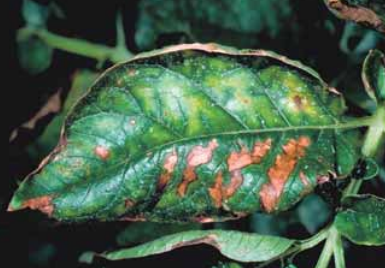

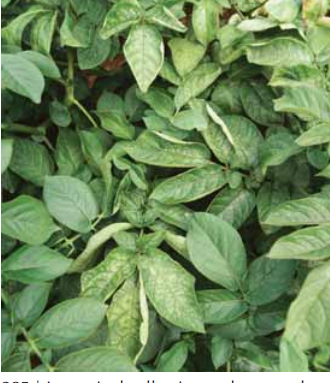
The yellowing of interveinal areas and curling and browning of leaf edges are distinct symptoms of ring rot. Eventually, necrosis kills the leaflets.
Lower leaves usually wilt first. Interveinal areas turn yellowish.
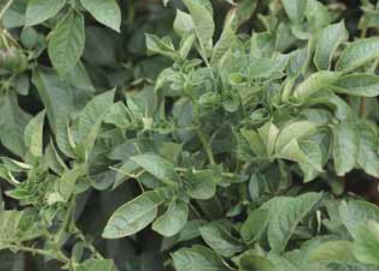
Russet Burbank may develop the dwarf rosette symptom early in the season.
Interveinal yellowing on lower and upper leaves.
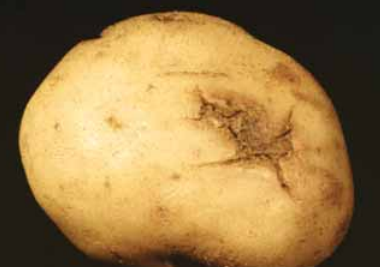
Infected tubers usually develop star-shaped cracks in the skin.
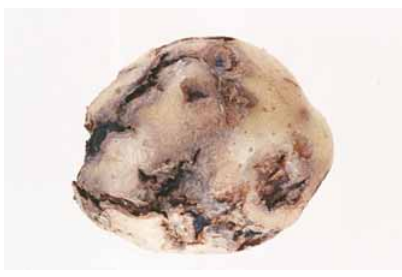
Severe tuber cracking caused by ring rot.
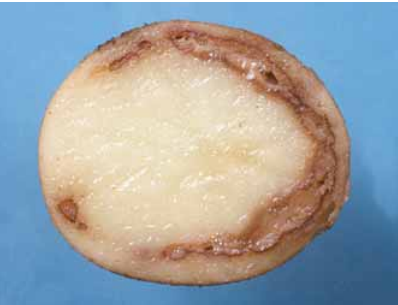
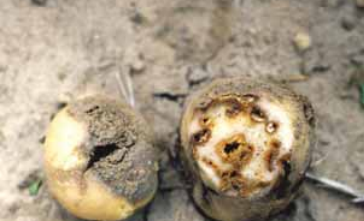
A creamy, yellow-brown, cheesy, odourless rot develops in the vascular ring.
Corky tissue surrounds hollows in the vascular ring. When secondary bacteria enter, a foul- smelling rot may occur, and infected tubers may be completely destroyed.
Typical ring rot symptoms on tubers.
Tags: bacterialmichiganensis
Next Post
Higher Total Canadian Potato Storage Holdings

Higher Total Canadian Potato Storage Holdings

General Partner’s position

Recommended

Nitrogen addition affects trait divergence of plant community assembly

Nitrogen addition affects trait divergence of plant community assembly

3 years ago
Wingard Farms Minnesota- The Home Place

Wingard Farms Minnesota- The Home Place

5 years ago
  • About Us
  • Partnership & Advertising Opportunities
  • Careers at Potatoes.News

© 2010-2026 POTATOES NEWS

Welcome Back!

Login to your account below

Forgotten Password? Sign Up

Create New Account!

Fill the forms below to register

All fields are required. Log In

Retrieve your password

Please enter your username or email address to reset your password.

Log In
No Result
View All Result
  • NEWS
  • IPT
  • AGROTECHNOLOGY
  • IRRIGATION
  • POTATO PROCESSING
  • Contact us

© 2010-2026 POTATOES NEWS