
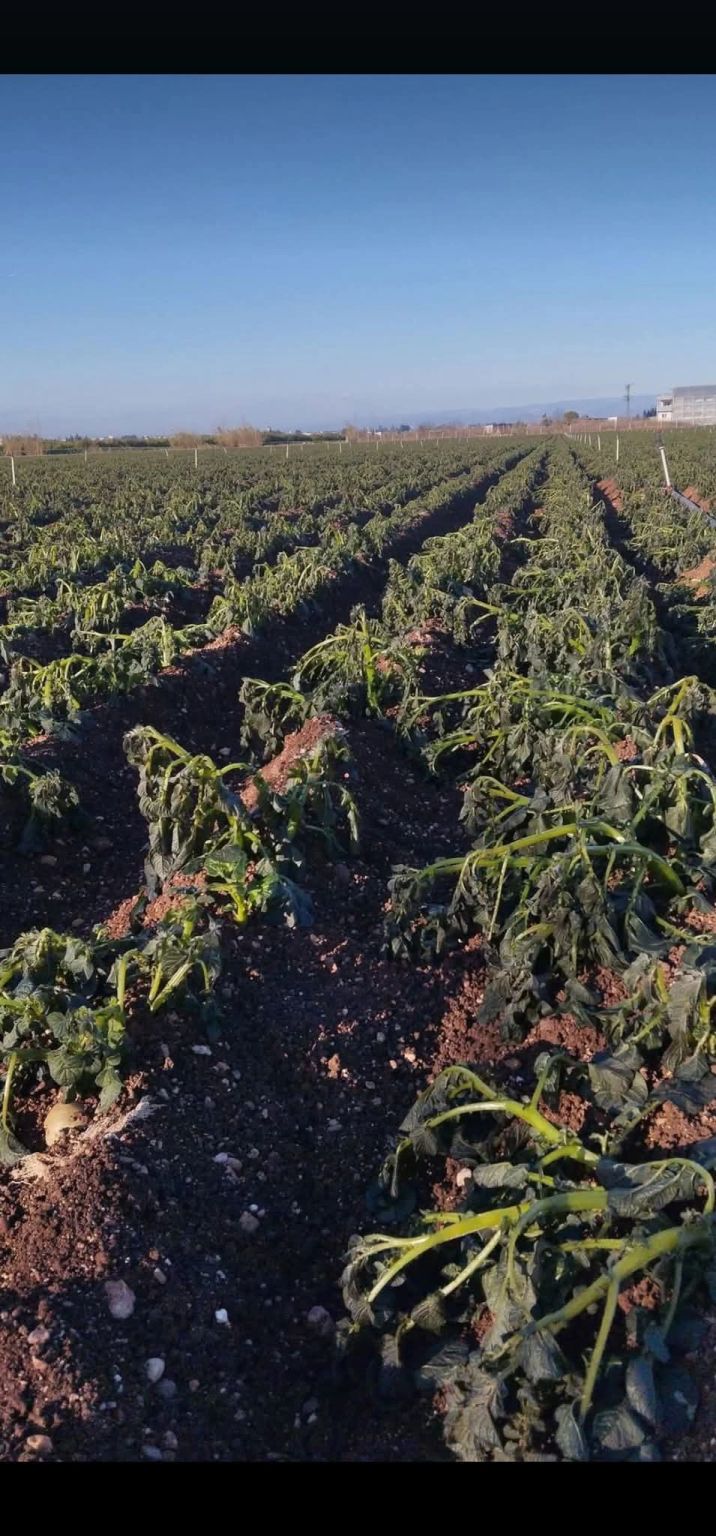
Potato producers in the Adana and Hatay regions have once again been hit hard by severe frosts that are causing considerable damage to their crops. This season, unusual weather patterns have led to extensive damage across fields, raising serious concerns among agricultural experts.
Scale of Damage and Key Details
In both regions, frost events have resulted in significant crop losses. The upper part of potato plants is particularly vulnerable: when temperatures range from 0°C to -4°C over a period of 6–7 days, destructive cellular changes occur. These processes range from minor discoloration of the leaves to the complete death of the plant’s structure.
Economic Implications for Farmers
Of particular concern is the rising cost of protecting and restoring affected areas. According to available data, the cost of such measures is approximately 40,000 Turkish lira per decare (i.e. per 1,000 square meters or 0.1 hectare). With an exchange rate of about 1 USD ≈ 19 Turkish lira, these expenses translate to roughly 2,100 USD per 1,000 square meters, or approximately 21,000 USD per hectare. Such costs compel agricultural producers to reconsider their strategies for minimizing risks associated with extreme weather conditions.
Technical Aspects of Frost Damage
Potatoes are highly sensitive to frost due to the structure of their upper parts. When temperatures briefly drop below zero, cellular damage begins, manifesting as anything from slight discoloration of the leaves to the complete death of the plant. This mechanism necessitates timely measures from farmers, such as early irrigation, to protect the crops.
Trend Analysis and Lessons from Previous Seasons
The POTATOES NEWS portal has repeatedly highlighted the risks associated with frost in the Adana and Hatay regions. In previous seasons, timely agronomic measures helped minimize the damage from weather anomalies; however, this season presents a much more challenging situation. The intensification of climate anomalies is prompting a reexamination of traditional farming methods and an increased need for innovative protective solutions.
Prospects and Future Steps
Farmers are now forced to seek new ways to cope with the impacts of sudden temperature fluctuations. Strengthening early warning systems for adverse weather conditions, adopting modern agronomic practices, and investing in innovative technologies could prove to be effective measures to reduce frost damage. The ongoing evolution of agricultural techniques may pave the way for a more resilient sector in the face of extreme climatic challenges.
What innovative methods and technologies do you think could help farmers better cope with the challenges of extreme weather conditions?