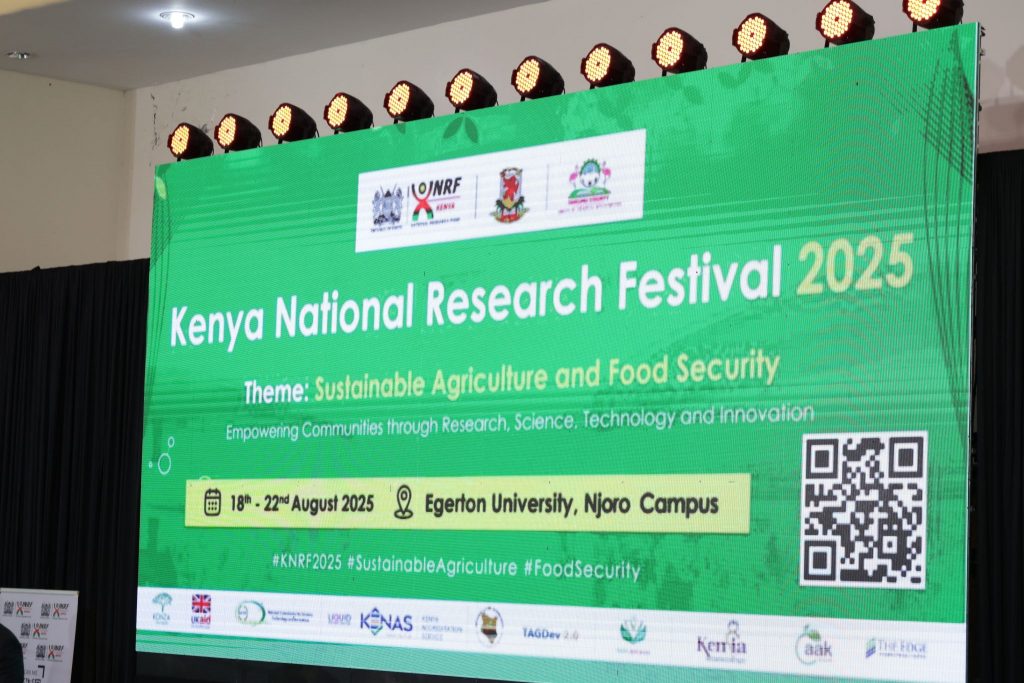
Potatoes may be humble, but their potential is far from ordinary. This concern took centre stage at the Kenya National Research Festival 2025, a five-day event hosted at Egerton University’s Njoro campus under the theme “Sustainable Agriculture and Food Security.” Researchers, students, farmers and agritech innovators came together to showcase how value addition in potatoes could unlock new opportunities for farmers, entrepreneurs, and Kenya’s agro-industrial future.
Why Potatoes Matter
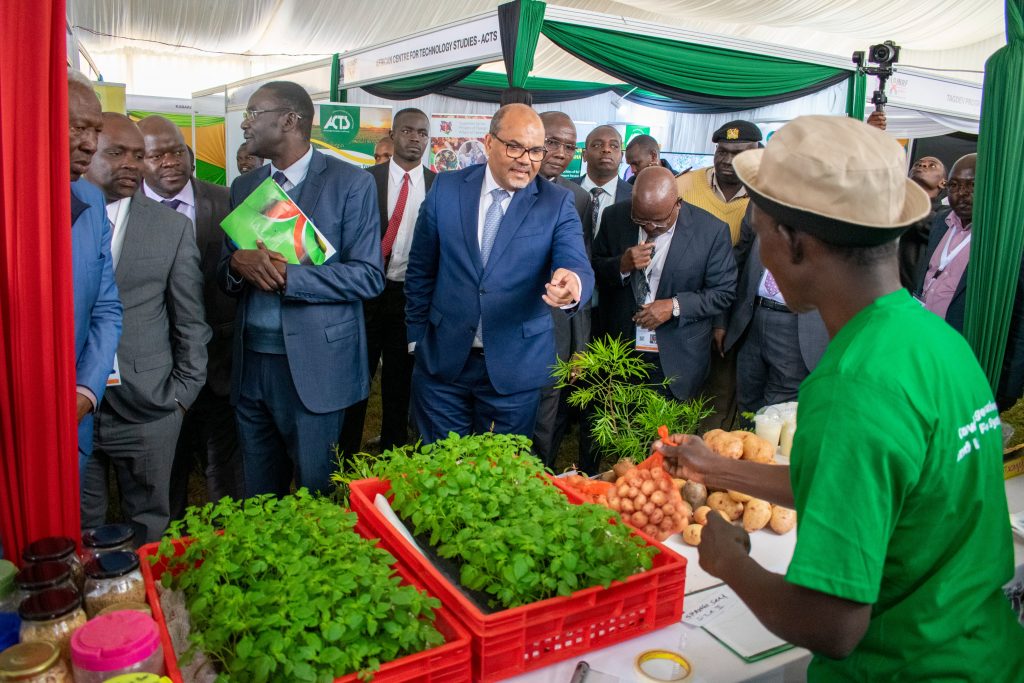
Potatoes are Kenya’s second most important food crop after maize, grown by more than 800,000 farmers. But despite their importance, weak value chains and limited processing continue to deny farmers higher incomes while slowing down industrial growth. The festival challenged this status quo, positioning the potato as a game-changer for food security, innovation and rural livelihoods.
Student-Led Breakthroughs
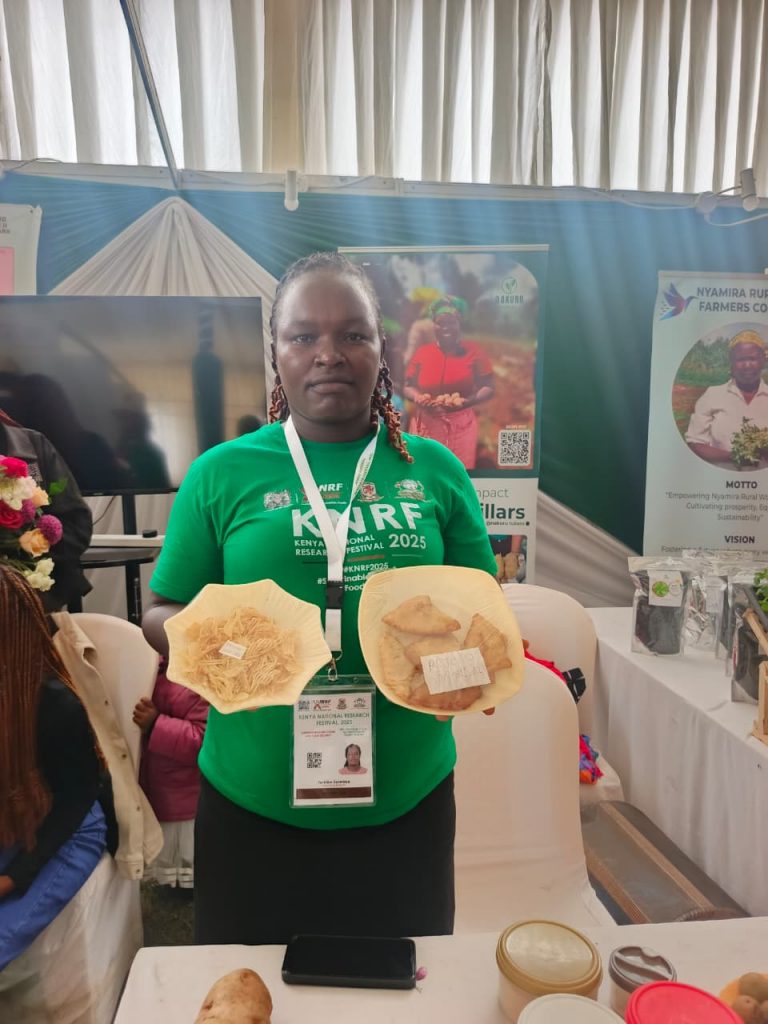
University students wowed the audience with their creativity. Using potato and cassava flour, they baked mandazi, instant noodles and cakes healthier, more affordable alternatives to wheat-based snacks. Others explored potato starch for biodegradable packaging, fortified potato flour for porridge and bakery products and even potato-based blends to reduce reliance on costly imports. Each project showed the crop’s potential to power sustainable businesses and healthier diets.
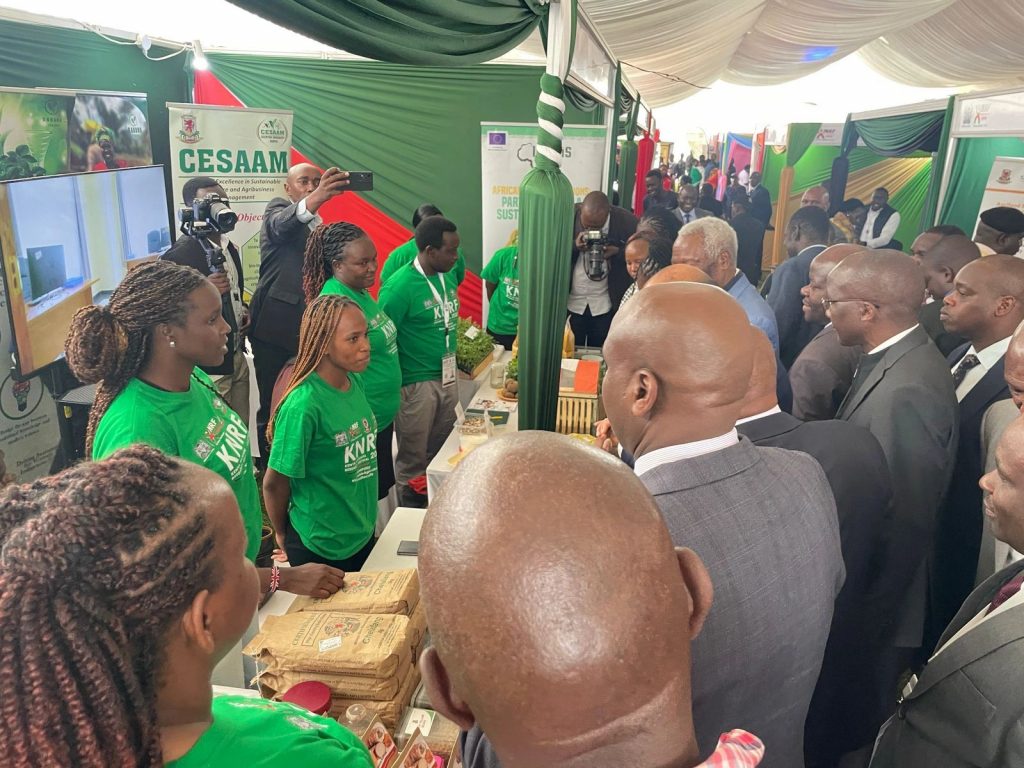
Among the standout innovators was Jackline, a CESAAM Master’s student currently mentored by the Nakuru Tubers team. She showcased her work on value-added potato products, highlighting how the crop can be transformed into a diverse range of foods that meet evolving consumer demands. Jackline underscored her commitment to bridging the gap between research and market application, ensuring that potato-based products not only reach households but also generate new income streams for farming communities.
Alongside her, Milkah, a TAGDev-sponsored PhD student, presented cassava flour and a variety of products derived from it. She explained how her research is not only focused on nutrition but also on developing market-ready products. Milkah outlined plans to commercialize her cassava-based innovations, turning research outcomes into practical solutions that can create jobs, reduce dependency on imports and promote food security.
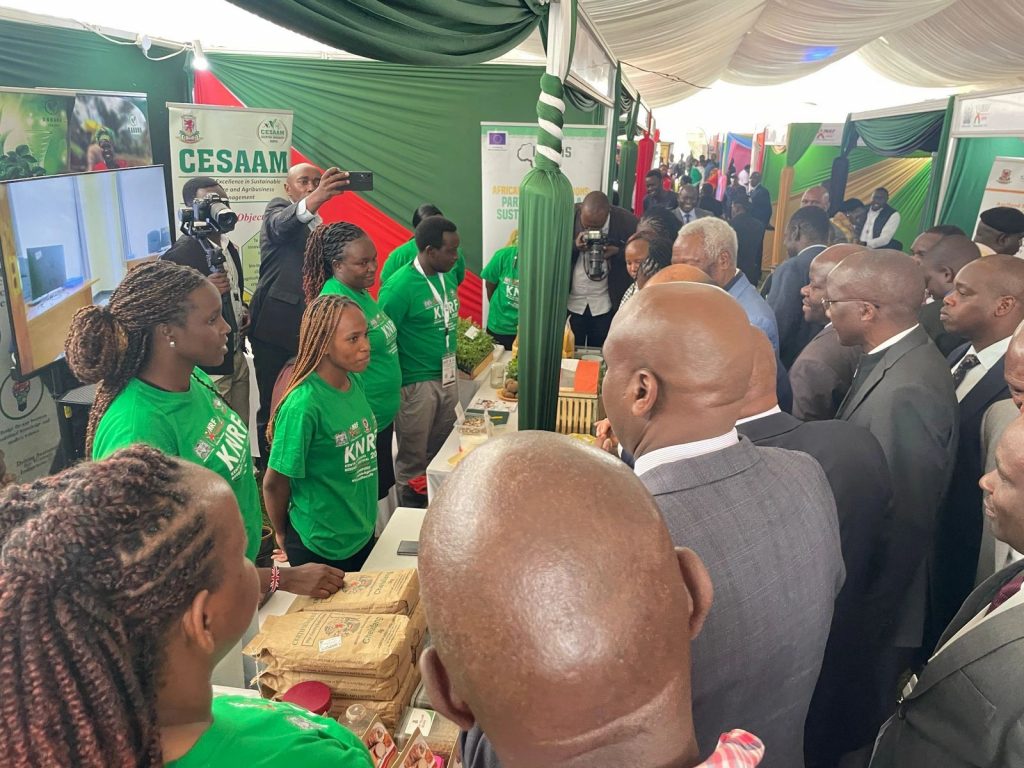
These youth-driven innovations are supported through programs such as TAGDev, backed by RUFORUM (Regional Universities Forum for Capacity Building in Agriculture) and the Mastercard Foundation and the Centre of Excellence in Sustainable Agriculture and Agribusiness Management (CESAAM), supported by the World Bank. Together, these initiatives equip young researchers and entrepreneurs with practical skills, mentorship and resources to drive value addition and create jobs in agriculture.
Agritech on the Rise
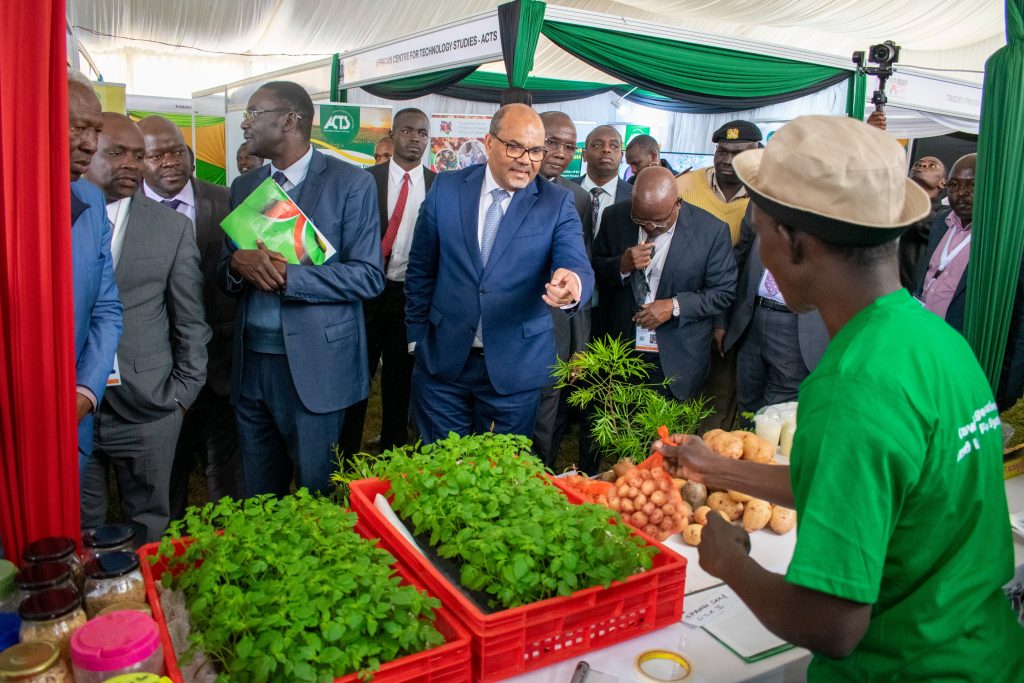
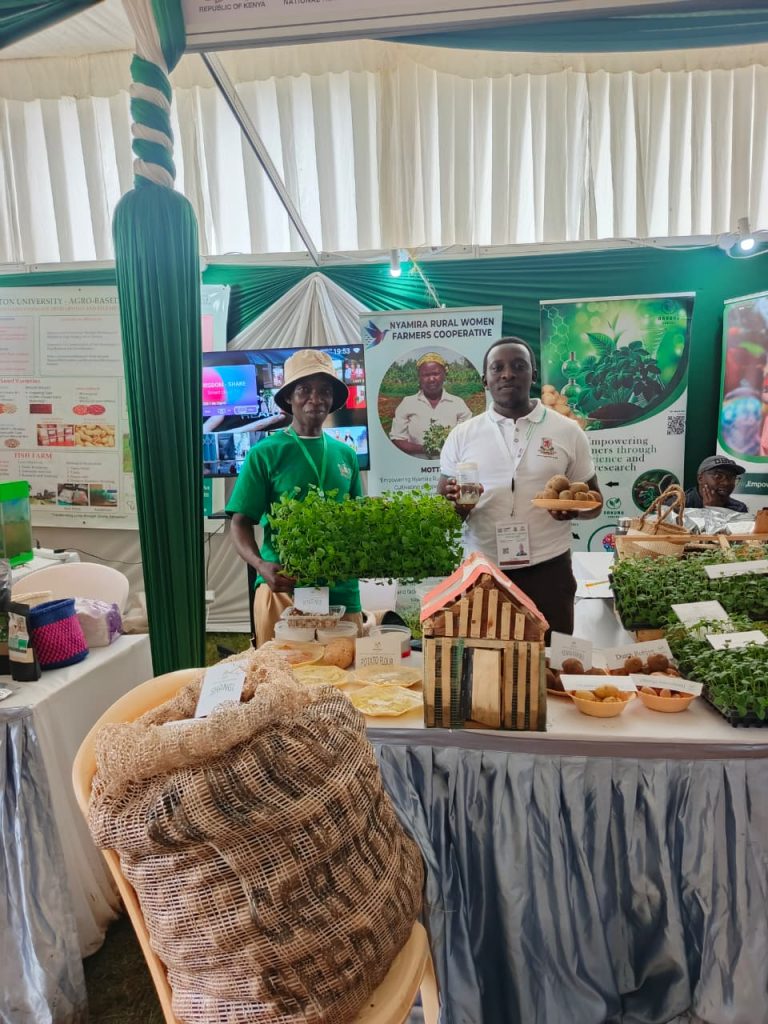
Young agritech companies are also stepping up. Nakuru Tubers, for example, is pioneering modern propagation methods such as tissue culture, invitros, minitubers and rooted apical cuttings. These technologies not only ensure farmers get clean, disease-free seed potatoes but also guarantee processors a steady supply of quality raw materials essential for scaling value addition.
Farmers and Innovation at the Centre
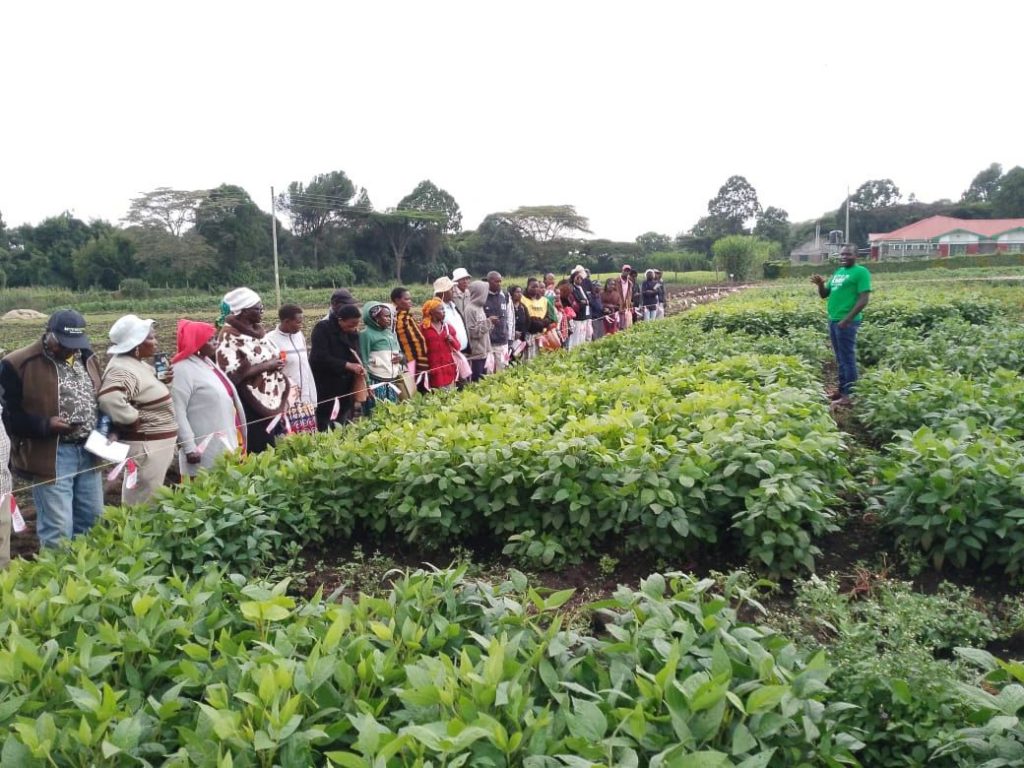
This year’s festival has attracted more than 1,000 farmers from Nakuru and beyond, who are participating in field demonstrations, exhibitions, keynote speeches, panel discussions, training sessions, poster presentations and innovation pitches. Their involvement underscored the festival’s mission to connect research with real-world application, ensuring innovations directly address farmers’ needs.
Leaders Call for Science-Driven Agriculture
The event wasn’t just about innovations on display; it was also a call to action. Agriculture Cabinet Secretary Mutahi Kagwe underscored the importance of investing in science and research to transform agriculture.
“Building a knowledge-driven agriculture will greatly rely on sustainable research financing, evidence-based policymaking and support for innovation ecosystems,” Hon. Kagwe noted, adding that research outcomes must directly benefit farmers and pastoralists.
Calls for Greater Research Funding
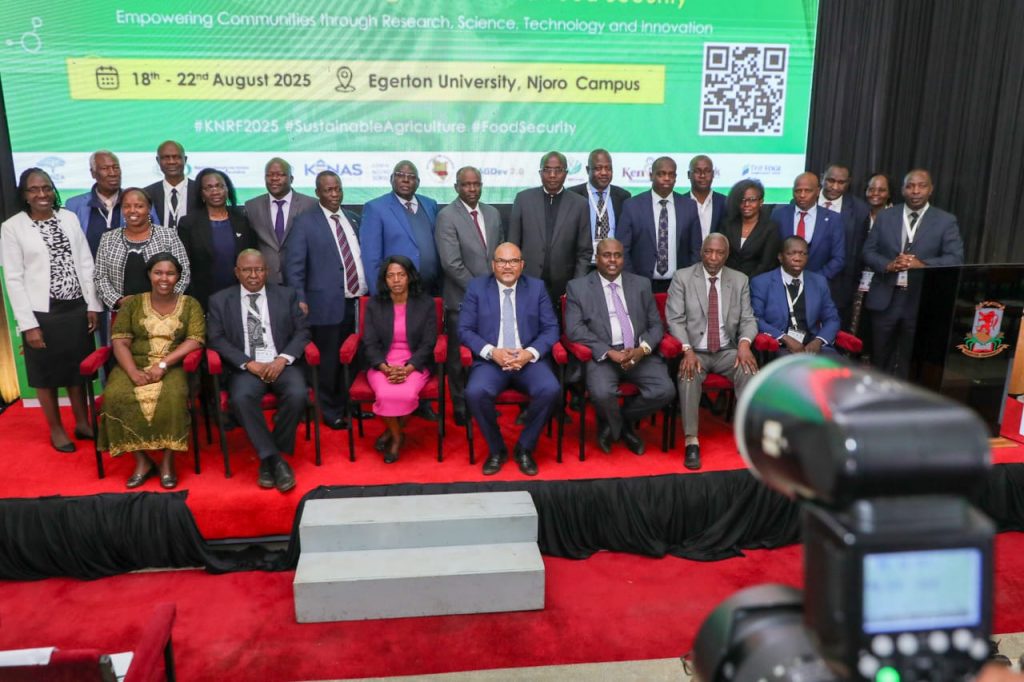
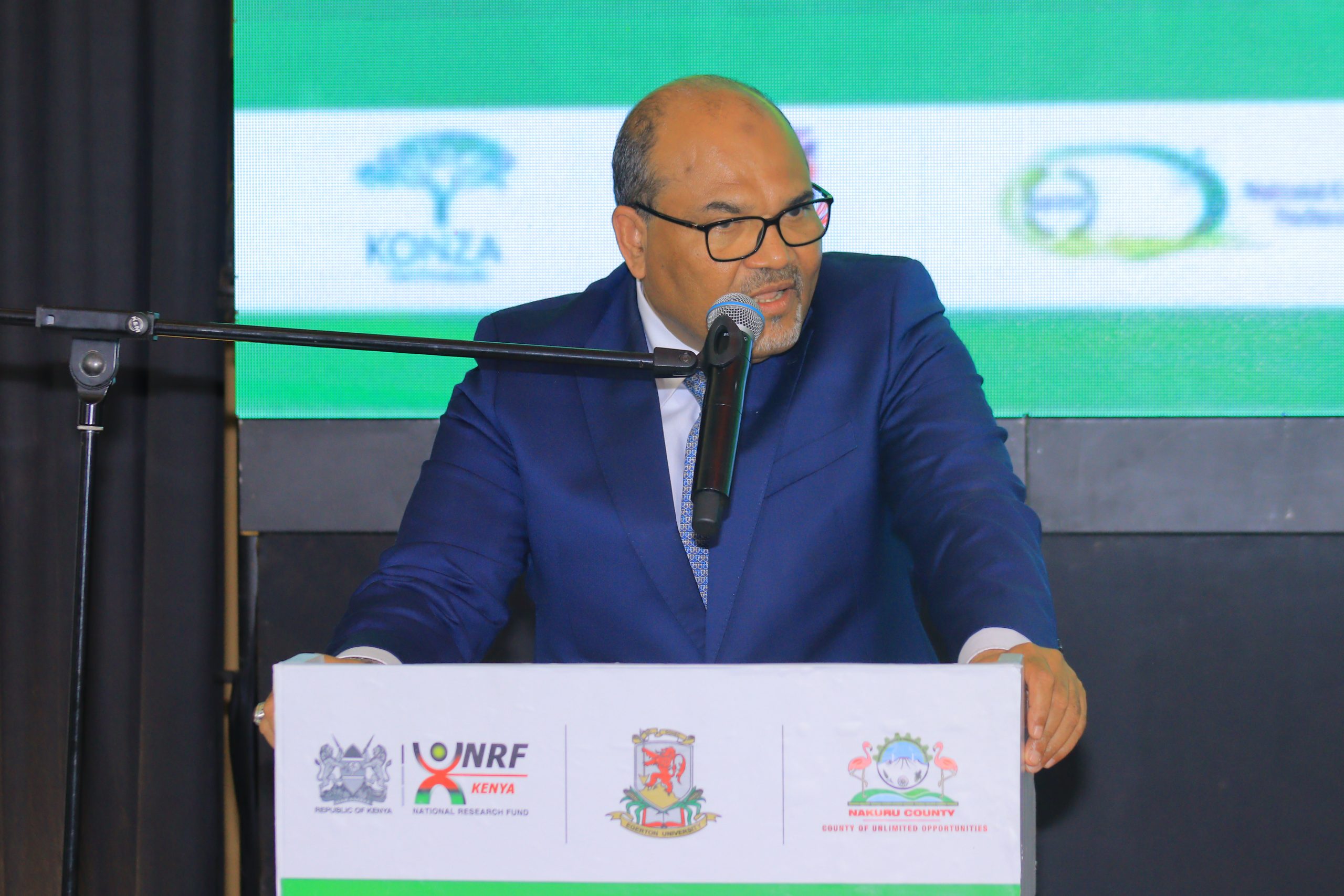
Kenya has yet to meet its pledge of spending 2 per cent of GDP on research, a shortfall experts warn is slowing innovation in agriculture and beyond. Prof. Dickson Andala, CEO of the National Research Fund (NRF), emphasised that research investment is vital to confront hunger and climate challenges.
“We cannot continue ignoring science when the country is facing recurring droughts and declining yields. Research is the only sustainable way forward,” he said.
Since its inception, the NRF has invested over Ksh. 7 billion funding more than 400 research projects, supporting 19 research infrastructures and backing over 700 postgraduate students. Egerton University alone has received Ksh. 152.9 million, including Ksh. 39 million for a Safe Food Reference Laboratory that will strengthen food safety testing.
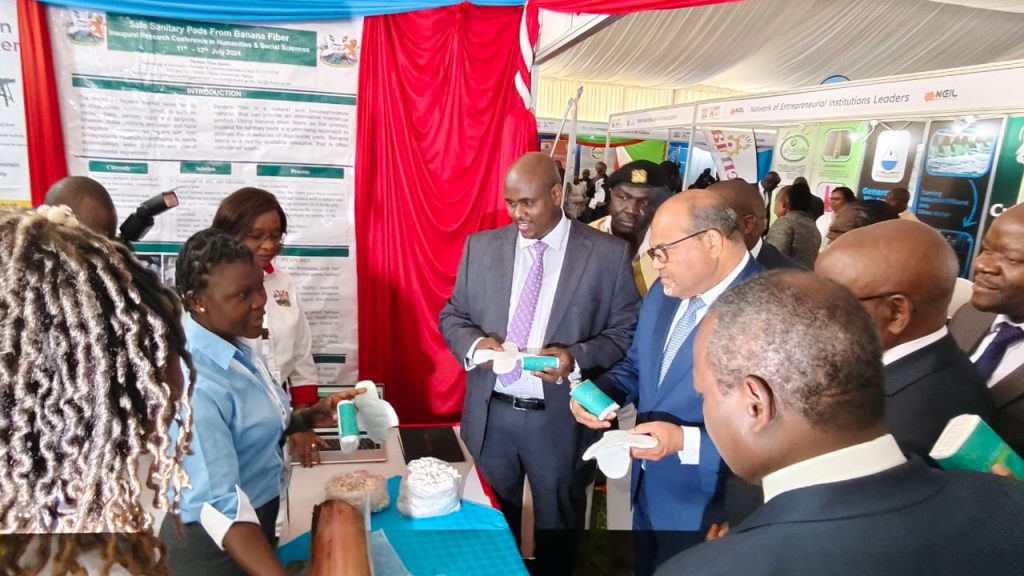
Meanwhile, Principal Secretary for Science, Research and Innovation, Prof. Shaukat Abdulrazak, urged counties to embrace cutting-edge technologies from nuclear science for nutrition to electronic beam technology that reduces post-harvest losses. Cabinet Affairs PS Idris Dokota echoed the sentiment, calling counties “key players in shaping agricultural policy” and urging them to support youth-driven innovations.
Looking Ahead: From Labs to Markets
The potato-centered innovations presented at the festival underscored one message: research must leave the lab and reach the grassroots. Whether it’s potato flour cakes on store shelves or biodegradable starch packaging replacing plastics, the goal is to turn science into products that improve lives and incomes.
As the spotlight on potatoes grows brighter, experts believe value addition could revolutionize food security and rural economies in potato-rich counties like Nakuru, Narok, Nyandarua and Meru. With the right support, the potato might just become Kenya’s golden crop.