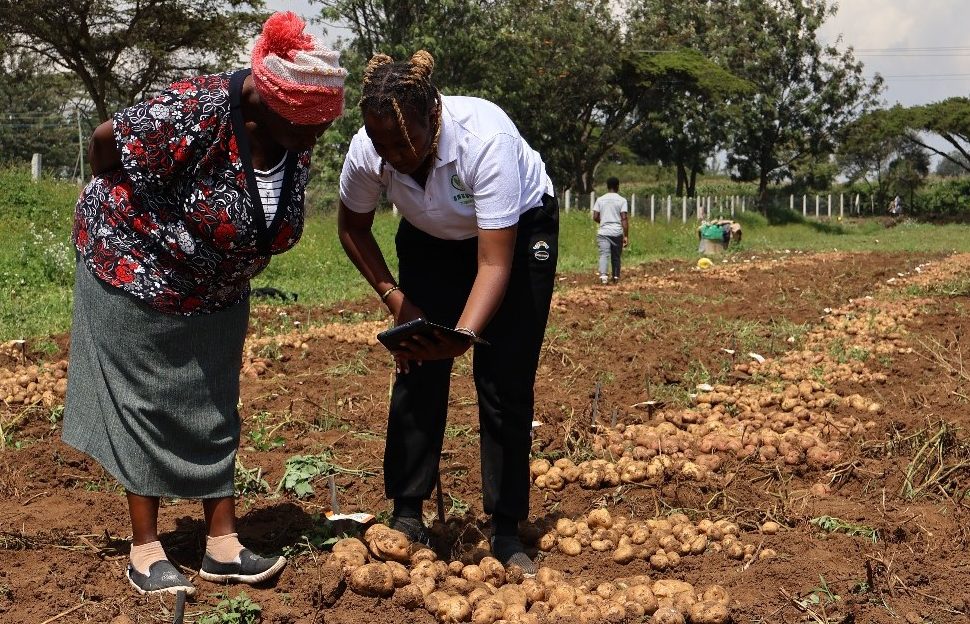
In the rolling highlands of Kenya, potatoes are more than food they are livelihood, culture and hope. Now, thanks to a groundbreaking initiative led by the International Potato Center (CIP), farmers are taking a front-row seat in shaping the potatoes of tomorrow. Through participatory breeding trials in Molo and Njoro, smallholders, youth and private companies are being exposed to a stunning diversity of potato clones, learning firsthand how breeding works and which varieties best suit their needs in the face of climate change.
A living showcase of potato diversity
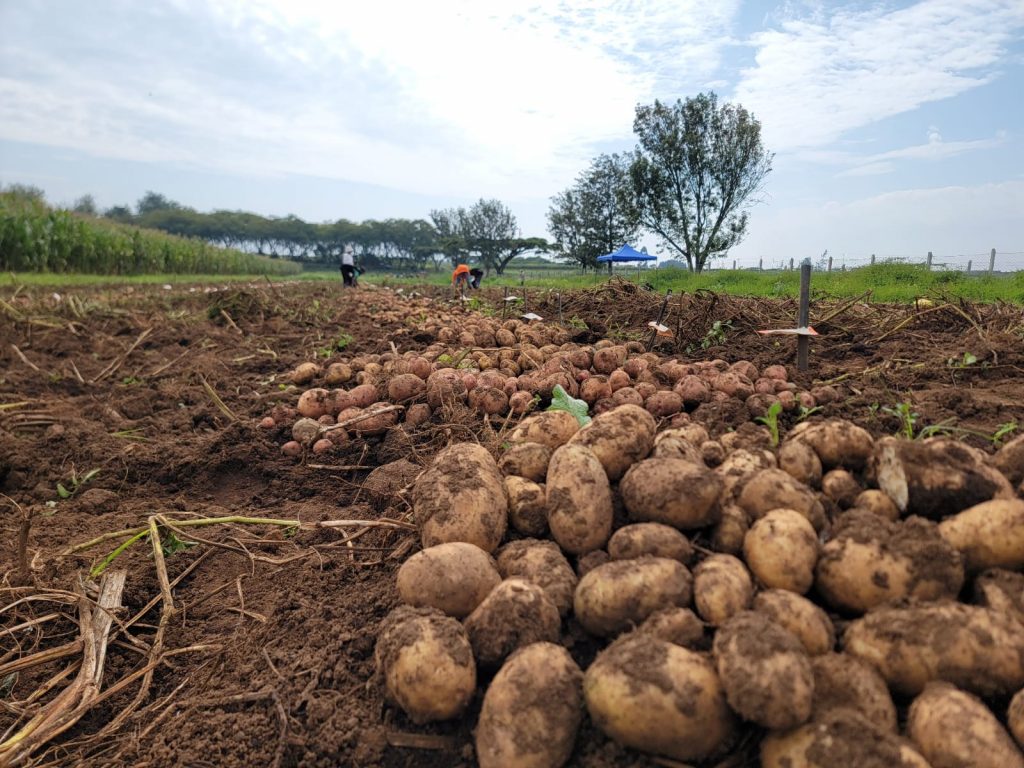
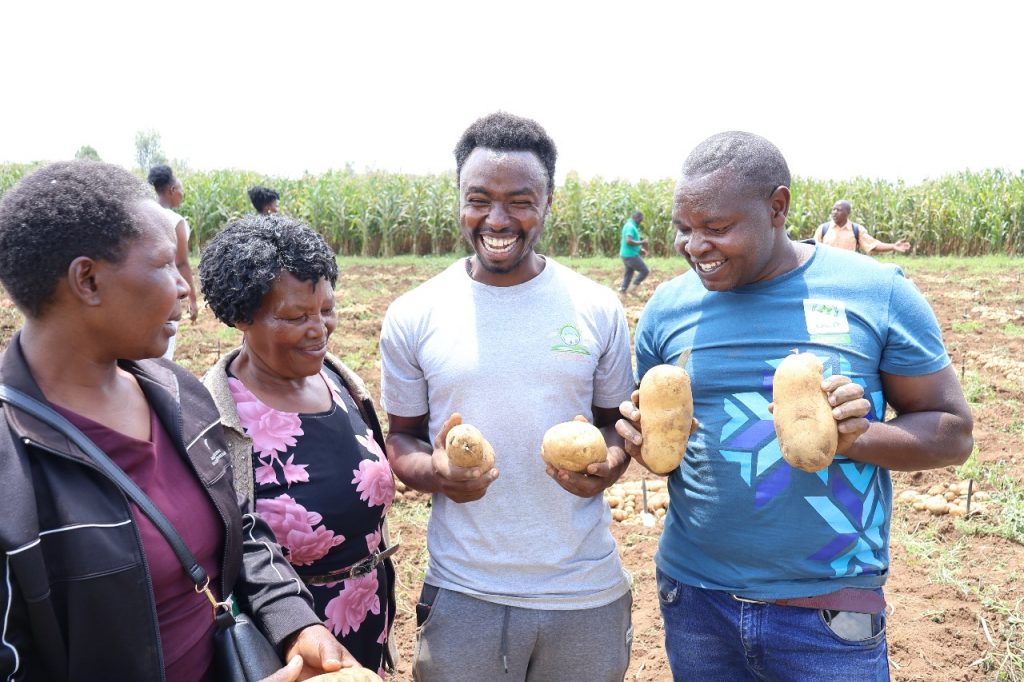
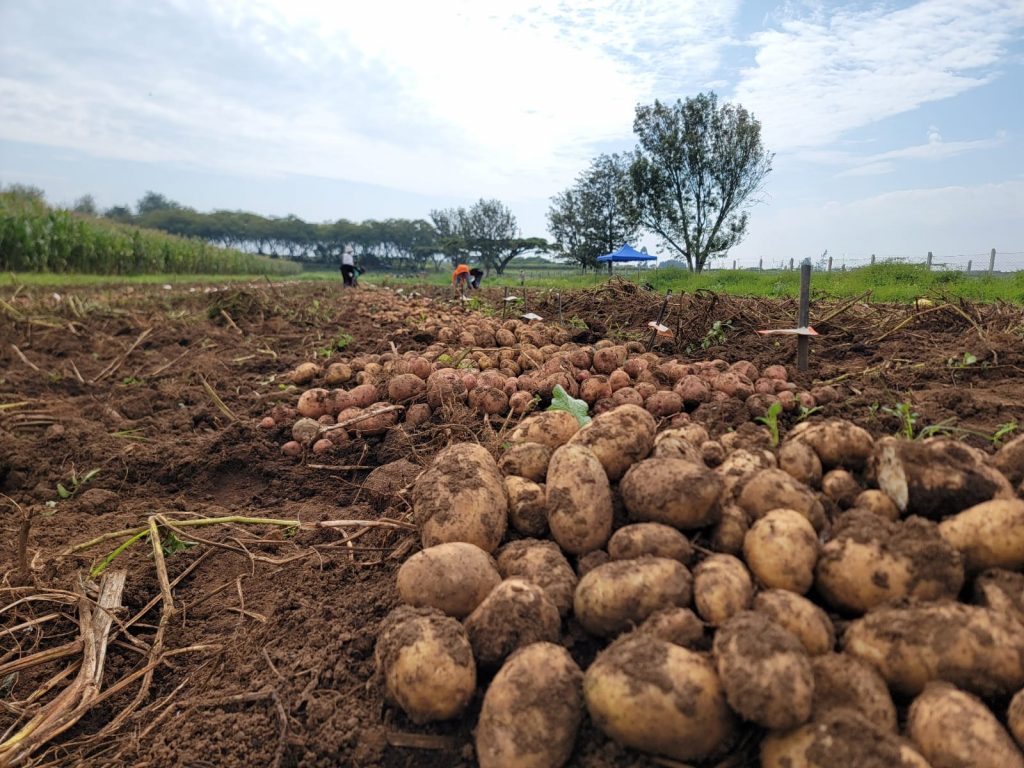
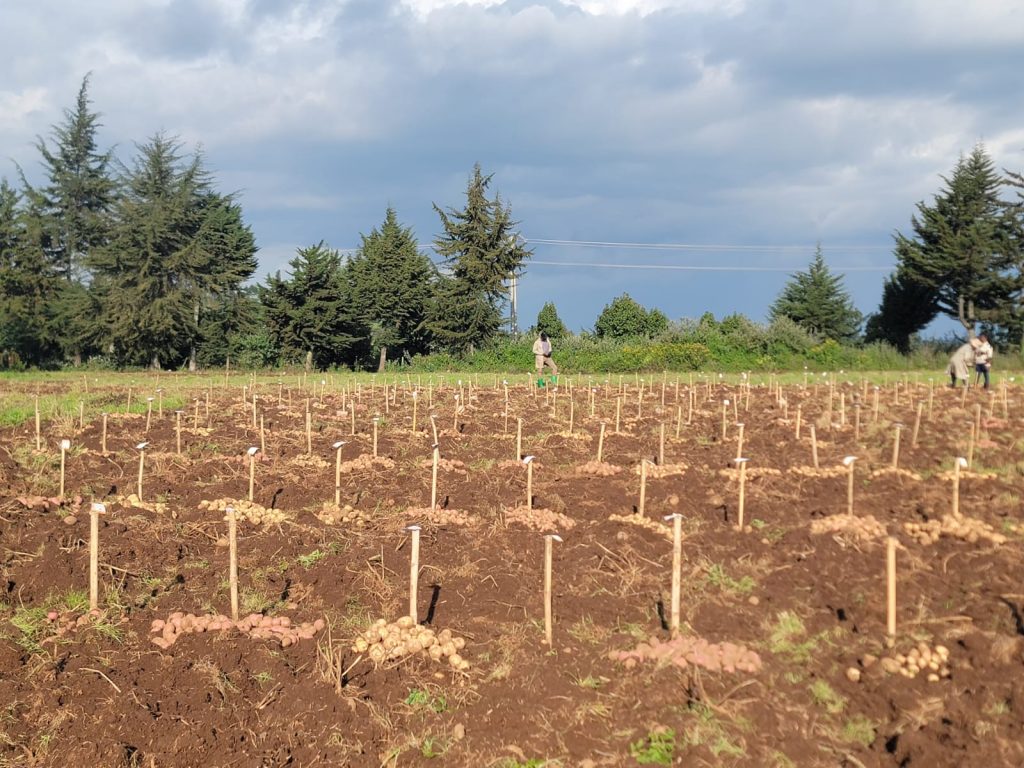
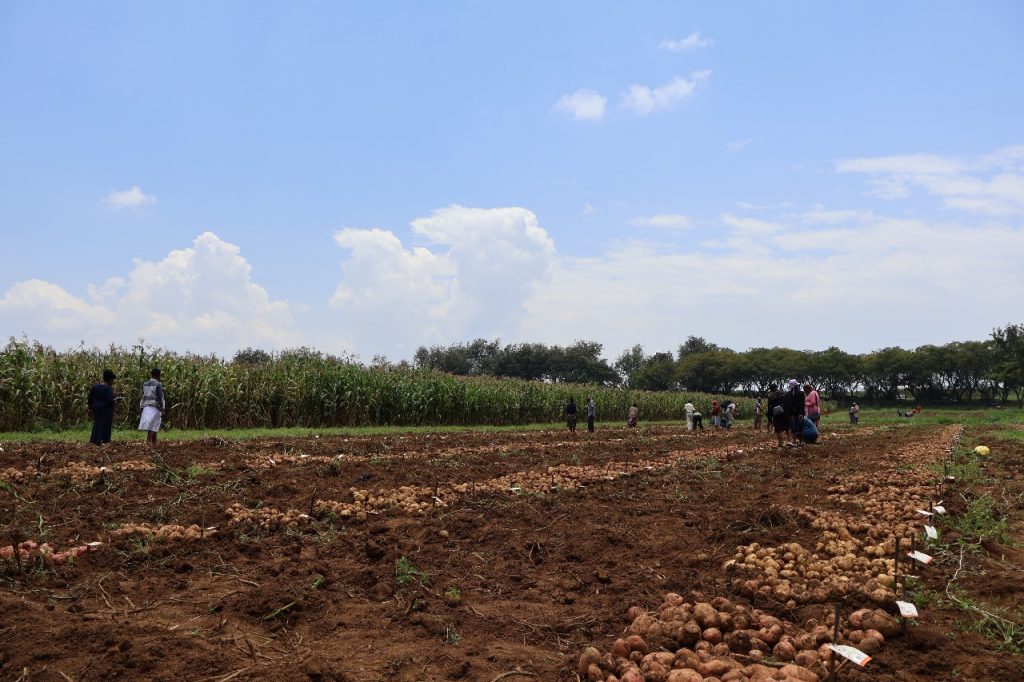
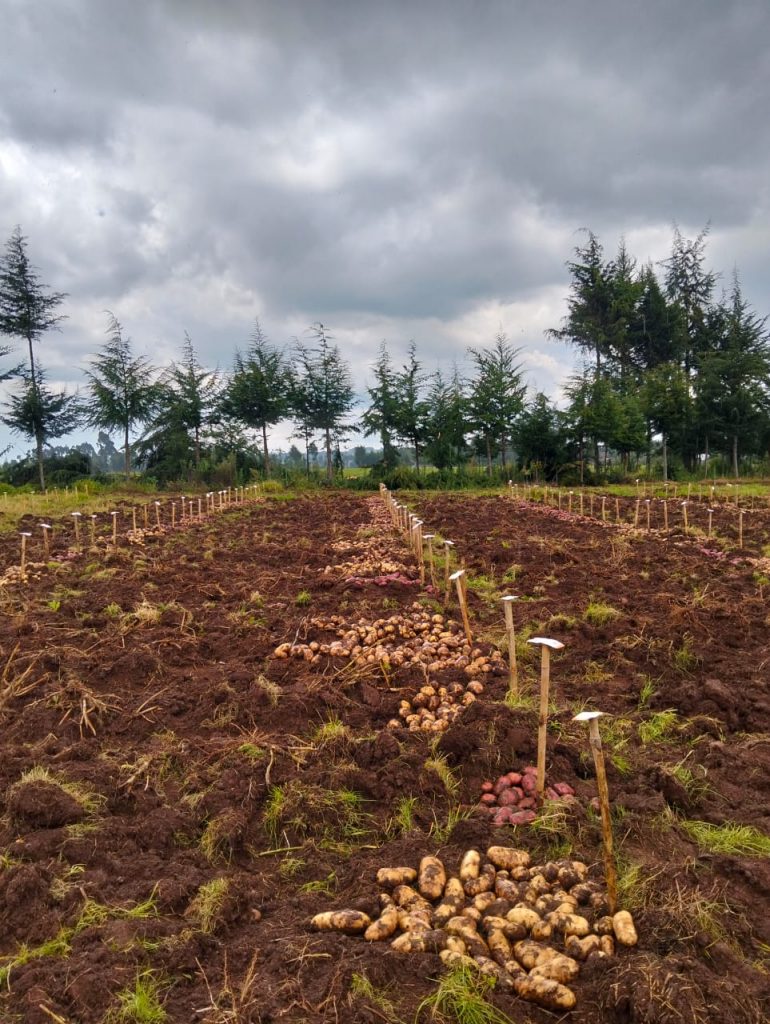
The trials brought together hundreds of new breeding lines fresh from CIP’s global breeding pipeline. But this wasn’t just a scientific display. For the first time, farmers saw side by side the diversity hidden within potato genetics: tubers of different colors, sizes, shapes and skin textures.
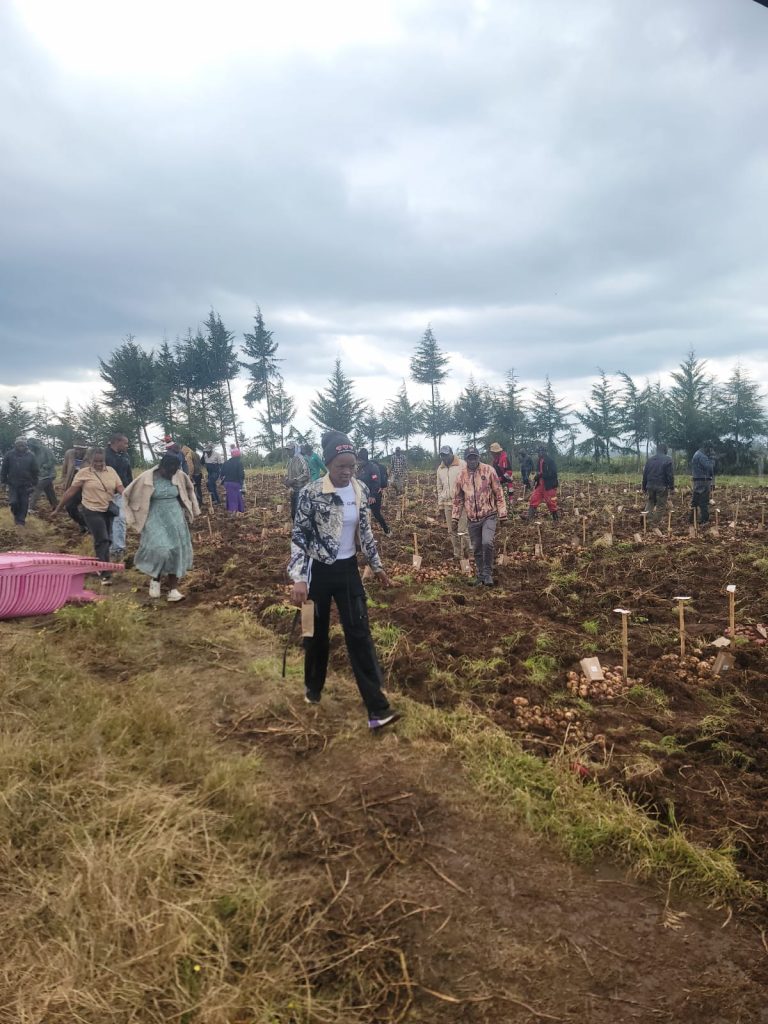
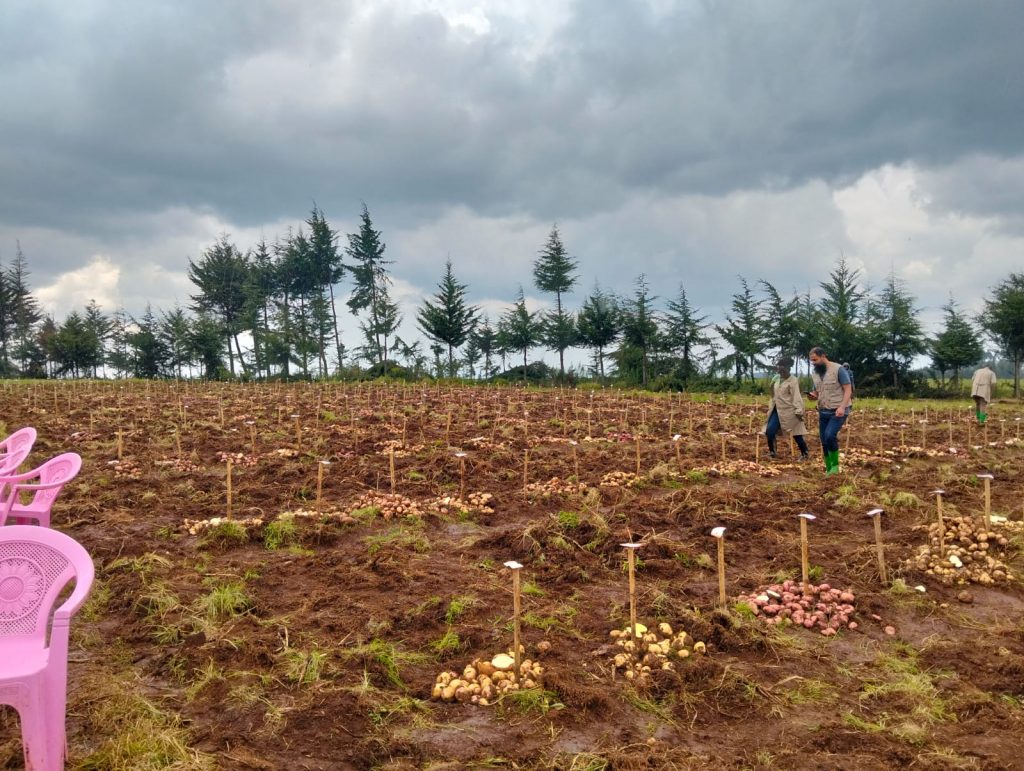
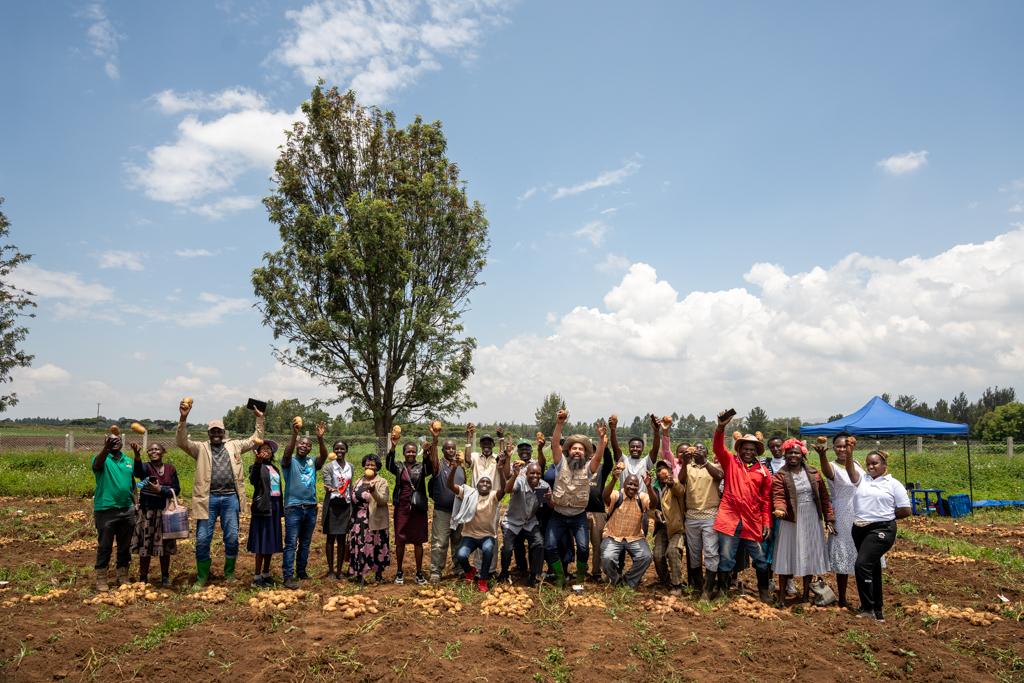
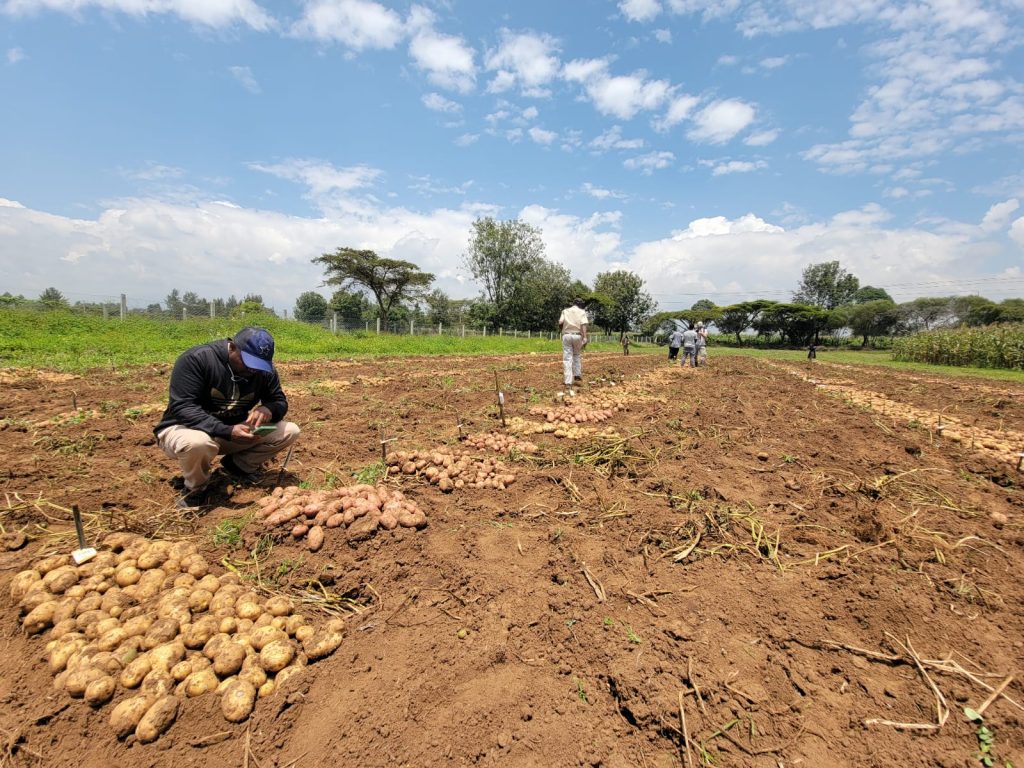
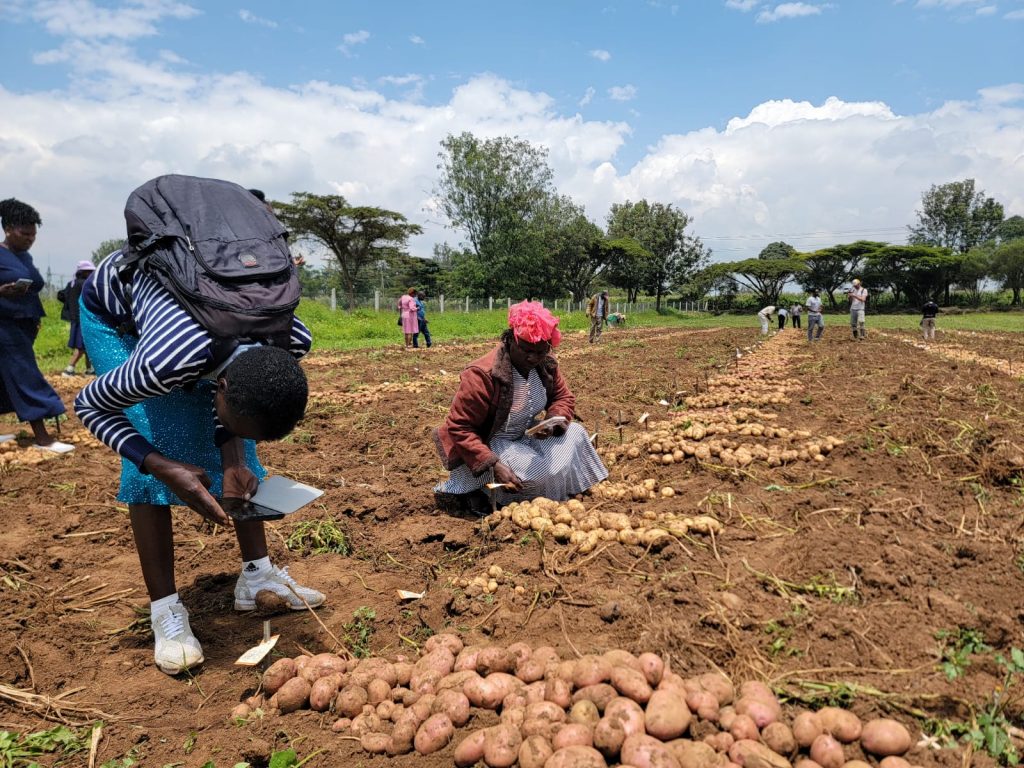
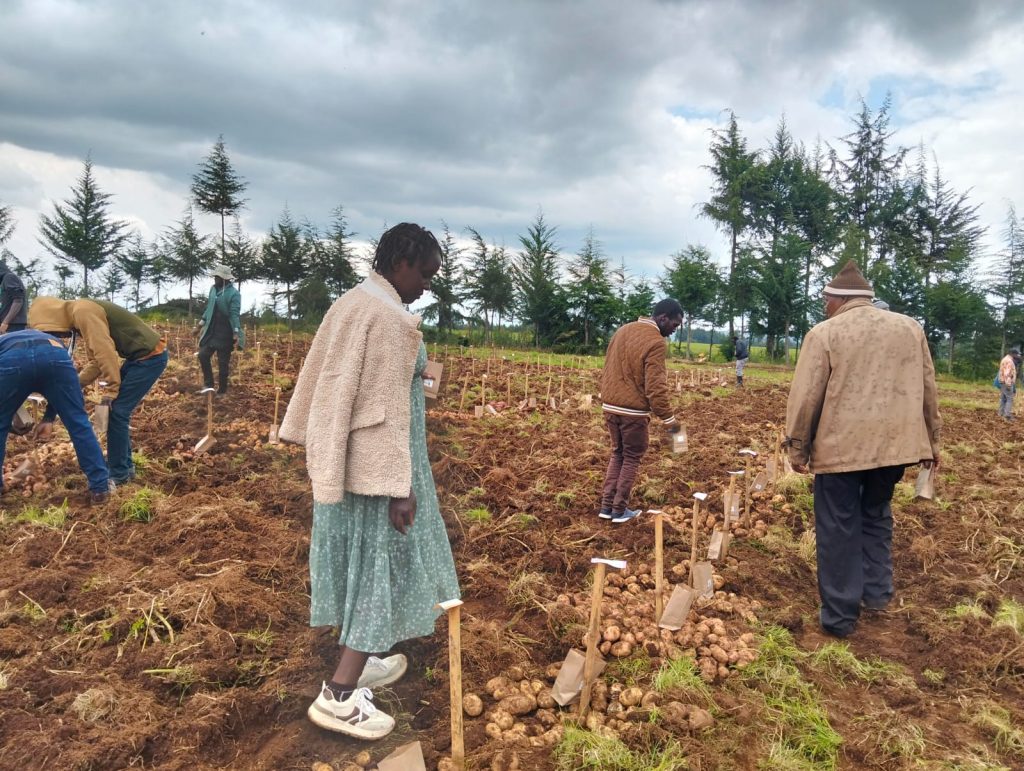
And unlike past field visits where crops were still growing, this time the farmers had a chance of meeting with potato breeder in Kenya and evaluated harvested tubers. Spread out in neat rows, the potatoes were arranged clone by clone, offering farmers a hands-on opportunity to judge appearance, market quality and consumer appeal.
One farmer from Njoro expressed his surprise:
“I never imagined that potatoes could vary so much. Where do potatoes even come from? what is their origin? I have seen one variety called Unica, which I already grow on my farm and others that looked similar to Sherekea and our common Shangi, along with several more that resembled them. seeing them all harvested together gave me a clear picture of the incredible diversity of potatoes we also have in Kenya and it opened my eyes to just how many varieties can serve different purposes, from the market to the kitchen.”
Kernels and barcodes: Voting for the future
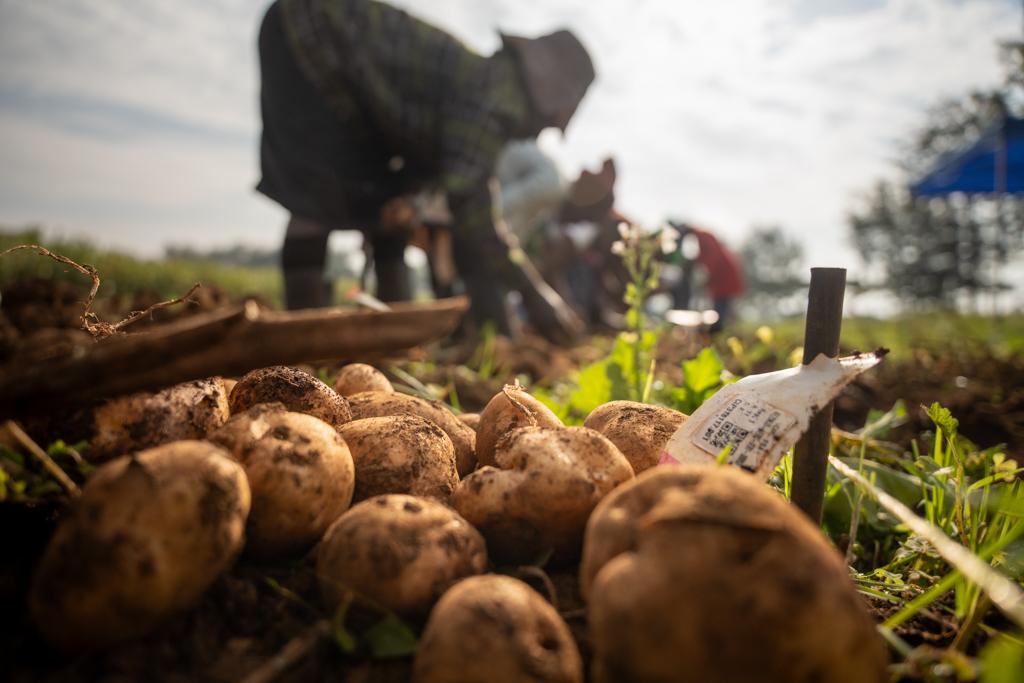
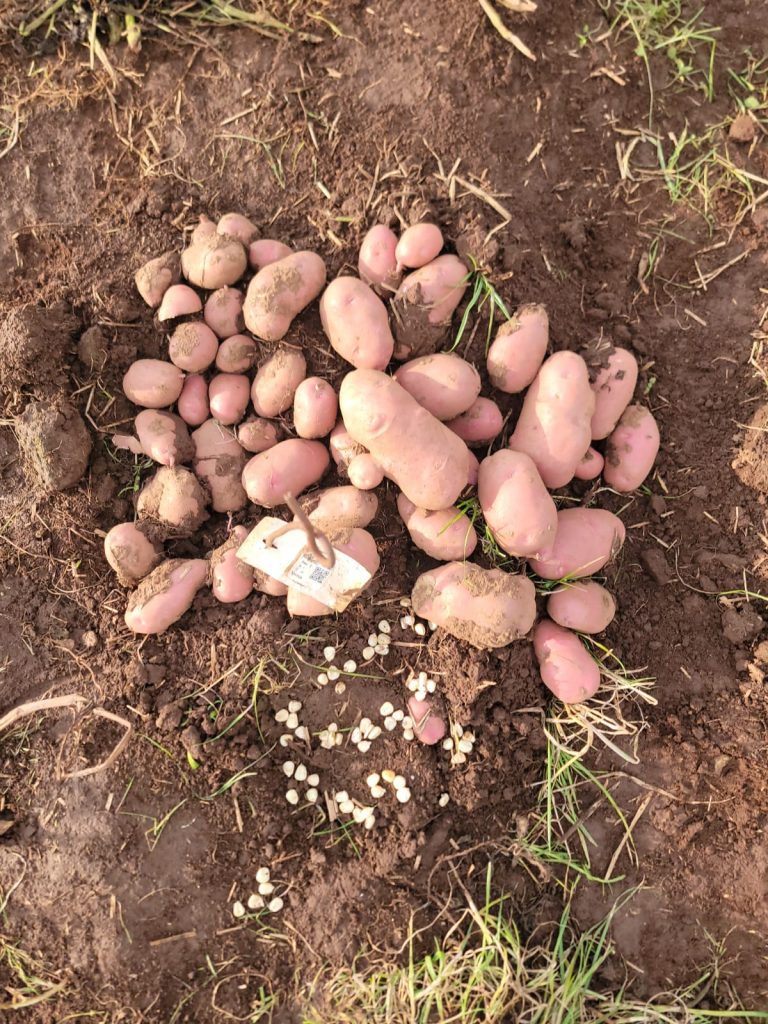
The selection method was as engaging as it was innovative. Farmers used maize kernels as voting tokens, placing them directly on the tubers they preferred most in the lineup. Each kernel represented a choice, turning the evaluation into a lively, interactive process where every farmer’s voice mattered.
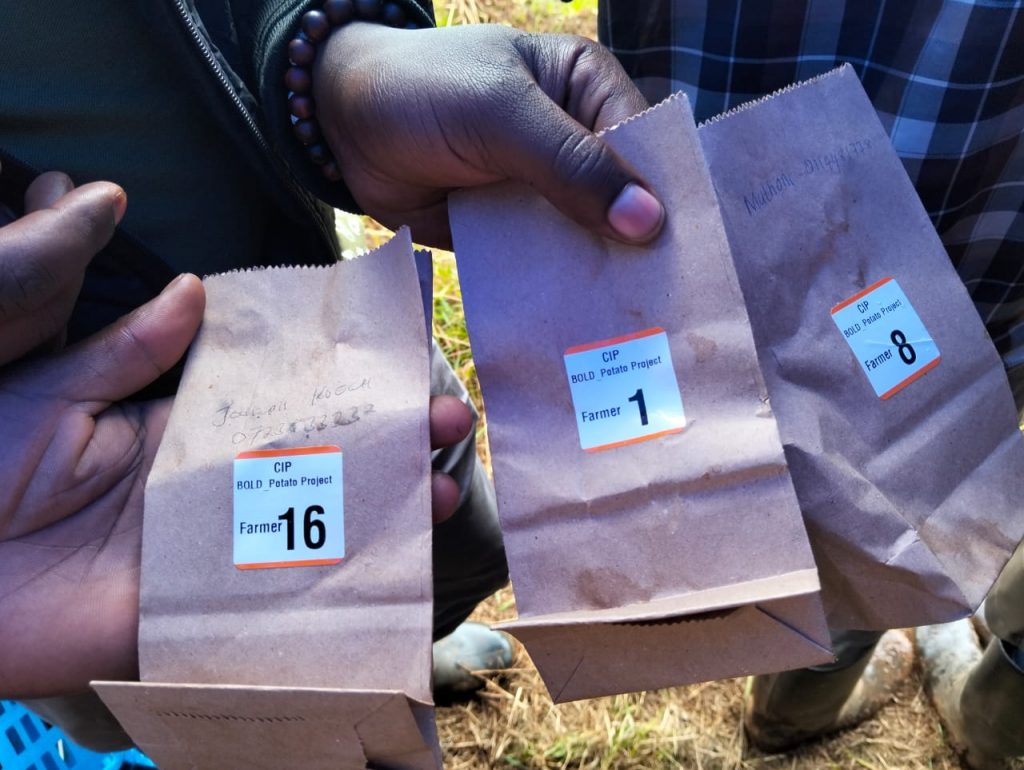
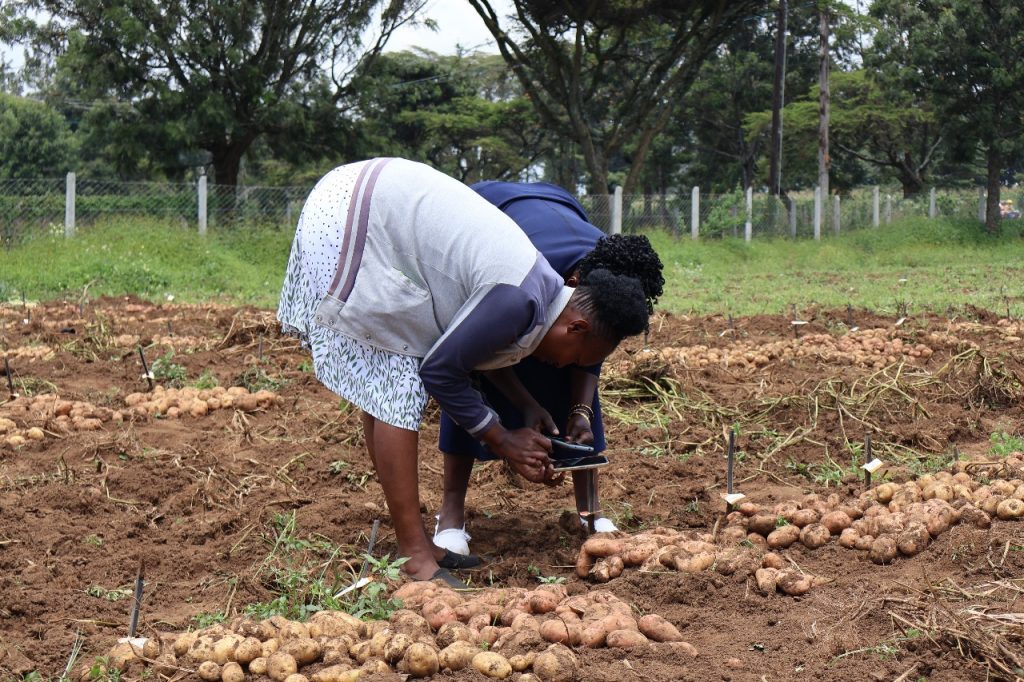
Alongside this, digital barcode sheets captured detailed preferences, allowing CIP breeders to analyze the data systematically. By combining the simplicity of kernels with the precision of digital tools, the program ensured that traditional decision-making was preserved while modern science recorded and amplified farmer voices.
Traits that shaped decisions
Farmers ranked the potato clones according to traits most relevant to their daily lives:
- Tuber size and shape – larger, uniform potatoes received more votes for both household use and market appeal.
- Skin color and smoothness – important for achieving better prices in local markets.
- Depth of eyes and eye numbers – influencing ease of peeling and suitability for seed use.
- Tolerance to late blight and other stresses – while no detailed data was presented, farmers were informed that certain clones showed stronger resilience during the growing season.
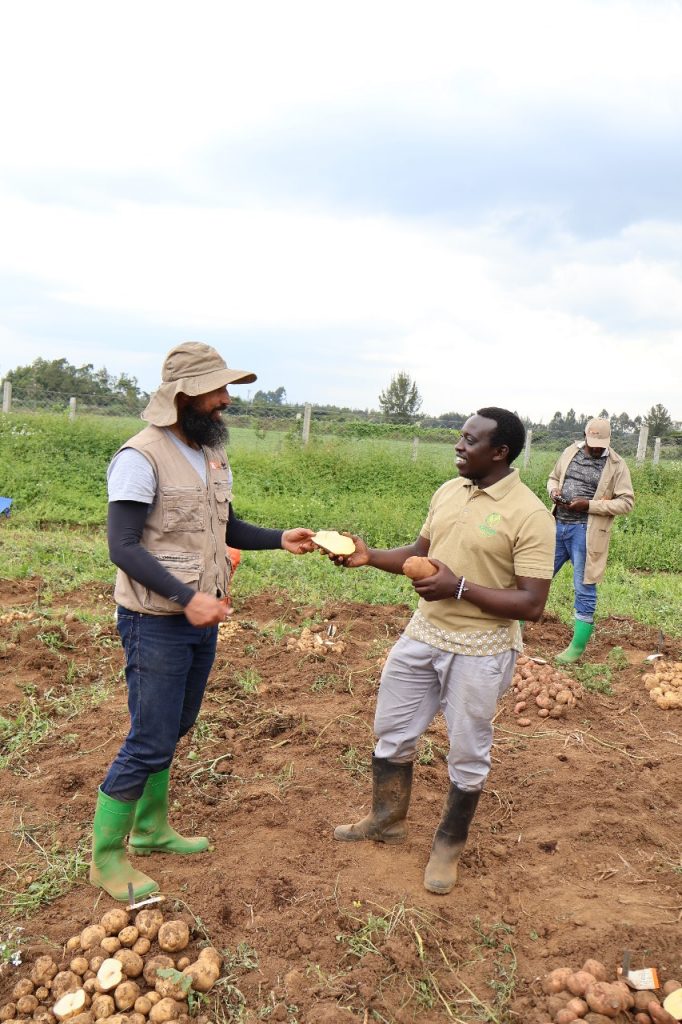
To look beyond outward appearance, farmers were encouraged to cut the tubers open. This revealed hidden quality traits such as:
- Flesh color and dryness – determining both consumer preference and cooking performance.
- Water content – an indicator of storability and suitability for processing.
- Dry matter content – linked to cooking quality, with drier tubers often preferred for frying and boiling.
This hands-on evaluation helped farmers connect external appearance with internal traits that matter most in kitchens, markets and storage facilities leading to more informed selections.
Youth and agribusiness at the center
The trials also drew in new energy from young agricultural entrepreneurs. Nakuru Tubers (https://www.nakurutubers.com/), a dynamic youth-led agribusiness, played an active role in organizing the participatory sessions, helping farmers understand the process and demonstrating how modern potato seed systems can transform livelihoods. Their involvement underscored the critical role of youth in scaling innovation.
Meanwhile, the Grenever Company, known for championing organic and sustainable agriculture, explored how specific clones might be developed into biofortified or special potatoes tailored for health-conscious and premium markets. Their presence illustrated how private companies can align with farmer-led breeding to create opportunities in both local and niche value chains.
A learning journey: From origins to release
The participatory trials weren’t just about choosing tubers they were also about demystifying potato breeding. CIP scientists walked farmers through the entire journey:
- Origins: tracing potatoes back to the Andes of South America, where wild relatives provide resistance genes.
- Crossing parental lines: combining traits to create diverse segregating populations.
- Multi-environment trials: testing clones in places like Molo and Njoro to understand genotype-by-environment interactions.
- Farmer-participatory selection: integrating real-world preferences into breeder decisions.
- Varietal release: the final step, where selected lines become officially recognized varieties for commercial cultivation.
For many farmers, this was the first time they understood how varieties move from research stations to their own fields.
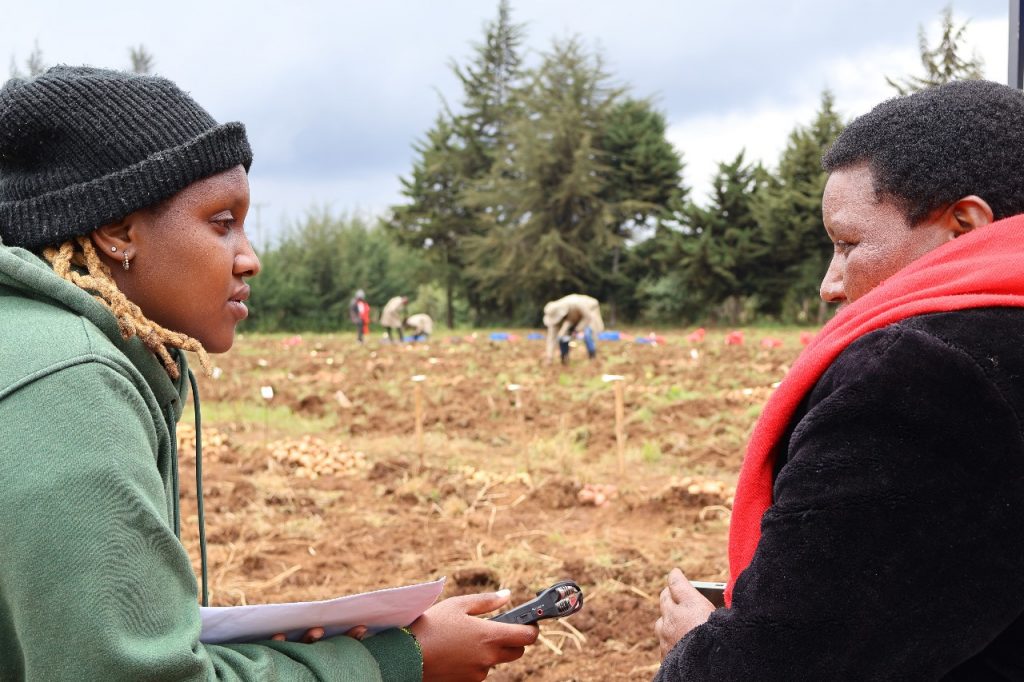
One participant noted:
“Now we see the journey of a potato from a cross in the lab to the harvest in our baskets. We feel part of the process, selecting what we prefer and what will bring both income and food to our tables.”
East Africa as the new hub of seed potato innovation and research
With participatory breeding at its core, East Africa is rapidly positioning itself as the continent’s hub for potato diversity and innovation. The blend of science, farmer knowledge, youth leadership, government institutions and private sector engagement is creating a new model for agricultural resilience.
At the heart of this movement are participatory trials in Molo and Njoro, hosted on established agricultural research grounds KALRO’s field stations and the Molo Agricultural Development Corporation (ADC). These sites provided ideal environments for multi-location testing, allowing farmers and breeders to see firsthand how potato clones performed under different highland conditions. Involving farmers in such evaluations is not only about collecting data, but also about giving them a voice in shaping the varieties that will define their agricultural future.
Thiago Mendes, Africa Breeding Lead at CIP (International Potato Center), stressed that East Africa is uniquely poised for this role, noting:
“This region is not only testing new varieties it is shaping the future of potato breeding. With CIP’s genetic resources, farmer participation, and private-sector investment, East Africa can deliver clean, resilient and affordable seed potatoes that will transform agriculture across Africa.”
Building on this momentum is the BOLD (Biodiversity for Opportunities, Livelihoods and Development) Project, a groundbreaking 10-year initiative to strengthen food and nutrition security worldwide by conserving and using crop diversity. Led by the Crop Trust, in partnership with the Norwegian University of Life Sciences and funded by the Norwegian Government, BOLD is playing a vital role in potato research across East Africa. (https://www.croptrust.org/news-events/news/the-wow-potatoes-of-kenya-fighting-late-blight-with-farmer-approved-disease-resistant-spuds/)
Mendes underscored the significance of the initiative, explaining:
“Through the BOLD–Potato Project in Kenya, we are connecting potato diversity from Peru the crop’s center of origin to Africa, while deepening farmer engagement in the breeding process. This initiative is creating a living bridge between global genetic resources and local needs, ensuring that East Africa’s farmers are part of a more resilient potato future.”
As the initiative expands, research institutions across East Africa are being encouraged to join this hub, working hand-in-hand with farmers, youth-led agribusinesses and private companies. Their involvement will not only broaden the scale of testing but also strengthen regional capacity in potato breeding, seed systems and climate-resilient agriculture.
For farmers, participation in the trials has been about more than just evaluation. In Molo and Njoro, the simple act of placing maize kernels on harvested tubers was more than a vote it was a statement. A statement that farmers are ready to shape their future, that youth are ready to lead, that companies are ready to invest in diversity-driven solutions and that research institutions are prepared to anchor East Africa as a powerhouse of potato science.
The next potato varieties released in East Africa won’t just be CIP’s creations. They will be co-creations of science and society born from harvests where kernels and barcodes met tubers and where farmers, institutions and innovators claimed their place in the story of resilience.