
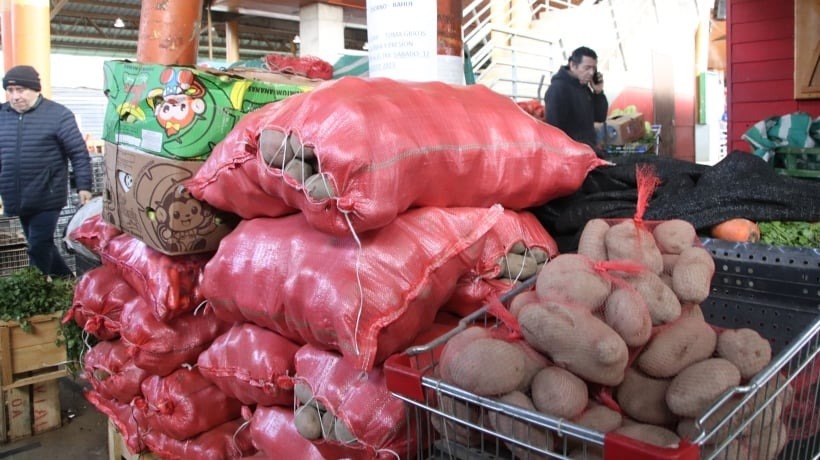
SANTIAGO, CHILE — The Chilean potato market is facing a sharp price drop, reaching the lowest levels in the past three years. The main reasons are record yields during the latest harvest and excessive stocks that have flooded the market.
High Yields Create Market Pressure
According to the Papa Chile Consortium, weather conditions favored potato production across most growing regions, especially in the central and southern zones. As a result, total output significantly exceeded market demand.
“When production goes well and yields are high, we produce more than the market can absorb — and that pushes prices down,” said Luis Miquel, general manager of the Papa Chile Consortium.
Farm-gate prices for 25-kg bags have dropped to around 3,000–4,000 Chilean pesos (USD 3.50–4.70) — levels close to or below the cost of production for many growers.
Oversupply and Lack of Processing Capacity
The structural issue behind the crisis lies in Chile’s limited potato-processing industry. Despite producing large volumes of quality raw potatoes, the country imports most of its processed products such as frozen fries and dehydrated potato flakes.
Industry representatives stress that expanding domestic processing facilities could help absorb part of the surplus and stabilize market prices.
Producers Seek Solutions
Farmers and associations are now discussing several potential measures:
- Better coordination of planting areas to prevent future oversupply
- Investments in storage and processing capacity
- Development of export opportunities for both fresh and processed potatoes
Without these actions, experts warn, the situation could worsen next season if high yields continue.
Outlook
Chile’s potato industry remains strong in agronomic performance but vulnerable economically. The challenge is to convert high yields into sustainable profit through innovation, cooperation, and industrial development.
Summary:
- Reason for price fall: High yields + oversupply
- Average price: CLP 3,000–4,000 per 25 kg
- Impact: Below-cost returns for many growers
- Key need: Investment in processing & storage