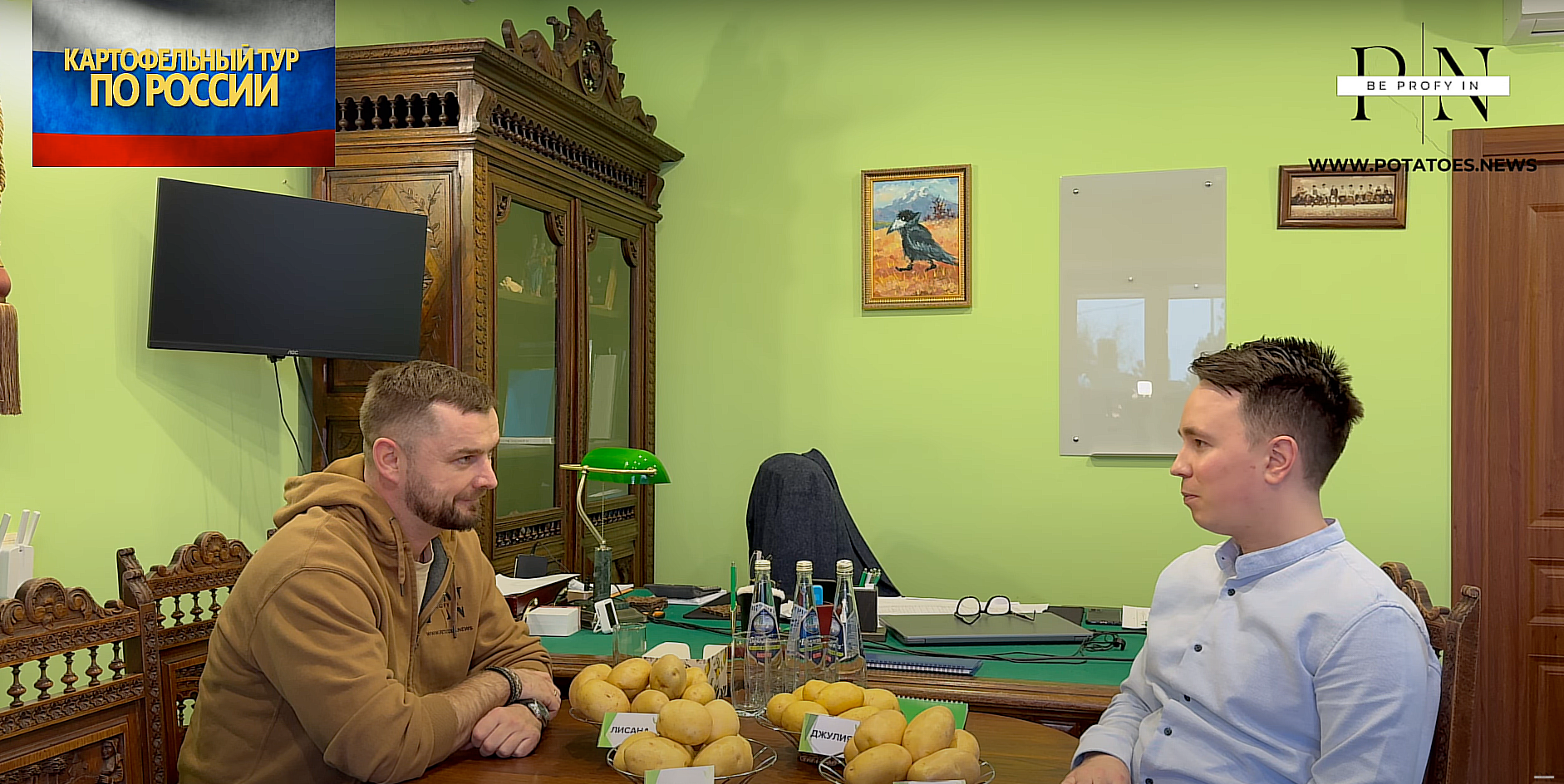
In an exclusive interview with Ilya Vladimirovich Molyanov, we learned not only about the company’s operations, but also received a clear and engaging explanation of the fundamentals of potato breeding and seed production.
The big picture
Everyone says “let’s support Russian varieties,” but new varieties need a commercial push. Creating a cultivar costs money; promoting it costs even more. Export is attractive (“bring money from outside and multiply it inside”), yet real barriers bite: varieties must be registered in each target country (Mongolia, Central Asia, Ireland, India, etc.), each with its own trials and timelines. Without sustained funding, companies end up spending—not earning—abroad.
What MOLYANOV AGRO GROUP does
A platform that links breeders, seed producers, and growers to the market:
- Origin story: several farms that couldn’t reliably sell alone joined forces to avoid “grow first, sell later” warehousing.
- Consolidation in Samara Oblast (via the Potato Growers’ Union and the MAC group) enabled coordinated production and outbound sales beyond the region.
- Assortment by conditions: a compact portfolio (mix of free and licensed varieties) is tailored to each farm’s soils, storage, labor, and risks. Trials continue; weak newcomers are rotated out.
- Guaranteed offtake: if a lot doesn’t fit the local outlet, the group reroutes it to Kazakhstan, Siberia, or European Russia. Every variety has a buyer—just not the same buyer.
Why scale matters
Breeding potatoes is slow and complex (40–50+ traits including storage and market traits), unlike many grains. Grants gave an initial push, but self-sustaining R&D needs volume:
- Rough rule of thumb: a seed company must sell ~30,000 t/year to fund a meaningful breeding program and absorb inevitable “misses” (a variety that looks great in year 1 may be irrelevant by year 5).
- The goal isn’t to live on subsidies but to reinvest trading margins into selection and trials.
Community & visibility
The grower network is still small and fragmented; many know of each other indirectly. Public interviews and field visits help put faces to names and speed practical cooperation.
People & succession
Vladimir’s son Ilya works in the business.
- Vladimir: action-first — “jump in, then assess.”
- Ilya: calculates first, then acts.
Different styles are a feature, not a bug; the next generation shouldn’t copy past mistakes, but build on them.
Pull quotes
“Creating a variety costs money; bringing it to market costs even more.”
“To fund real selection, you need volume—a few thousand tons won’t do it.”
At a glance
- Focus: Russian varieties, market access, seed sales, export registration
- Model: compact, farm-matched portfolio + guaranteed offtake across regions
- Breeding finance: target ~30k t/yr seed sales to fund R&D and absorb failures
- Geographies for registration: Mongolia, Central Asia, Ireland, India (examples)
Prepared for Potatoes News.