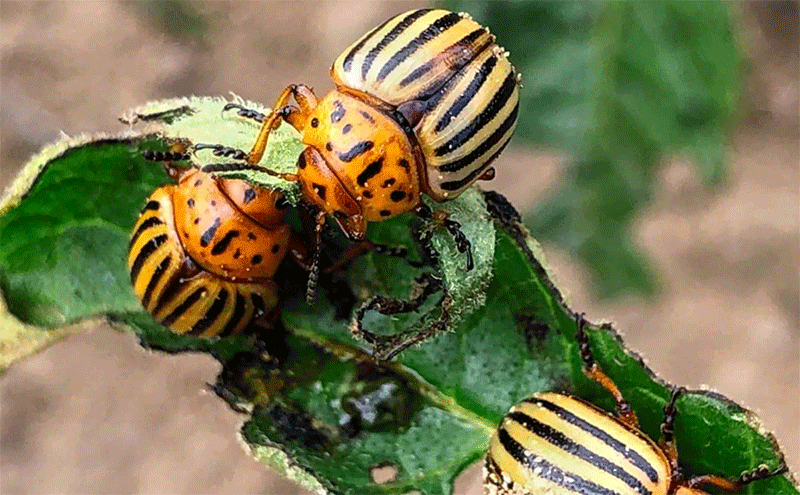
The Colorado potato beetle (CPB) represents one of the most significant and costly pest challenges in global agriculture, with populations often resistant to multiple classes of conventional insecticides. This resistance crisis has created an urgent need for novel modes of action. Enter Calantha, the world’s first commercially available sprayable RNA interference (RNAi) bioinsecticide, which represents a paradigm shift in pest control. A recent study published in Pest Management Science confirms its high efficacy when applied during the early larval stages in spring, targeting the pest with a precision previously unavailable. As noted by senior author Professor Brian Nault of Cornell AgriTech, this “brand-new class with a novel mode of action” is a critical tool for managing resistant CPB populations.
Calantha’s active ingredient is a tailored double-stranded RNA (dsRNA) molecule. When ingested by CPB larvae or adults, the dsRNA silences the PSMB5 gene, which is essential for cellular protein recycling. Without this function, defective proteins accumulate, leading to cell death and the subsequent demise of the insect within days. This mechanism is highly specific to the CPB, sparing beneficial insects like bees, predatory wasps, and ladybugs—a significant advantage over broad-spectrum chemicals. The platform’s versatility is already being leveraged, with similar RNAi products for Varroa mites and Asian citrus psyllids in development. For optimal results, the research recommends initiating applications at egg hatch, followed by weekly treatments for two to three weeks to target small, vulnerable larvae. However, strategic limitations exist; to proactively manage resistance, New York state, for example, has limited its use to two applications per season. Furthermore, its current manufacturing process excludes it from organic certification, a hurdle for future adoption.
The arrival of RNAi technology in a sprayable form marks a watershed moment for agricultural pest management. Calantha provides a desperately needed, highly specific tool for combating resistant Colorado potato beetle populations within an Integrated Pest Management (IPM) framework. Its ability to target a key pest while conserving beneficial insect populations enhances farm-level ecosystem resilience. However, its successful long-term integration will depend on prudent stewardship—including application timing and rotation with other control methods—to delay resistance. For researchers and growers, it opens a new frontier: the potential to design bespoke solutions for a wide range of intractable pests, moving us toward a future of more precise and sustainable crop protection.
