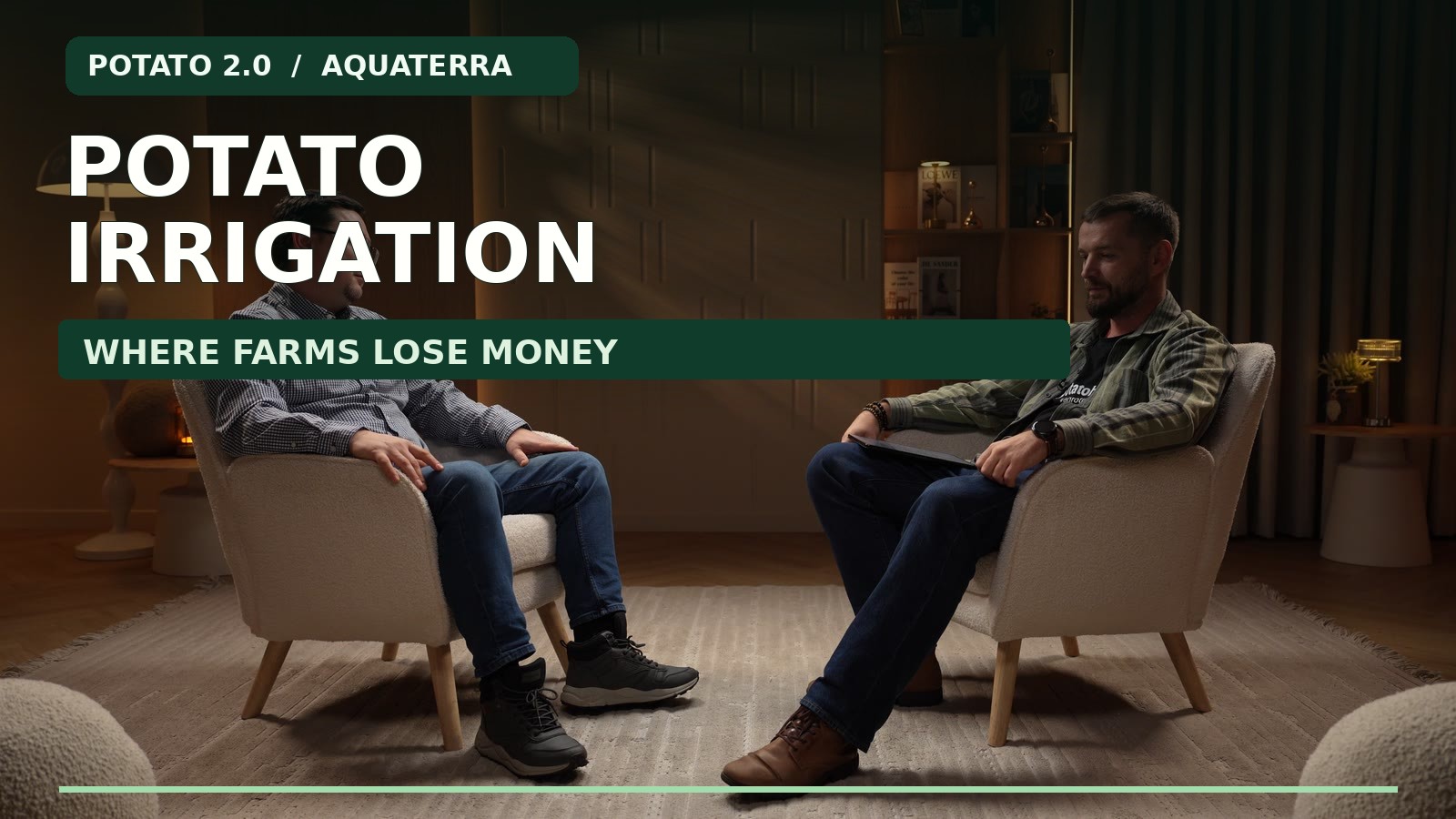
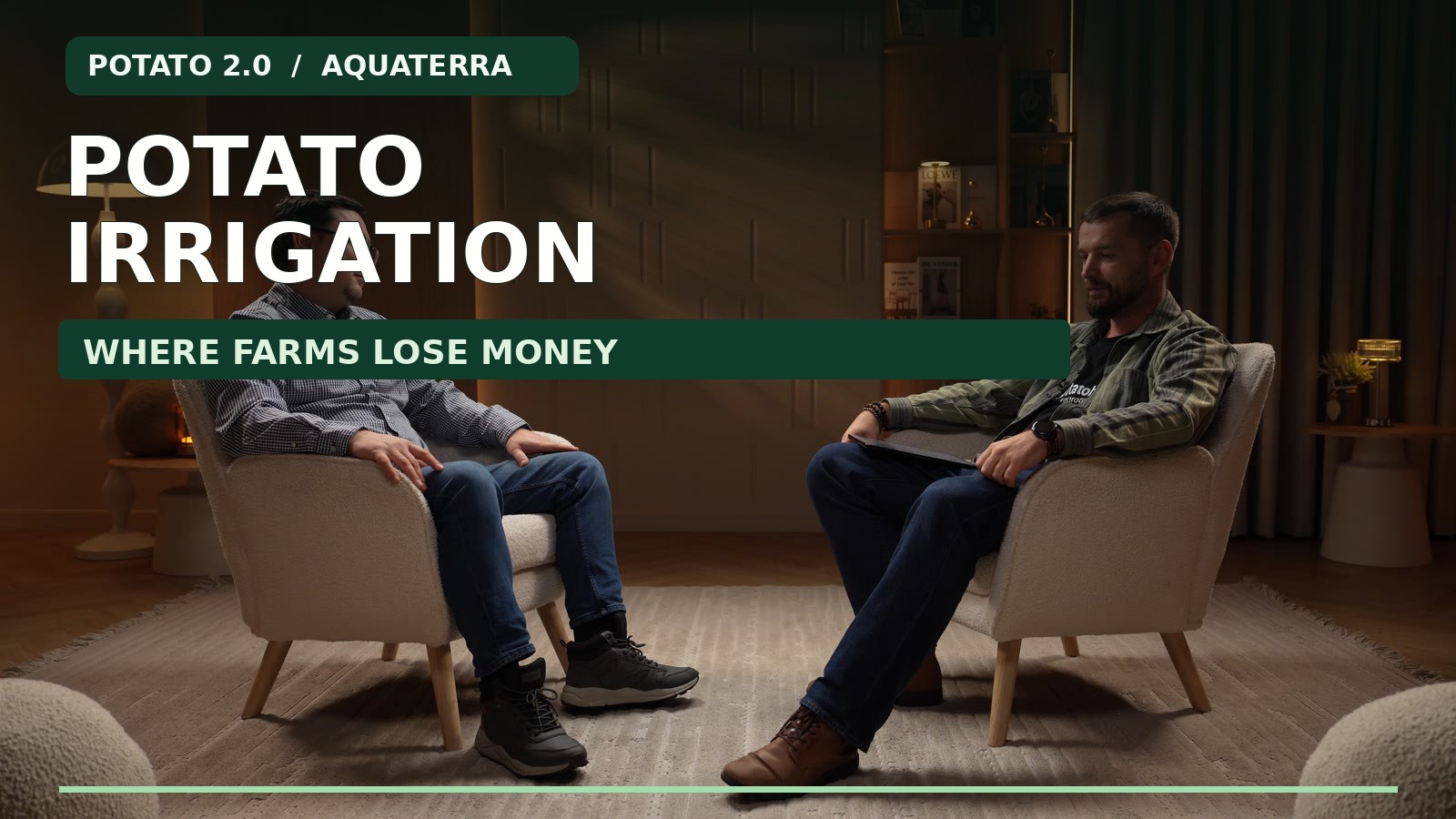
Where does a potato farm lose money on irrigation — in the pump, the sprinkler or the way the system is managed? The answer is often a combination of all three. In a new episode of Potato 2.0, host Viktor Kovalev speaks with Timur Sultanov, head of Aquaterra, about improving irrigation efficiency without compromising crop quality.
The discussion draws on practical equipment and field experience: water stress in potatoes, pump efficiency, aging sprinkler nozzles, the design of center-pivot systems, water chemistry and maintenance strategies.
Potato irrigation is more than applying water
Potatoes can respond to reduced available soil moisture before stress is immediately visible in the canopy. As Sultanov explains, the crop is grown on ridges, which makes proper water distribution and infiltration particularly important. Irrigation intensity should match soil conditions to reduce runoff, prevent ridge erosion and maintain a uniform moisture profile.
Weekdays. Unsubscribe in one click.
The real economics of pumping stations
Farmers naturally compare the purchase prices of pumps. However, the more meaningful comparison includes energy consumption, operating pressure, hydraulic performance, servicing and the expected years of operation. Sultanov discusses how differences in pump efficiency of approximately 10–15%, depending on the equipment being compared, can translate into material long-term operating costs. These figures should be evaluated against each farm’s own duty cycle and electricity tariff.
Sprinkler nozzles: the small components that can affect a whole field
Worn nozzles and pressure regulators can alter discharge rates, distribution uniformity and sprinkler performance. The episode includes a close comparison between an older and a newer nozzle. It also covers when to inspect and replace sprinkler components and why a center-pivot system should be assessed as a whole rather than judged only by whether water is flowing.
Start with the water source and the soil
Before specifying pumps or sprinklers, an irrigation project needs a realistic assessment of water availability and quality. Salinity, alkalinity and seasonal changes in water composition can influence soil conditions and crop management. The conversation also addresses hydraulic design, the selection of suitable equipment, fertigation with liquid fertilizers and preparation for the next growing season.
YUGAGRO and the pressure to improve efficiency
Reflecting on the YUGAGRO trade show in Krasnodar, Sultanov argues that difficult market conditions can encourage growers and equipment operators to look more closely at production costs. Upgrading existing machinery, preventing breakdowns and training irrigation technicians are all part of that discussion.
Aquaterra consultation for Potato 2.0 viewers
Aquaterra invites viewers to contact its specialists and mention the POTATO 2.0 code when asking an irrigation question. This offer is for a professional consultation; it is not an advertised discount.
Watch the episode
The episode will be relevant to potato growers, farm managers, irrigation engineers and agronomists preparing investments and maintenance plans ahead of the season.