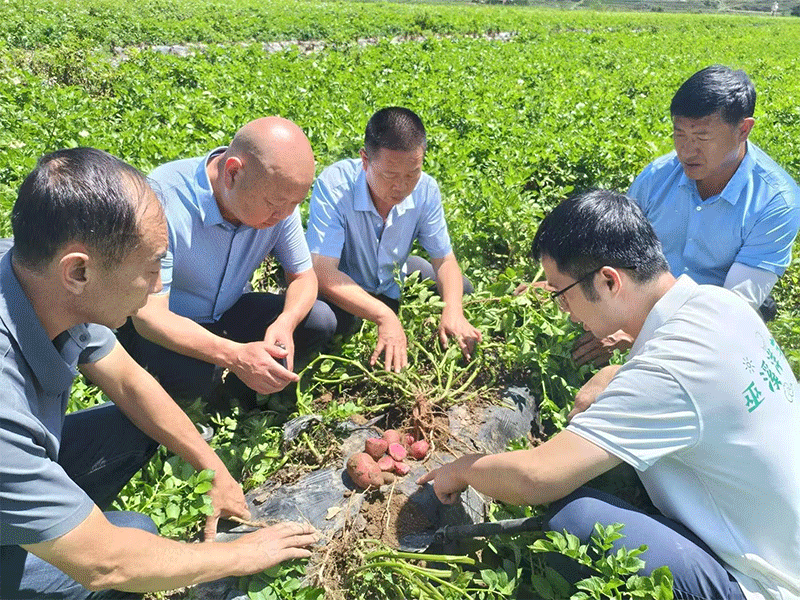
Potato viral diseases remain one of the most significant constraints to global potato production, causing estimated yield losses of 15-30% annually 6. Traditional virus detection methods often require laboratory infrastructure, trained personnel, and involve time-consuming processes like ELISA or PCR, which can take hours or even days to provide results. For seed potato producers, this delay can critically impact planting schedules and seed certification timelines.
The emergence of a novel diagnostic technology addresses these limitations directly. Researchers from the Western (Chongqing) Science Center for Germplasm Creation and the Chongqing Potato Industry Technology System Innovation Team, led by吕典秋, have developed a “Nanoparticle Immunochromatographic Rapid Diagnostic Kit for Seed Potato Viruses” after six years of dedicated research 5.
Technological Breakthrough and Performance Specifications
This diagnostic breakthrough represents a significant advancement in phytopathology management through nanotechnology. The kit utilizes specialized nanoparticles that bind to viral antigens, producing a visual signal within minutes without requiring sophisticated equipment.
The performance metrics demonstrate substantial improvements over existing technologies:
- 100-fold increase in sensitivity compared to conventional reagents
- Remarkable stability maintained across a temperature range of -20°C to 40°C for 12 months
- Rapid results generated within 3-5 minutes
- No requirement for specialized training or equipment – suitable for field use
This development effectively breaks foreign technology monopolies and fills a critical gap in China’s seed potato quality control market 5.
Integration With Traditional Seed Production Strengths
The implementation of this technology is particularly valuable in regions with established seed production infrastructure like Wuxi County in Chongqing. This area possesses natural advantages for seed potato production, including:
- High altitude (over 1,000 meters above sea level) creating cool climatic conditions
- Abundant sunlight with reduced aphid populations – natural vectors for virus transmission
- Established expertise in seed potato cultivation 5
The Shuguang Agricultural Science and Technology Development Co., Ltd., a key agricultural龙头企业 in Wuxi County, exemplifies the integration of traditional strengths with innovative technology. The company operates the largest micro-seed potato production base in Southwest China, with annual production capacities of:
- 20 million virus-free test-tube plantlets
- Over 60 million mini-tubers 5
This massive production scale underscores the critical importance of efficient virus detection methods to maintain quality standards.
Implications for Global Seed Potato Systems
The development of rapid, accurate, and field-deployable diagnostic tools has profound implications for seed potato systems worldwide:
- Enhanced Certification Programs: Seed certification agencies can implement more rigorous testing protocols without sacrificing time efficiency, potentially raising overall seed quality standards.
- Reduced Transmission Risks: The ability to quickly identify infected lots before planting or distribution can significantly reduce the spread of viral pathogens across regions.
- Economic Benefits: Early detection prevents the costly process of growing, harvesting, and storing infected seed lots, protecting investments throughout the value chain.
- Adaptation to Climate Change: As changing climatic conditions alter pathogen distribution patterns, responsive monitoring tools become increasingly valuable for maintaining productivity.
The nanoparticle-based immunoassay diagnostic kit represents a transformative advancement in plant disease management. By enabling rapid, sensitive, and field-deployable virus detection, this technology addresses a critical bottleneck in seed potato production systems. Its development highlights the powerful convergence of nanotechnology and agriculture, offering practical solutions to longstanding challenges in phytosanitary control.
For seed producers, integrating this technology into quality assurance protocols can significantly enhance product reliability while reducing losses from viral infections. For the broader agricultural community, it demonstrates how targeted research and development can yield practical tools that strengthen global food security by protecting one of the world’s most important staple crops.