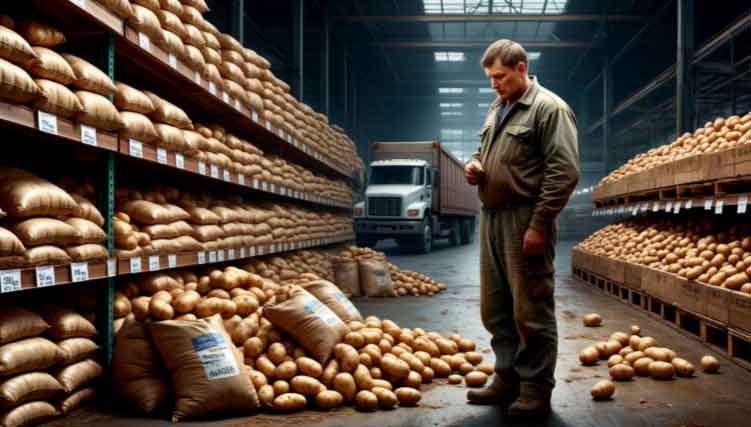
Russian potato producers are facing a serious paradox: despite massive stockpiles of domestic products — over 1.3 million tons currently in storage, nearly 1.5 times more than last year — retail chains are increasingly buying imported vegetables. Since early spring, experts have noted a rise in potato shipments from Egypt, China, and Azerbaijan. Egyptian produce, in particular, has been flooding the Russian market at lower prices due to a global oversupply in Europe and Egypt redirecting part of its exports to Russia. Retail chains explain their choice as purely commercial — buying cheaper imports is simply more profitable, leaving local farmers facing contract rejections or offers to sell their potatoes far below the cost of storage and production.
Russian farmers warn that prolonged lack of sales could lead to serious financial losses, reduction of planted areas next season, and even the disposal of部分 of the harvest. Meanwhile, domestic producers insist they are fully capable of supplying the domestic market without relying on imports. The State Duma has taken notice of the issue, with deputies noting that previous agreements between retailers and producers to support local goods are no longer being honored. This has reignited discussion of the so-called “Russian shelf” — a mechanism that would require stores to allocate a portion of their space for domestic products. Agrarian committee representatives argue such measures would protect local farmers and reduce market dependence on foreign supplies.