• About Us
  • Partnership & Advertising Opportunities
  • Careers at Potatoes.News
Saturday, January 10, 2026
  • Login
  • Register
No Result
View All Result
POTATOES NEWS
  • NEWS
  • IPT
  • AGROTECHNOLOGY
  • IRRIGATION
  • POTATO PROCESSING
  • Contact us
  • NEWS
  • IPT
  • AGROTECHNOLOGY
  • IRRIGATION
  • POTATO PROCESSING
  • Contact us
No Result
View All Result
POTATOES NEWS

Why Kuzbass Vegetables Don’t Last Until Summer – And the Role of Imports in Food Security

by T.G. Lynn
06.08.2025
in News, Storages
A A
Why Kuzbass Vegetables Don’t Last Until Summer – And the Role of Imports in Food Security

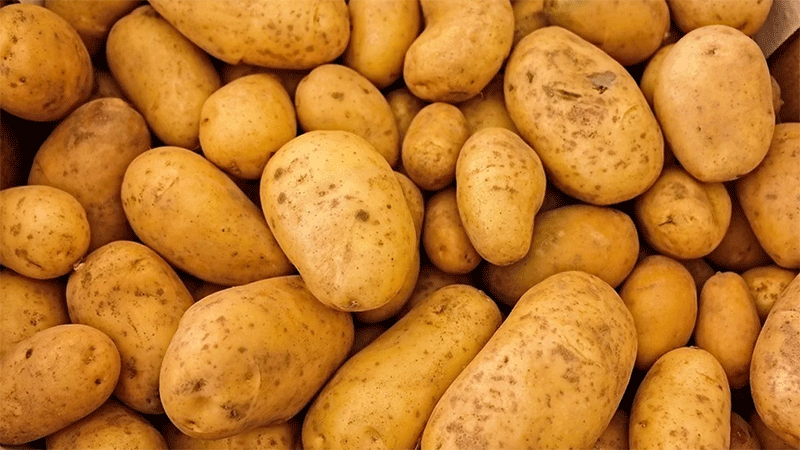
According to the Kuzbass Ministry of Agriculture, locally grown potatoes and vegetables can only be stored in fresh condition until April under current conditions. Beyond that, traders must rely on imported produce from southern regions or other countries. This recurring issue has raised questions among consumers, but the explanation lies in a combination of biological, climatic, and logistical factors.

Key Factors Affecting Storage Longevity

  1. Storage Duration & Methods
    • Potatoes last 6–8 months in floor storage and 5–7 months in containers (per GOST standards).
    • Extending shelf life requires sprout-suppressing chemicals, which are not always preferred due to consumer demand for natural products.
  2. Weather & Harvest Conditions
    • In 2024, excessive rainfall in late August and early September led to a state of emergency in Kuzbass due to waterlogged soil.
    • Delayed mechanized harvesting caused suffocation damage in root crops, reducing overall yield quality.
  3. Biological & Infrastructural Limits
    • Different potato varieties have varying resistance to rot and sprouting.
    • Storage facilities must maintain optimal temperature and humidity, but many older warehouses lack modern climate control.

The Need for Imports & Future Solutions

Since local stocks deplete by spring, imports fill the gap until the next harvest. However, the Ministry of Agriculture is working to expand production capacity:

  • 20,000 hectares of fallow land are reclaimed annually.
  • By 2030, an additional 150,000 hectares of unused agricultural land will be reintroduced.

While Kuzbass farmers face natural and technical hurdles in long-term vegetable storage, strategic land expansion and improved storage technology could reduce dependency on imports. Collaboration between agronomists, engineers, and policymakers will be key to strengthening regional food security.


Tags: agricultural land reclamationclimate impact on farmingcrop storage technologyfood importsKuzbass agriculturepost-harvest lossesPotato Storagesprout suppressionvegetable shelf life
Next Post
Revolutionizing Potato Storage: Key Insights from the NAPSO-PAA Symposium and the Future of Post-Harvest Innovation

Revolutionizing Potato Storage: Key Insights from the NAPSO-PAA Symposium and the Future of Post-Harvest Innovation

General Partner’s position

Recommended

Skagit Valley Natives

Skagit Valley Natives Invent High-Tech Fix for Farmers’ Irrigation Problem

5 years ago
Bergeron & Sons: The Potato Giants Pioneering Sustainability and Innovation

Bergeron & Sons: The Potato Giants Pioneering Sustainability and Innovation

1 year ago
  • About Us
  • Partnership & Advertising Opportunities
  • Careers at Potatoes.News

© 2010-2026 POTATOES NEWS

Welcome Back!

Login to your account below

Forgotten Password? Sign Up

Create New Account!

Fill the forms below to register

All fields are required. Log In

Retrieve your password

Please enter your username or email address to reset your password.

Log In
No Result
View All Result
  • NEWS
  • IPT
  • AGROTECHNOLOGY
  • IRRIGATION
  • POTATO PROCESSING
  • Contact us

© 2010-2026 POTATOES NEWS