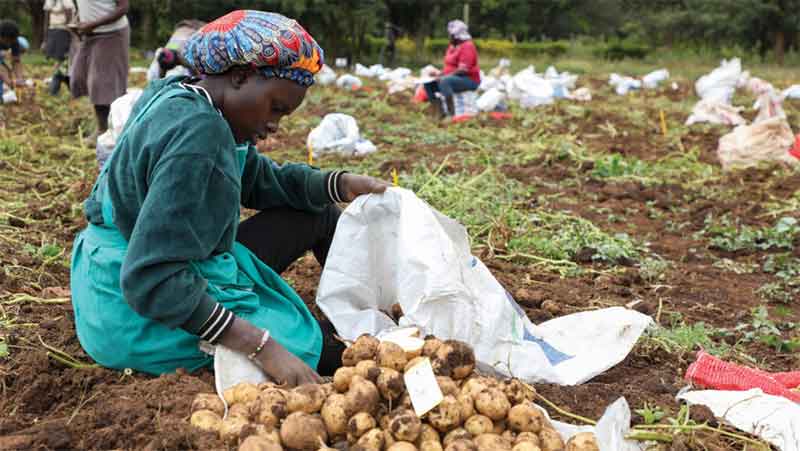
In the narrative of agricultural innovation, the path from lab to field often runs through the world’s most challenging growing conditions. This is precisely why Kenya, and Africa more broadly, is poised to become the first major beneficiary of true potato seed (TPS) technology, a development spearheaded by companies like Solynta. The continent’s pressing needs—climate adaptation, disease pressure, and broken seed systems—create the perfect crucible for a technology that could redefine global potato production.
Kenya’s climate, described as being as conducive to late blight as Ireland’s, presents a relentless, real-world testing environment. Phytophthora infestans causes global potato losses exceeding $6.7 billion annually, and in Africa, smallholder farmers can lose 30-60% of their crop to the disease. Hybrid TPS offers a genetic solution. Unlike traditional clonal seed tubers, which perpetuate disease, hybrid seeds are born disease-free and can be bred for specific resistances more rapidly. A 2023 study in the American Journal of Potato Research noted that TPS enables faster cycling of genetic traits, allowing breeders to keep pace with evolving pathogen strains, a critical advantage in high-pressure zones like East Africa. Furthermore, as Charles Miller of Solynta notes, Kenya seeks to reduce reliance on water-intensive crops. TPS-produced plants can establish more resilient root systems and, coupled with drought-tolerant genetics bred into new hybrids, offer a vital adaptation strategy in regions facing increasing aridity.
The logistical and economic barriers of traditional seed systems in Africa further tilt the scale toward TPS. Transporting bulky, perishable seed tubers across vast distances with poor infrastructure is costly and inefficient, with post-harvest losses significant. In contrast, 25 grams of hybrid seeds—which fit in an envelope—can plant one hectare, replacing 2.5 tons of seed tubers. This reduces transport costs by over 90% and slashes the risk of spreading soil-borne diseases. For a continent where access to certified seed is a major constraint—the International Potato Center (CIP) estimates only about 10-15% of Sub-Saharan Africa uses quality seed—TPS democratizes access. It enables farmers to become “seed producers” themselves by growing a season of disease-free “seedling tubers” from the true seed, breaking the cycle of dependency on expensive, often unavailable, imported seed.
Africa is not merely adopting a new seed technology; it is leveraging its unique agricultural realities to pioneer a more efficient, resilient, and accessible model for potato cultivation. The success of hybrid true potato seed in tackling Africa’s dual challenges of biotic stress and systemic inefficiency will provide invaluable data and proof-of-concept for the global industry. This African-led pivot could accelerate the technology’s refinement and eventual adoption in established potato regions like Europe, demonstrating that solutions forged in some of the world’s most demanding conditions often hold the greatest universal promise. The future of potato seed may well be grown first in African soil.