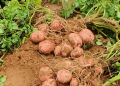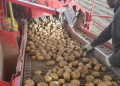
For generations, potato farmers in the Indo-Gangetic plains have faced an agonizing, annual cycle of boom and bust. Lush fields promising a bumper yield can be reduced to blackened, rotten wastelands in a matter of days by the relentless pathogen Phytophthora infestans, the cause of Late Blight. While the disease’s symptoms are tragically familiar, its perennial source was a mystery, leading to failed controls and relentless financial ruin. Now, a seminal study led by Professor Sanjoy Guha Roy of West Bengal State University, published as an Editor’s Pick in the esteemed journal Phytopathology, has uncovered the critical missing link: asymptomatic, latent infection in the seed tuber itself.
The Scale of the Crisis: Beyond the Irish Famine
The historical ghost of Late Blight is long, most infamously triggering the Great Irish Potato Famine. In modern India, the world’s second-largest potato producer, the economic toll is staggering. Guha Roy’s team quantifies annual losses at approximately 15% of national production, translating to a devastating ₹2,700 crore. This aligns with broader national assessments; the Central Potato Research Institute (CPRI) has estimated that potato diseases and pests cause 10-30% yield loss annually, with Late Blight being the most destructive foliar disease. In epidemic years, losses soar, pushing already indebted farmers toward desperation.
Debunking Myths: The Soil Isn’t the Problem
Prevailing theories suggested the pathogen survived India’s blistering summer heat in cooler hills or alternative hosts. Guha Roy’s team rigorously tested these hypotheses. Through extensive soil sampling and high-temperature experiments, they confirmed P. infestans does not persist in the soil of the tropical plains between seasons. This pivotal finding redirected the investigation to the very start of the production chain: the seed.
The “Clean” Seed Paradox: A System Flawed
The study’s most alarming revelation is that the very foundation of modern cultivation—certified seed—is compromised. Analyzing over 7,000 visually healthy seed tubers using molecular diagnostics, the team found roughly 1.6% were asymptomatic carriers. Even more critically, the research exposes a flaw in high-tech seed multiplication. While tissue-culture-derived “Pre-Basic” seeds are initially pathogen-free, they are vulnerable during field multiplication. In regions like Punjab and West Bengal, these multiplication nurseries are often situated near commercial fields. Airborne spores from infected crops breach protections, infecting the seed crop. The pathogen then lies dormant within the new generation of tubers, waiting to erupt in the next season’s favorable conditions.
A More Aggressive Foe
Genetic profiling identified the dominant strain as the European clonal lineage EU_13_A2, known for its heightened aggressiveness and resistance to Metalaxyl, a common, affordable fungicide. This explains the increasing severity and chemical control failures observed in recent years. The FAO has warned of the global spread of such aggressive, fungicide-resistant lineages, complicating integrated pest management strategies worldwide.
A New Diagnostic Clue and a Path Forward
The research also refined disease detection, identifying early stem lesions as a key, often-overlooked infection site. This insight is vital for improving scouting and early warning systems.
The study provides a clear roadmap for breaking the cycle:
-
Enhanced Seed Certification: Mandatory molecular testing for latent infection must supplement visual inspections.
-
Geographic Isolation of Nurseries: Seed multiplication must be relocated to strictly enforced, blight-free zones.
-
Investment in Field Diagnostics: Development of affordable, rapid test kits for use at the seed storage and farm level is urgent.
-
Revised Farmer Strategy: A shift to prophylactic fungicide application and the use of genuinely certified, tested seed is essential.
Professor Sanjoy Guha Roy’s work is a paradigm shift in the understanding of Late Blight epidemiology in India. By exposing the seed tuber as the “hidden hitchhiker” that bridges seasons, it moves the fight from reactive field management to proactive systemic reform. For agronomists, engineers, and farmers, this is a call to overhaul seed systems. For scientists and policymakers, it is a blueprint for safeguarding food security and farmer livelihoods. The silent saboteur has been unmasked; now, concerted action must ensure it has nowhere left to hide.