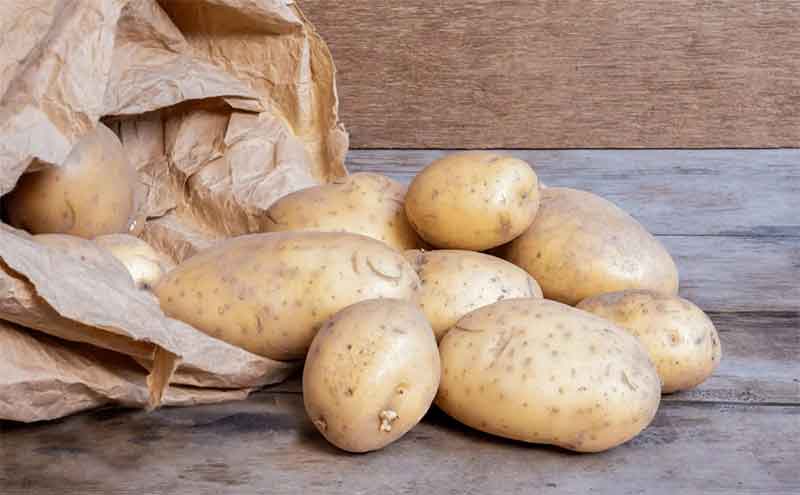
At the recent British Potato Industry Event, the GB Potatoes debate, provocatively titled “Has the Maris Piper had its day – or not?” laid bare a profound schism in the UK potato sector. On one side, voices like Katie Pook of Greenvale argue that the 58-year-old variety is an anachronism ill-suited to modern industrial agriculture and climate volatility. On the other, defenders like Gordon Stark of Taygrow champion its unparalleled versatility, brand strength, and economic logic. This debate is more than academic; it’s a microcosm of the challenges facing heritage cultivars worldwide.
The case for decline, presented by Katie Pook, is data-rich and points to systemic vulnerabilities. Maris Piper’s planted area has collapsed from a peak of nearly 25% in the early 2000s to just 10% today, with its retail value share dropping from 19.5% to 16.5% in four years. More damningly, it accounts for a disproportionate 40% of all consumer complaints from March to July, primarily concerning bruising and poor quality—a significant liability in an era of tight supermarket specifications. Pook argues the variety, bred in 1966 for resistance to the PCN species Globodera rostochiensis, is buckling under modern pressures: larger machinery that increases damage, reduced chemical interventions, and more unpredictable weather. Her clinching argument is market research indicating 93% of its buyers would readily switch if it were unavailable, suggesting weak brand loyalty.
In stark contrast, Gordon Stark’s defence is rooted in agronomic pragmatism and commercial reality. He highlights the variety’s ongoing massive output—500,000 to 700,000 tonnes annually—and its role as a strategic tool in PCN management. As new varieties target the now-dominant G. pallida species, Stark posits that rostochiensis populations could resurge, making Piper’s specific resistance valuable again. Economically, he underscores its low cost of production: no royalty fees and affordable seed costs compared to modern protected varieties. Furthermore, its unparalleled brand recognition, endorsed by culinary icons from Delia Smith to Jamie Oliver, provides a marketing moat. Stark’s final point is geographical adaptation: while southern England struggles with climate stress, production is shifting successfully to Scotland, a natural evolution of growing regions.
The razor-thin margin of the debate’s vote confirms that the Maris Piper’s story is not one of simple obsolescence, but of negotiated transition. It will likely not regain its former dominance, but nor will it vanish. Its future appears to be as a niche strategic crop—valued for specific PCN management, for its economics on suitable land (increasingly in Scotland), and for its trusted name in certain market segments. For the industry, the debate underscores a critical need: breeding programs must deliver new varieties that match Piper’s agronomic flexibility and consumer appeal while surpassing its weaknesses. The legend’s final chapter will be written not by sentiment, but by its continued ability to turn a reliable profit in an increasingly challenging field.